This month the U.S. Army Corps of Engineers, St. Louis District, began tearing down a half-dozen homes in the Cades Cove neighborhood of Florissant, Mo., as part of the ongoing cleanup along Coldwater Creek.
The work is part of the Formerly Utilized Sites Remedial Action Program (FUSRAP) that targets legacy contamination from the early atomic energy program, the Corps said in an online Feb. 6 press release.
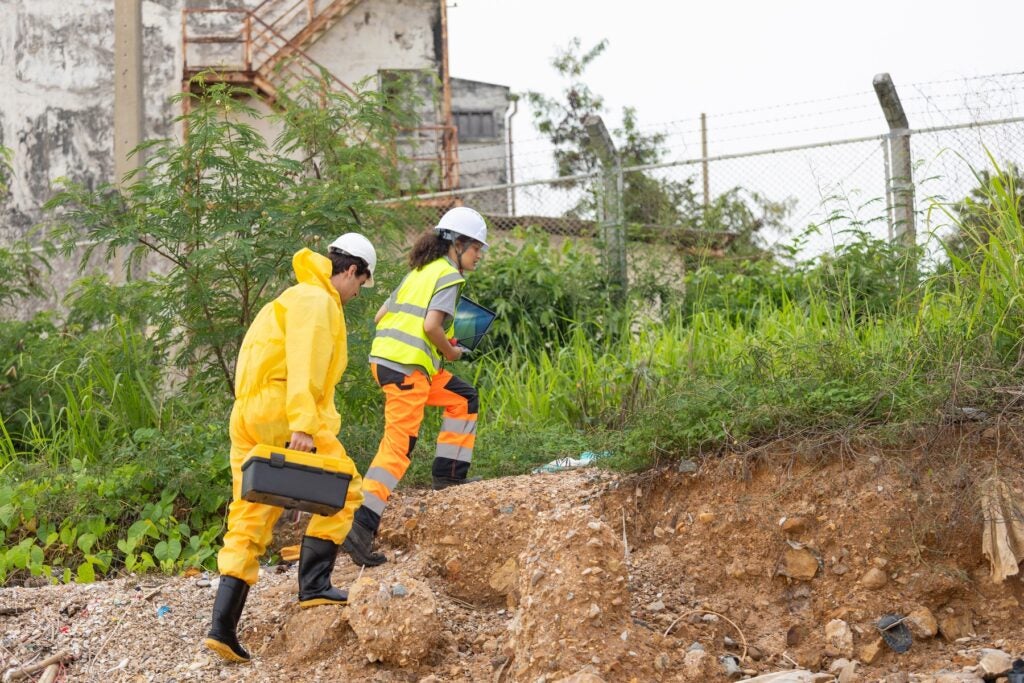
The six houses are within areas affected by historical contamination, and removing the structures allows crews to safely dig up contaminated soil below the foundations, the Army Corps said in the release.
“We understand this work impacts residents and the surrounding community,” the Corps said in the press release. “Our team is committed to completing the project with care, transparency, and strong safety protections in place.”
The homes will be taken down one at a time over about a month, the Corps said, adding there will be air monitoring and dust-control measures put into place. The worksite will be fenced in but no road closures are expected.
The full cleanup project should be finished within a year, according to the release. Once finished, the land will be restored and returned to homeowners.
The Army Corps has been working on contaminated soil cleanup along the banks of Coldwater Creek near an elementary school. Jana Elementary School was closed after radioactive contaminants from the Manhattan Project era were found near the school.
More information on the St.Louis District’s work around the school is available here.
In 2023, Sen. Josh Hawley (R-Mo.) proposed the Justice for Jana Elementary Act. the legislation would require “the U.S. Army Corps of Engineers (USACE) to establish and execute new remediation goals for Jana Elementary School in the Hazelwood School District so that no portion of the site is subjected to radiation above background levels.”
The latest work, which started Feb. 9, is taking place within the St. Louis Airport Sites Vicinity Properties, according to the press release.
Low-level radioactive contamination in this area can be traced back to 1966 when Continental Mining and Milling Company of Chicago bought uranium-bearing residues from the Manhattan Engineer District and eventually placed the residues in storage at Latty Avenue under an Atomic Energy Commission (AEC) license, according to a Corps website.
“In 1996, the volume of impacted soils, which are owned by commercial enterprises, private residences or local governments, was estimated at 195,000 cubic yards,” according to the website. Much remediation has occurred since then, however, according to the Corps.