Weapons Complex Monitor Vol. 36 No. 48
Visit Archives | Return to Issue
PDF
Weapons Complex Monitor
Article 1 of 7
December 24, 2025

2025 in review: Hanford finally makes glass; federal brain drain among top stories

By Wayne Barber

After decades of work, the Department of Energy’s Hanford Site at Richland, Wash., finally converted some liquid radioactive waste into glass – and some of the most senior people in DOE’s weapons complex left government service this year.

These are a couple of the big stories of 2025 affecting DOE’s $8-billion Office of Environmental Management (EM).

Undoubtedly, the top nuclear cleanup story for 2025 is the first gallons of less-radioactive liquid tank waste at the Hanford Site being vitrified into a glass form at Bechtel National’s Waste Treatment & Immobilization Plant (WTP).

The development was decades in the making. Bechtel has an $18-billion contract that began in December 2000 and is currently expected to run through March 2026. There have been cost overruns and schedule delays over the years for various reasons. Bechtel and DOE were facing an October deadline to make the first glass using Direct-Feed-Low-Activity-Waste Facilities at the WTP.

As of early December, 22 containers of molten glass had been filled.

There are 56 million gallons of radioactive and hazardous waste in Hanford’s underground tanks. It is left over from decades of plutonium production for defense purposes. While most of the tank waste is low-level, the WTP is not expected to start solidifying the high-level waste until the 2030s. The high-level waste is only a fraction of the volume but accounts for most of the radionuclides at Hanford. 

Meanwhile, DOE’s prime contractor for tank waste is proceeding with a solicitation for contractors to solidify some of the less-radioactive waste into a concrete-like grout and ship it out of state for disposal.

The startup of glassmaking at WTP did not occur without some drama.

DOE issued its final approval for plant operation in September.  This came after Sen. Patty Murray (D-Wash.) publicly accused Secretary of Energy Chris Wright of getting cold feet on whether to deploy the facility. Wright has consistently denied that he tried to hold up the WTP.

At one point friction between the Washington lawmaker and DOE prompted Murray to hold up a final vote on Tim Walsh to be DOE assistant secretary for environmental management or EM-1.

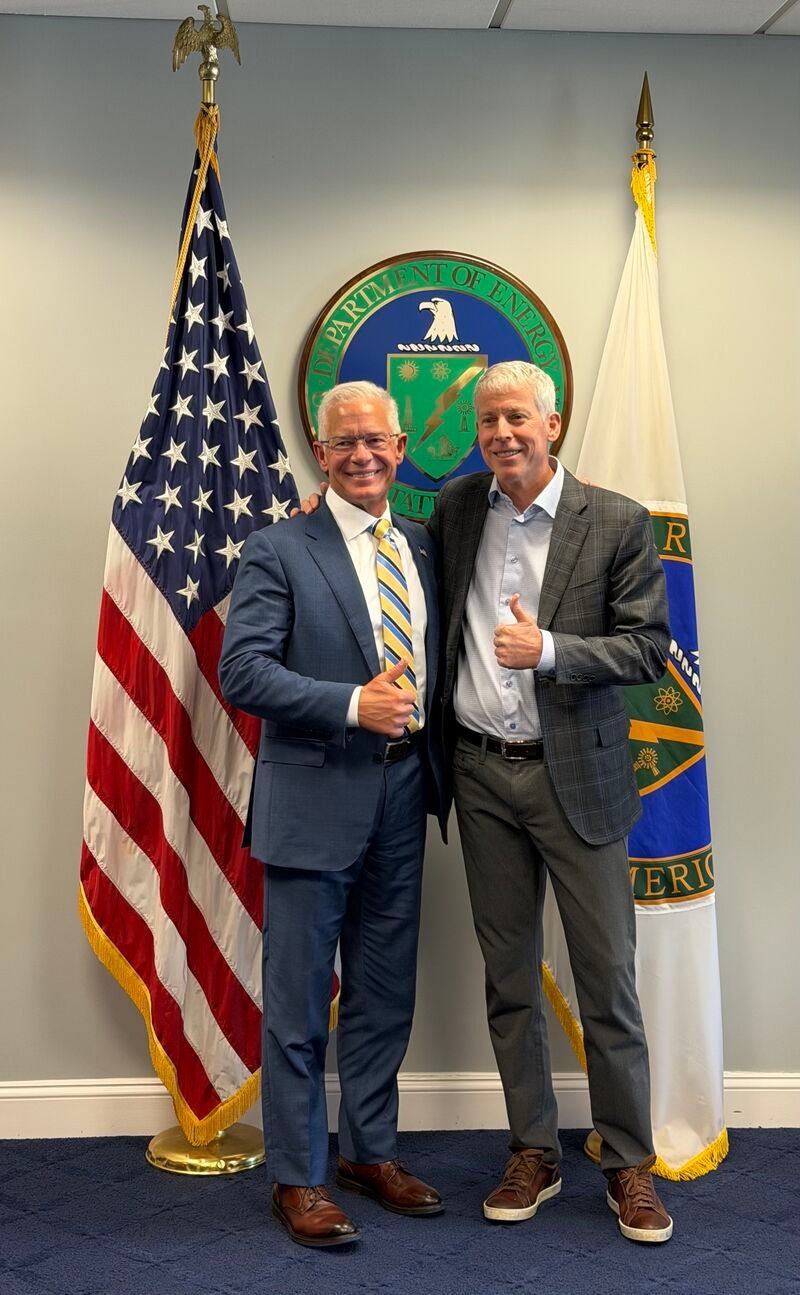
Walsh, a combat veteran and real estate developer from Colorado, finally won Senate confirmation in October. He had been nominated in March for the nuclear cleanup post by President Donald Trump.

Walsh is the first EM-1 to win Senate confirmation since Anne Marie White during the first Trump administration.

Walsh also became the fifth person to lead day-to-day operations at EM during 2025.

In January 2025, longtime federal executive Candice Robertson was acting as head of EM pending a nominee from President Trump. Jeff Avery was the No. 2 person at the nuclear cleanup office. Before 2025 was over both would leave their civil service career behind.

Robertson would leave DOE after the White House pushed hard to severely cut back on telework and soon signed on with BWX Technologies. After initially moving over to the National Nuclear Security Administration (NNSA), Avery would later leave the federal government and end up with a senior post at Westinghouse.

In addition to Robertson, others who led EM at one point or another since Jan. 20 are Dae Chung, Roger Jarrell and Joel Bradburne. Bradburne, a longtime manager at Portsmouth and Paducah, is the only one that remains with DOE.

It was that sort of year at DOE and the federal government. The White House Office of Personnel Management issued its fork in the road effort to dramatically slash the federal workforce.

Partly due to that effort, early retirements and other factors, field managers at Hanford, Idaho National Laboratory, the Oak Ridge Site in Tennessee and the Savannah River Site in South Carolina,  all left government service during 2025. Also leaving the federal government was DOE chief risk officer and a former acting EM-1, Jim Owendoff.

DOE and EM end the year without passage of  a budget for fiscal 2026. Following a 43-day government shutdown, the agencies are operating under another continuing resolution that runs through Jan. 30.

There were other big issues during 2025, from DOE’s efforts to develop data centers powered by small modular reactors at DOE nuclear sites to completion of major new infrastructure projects at the Waste Isolation Pilot Plant in New Mexico.

Exchange Monitor will seek to stay on top of these and other developing stories in 2026.

Comments are closed.