Weapons Complex Monitor Vol. 37 No. 01
Visit Archives | Return to Issue
PDF
Weapons Complex Monitor
Article 1 of 9
January 09, 2026

Bipartisan 2026 appropriations minibus passes House with EM, Hanford funding

By Sarah Salem

A three-bill minibus appropriations bill with fiscal 2026 funds for Energy and Water development, including $8.5 billion for nuclear cleanup and $25.4 billion to the National Nuclear Security Administration (NNSA), passed the House floor 397-28 Thursday.

The bill was released by top appropriators in the Senate and House Monday on both sides of the aisle. Congress has until Jan. 30 to either get all twelve spending plans passed or pass another stopgap spending bill, lest the government shut down again due to a lapse in funding.

Defense Environmental Cleanup, which accounts for the bulk of funds for the DOE Office of Environmental Management, would receive nearly $7.4 billion. Non-defense Environmental Cleanup would receive $322 million. The document says $865 million will be deposited into the DOE’s Uranium Enrichment Decontamination and Decommissioning Fund.

The bill would also again fund the Defense Nuclear Facilities Safety Board (DNFSB) at $42 million.

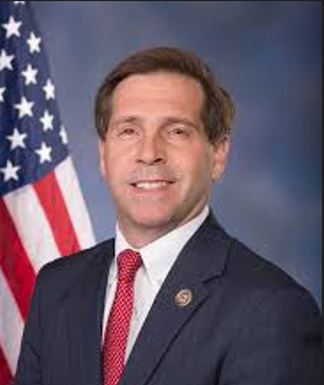
Three members of the House Appropriations Committee, Rep. Chuck Fleischmann (R-Tenn.), Rep. Dan Newhouse (R-Wash.) and Rep. Mike Simpson (R-Idaho) issued statements praising the nuclear provisions of the legislation. Fleischmann also predicted President Donald Trump would sign the bill once it clears the Senate. 

Fleischmann’s district borders upon the Department of Energy’s Oak Ridge Site in Tennessee, Newhouse represents the area around the Hanford Site in Richland, Wash., and Simpson the Idaho National Laboratory.

The Hanford Site would receive $3.2 billion for cleanup work, a $200 million increase from the previously enacted level, Newhouse said. 

In addition to money for continuing nuclear remediation, Simpson said Idaho National Laboratory will receive funding for further research and development of advanced Tri-structural Isotropic (TRISO) and High-Assay Low Enriched Uranium (HALEU) reactor fuel.

While funding for the Uranium Processing Facility at the Y-12 National Security Complex, which abuts Fleischmann’s district, was lower for fiscal 2026 at $730 million than the $841 million the House requested for fiscal 2025, Fleischmann attributed that to it being a “different year, different priorities,” a justification for sticking with the appropriations process, he added. “The needs on the reservations change, the needs of the projects change” year by year, he said.

Fleischmann told the Exchange Monitor in the halls of the Capitol Thursday he was “very pleased” with the “robust” funding for modernization programs in NNSA, and said while he made sure Republican priorities were in the bill he thinks the “minority is cooperating” since Democrats in the House and Senate “got some key things that they needed.”

Fleischmann added he thinks the Senate will pick the bill up “very quickly,” but “obviously they’re going to need 60 votes.”

House appropriations Ranking Member Rosa DeLauro (D-Conn.) said on the House floor there is not a single “poison pill policy rider” – meaning an unrelated, often controversial amendment that is snuck into a major policy or spending bill and either forces its defeat or  – in the package, which she said was a “testament to the good faith of these negotiations that both sides agreed to drop provisions the other found objectionable.”

In the minibus package, the Office of Nuclear Energy’s $1.785 billion, which is $100 million above fiscal 2025 enacted level, focuses heavily on its Advanced Nuclear Fuel Availability program and “repurposes previously appropriated funds to accelerate advanced reactor and small modular reactor demonstration projects,” according to an Energy and Water bill summary.

Comments are closed.