RadWaste Monitor Vol. 9 No. 35
Visit Archives | Return to Issue
PDF
RadWaste & Materials Monitor
Article 1 of 6
September 09, 2016

Boyle Confident DOE Will Find Borehole Test Site

By Karl Herchenroeder

LAS VEGAS — A senior Energy Department official said Wednesday there’s no doubt the agency will find an agreeable site for its deep-borehole nuclear waste storage field test, despite failing to secure two separate locations over several months this year in North Dakota and South Dakota.

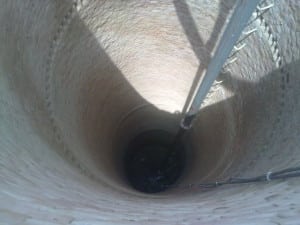
Following his appearance at the ExchangeMonitor’s 2016 RadWaste Summit here, DOE Office of Used Nuclear Fuel Disposition Director William Boyle offered his opinions on why the second community, Spink County, S.D., said no to the borehole test. The estimated five-year, $35 million project would test the feasibility of storing nuclear waste 3 miles deep in crystalline rock formations. It is just one storage method the Obama administration is exploring in replacing plans for a deep geologic repository at Yucca Mountain in Nevada.

Residents in both Dakotas voiced concern that a successful field test — which DOE and prime contractor Battelle Memorial Institute emphasized would not involve any actual waste – would lead to eventual waste storage in their states. Boyle said he believes South Dakota’s opposition started as an aversion to nuclear waste, but ultimately became an economic response. He said the Spink County economy is dependent on agriculture, and residents did not want to risk any impacts to their aquifer, even if it was determined that risk was very low.

“They did not want to put it at risk whatsoever,” Boyle said, calling it a “reasonable response.” “So it was an economic decision for them. As an outsider, I can look at it and say, ‘Oh, they’re being too risk-averse,’ but I’m an outsider. It’s their money. Many people are risk-averse with their own money.”

The department and Battelle in July mutually agreed to part ways on the contract, and DOE has since begun soliciting proposals for a new borehole contract. This round will involve multiple awards, requiring that contractors secure local support before the ultimate drilling contract is awarded. Associate Deputy Assistant Energy Secretary for Fuel Cycle Technologies Andrew Griffith said in July that this new approach gives the department a plan B if the job favorite falters.

Boyle, during his presentation, addressed the department’s consent-based siting effort, which is the Obama administration’s strategy for managing America’s nuclear waste. That plan envisions operation of a pilot storage facility for waste from decommissioned nuclear sites by 2021; one or more larger, interim facilities by 2025; and finally at least one permanent geologic repository by 2048. Moderator Eric Knox, senior project director for Nuclear and Environment in AECOM’s Management Services Group, asked Boyle if those dates are realistic. Boyle expressed doubt, noting that Obama’s strategy, guided by Blue Ribbon Commission recommendations, states that the timeline is subject to timely legislative action.

“We’re here in the gambling capital of the world,” Boyle said. “I wouldn’t bet on those dates myself.”

Boyle also responded to a question posed by RadWaste Monitor on whether DOE plans to contract private companies for its consent-based siting effort, which would likely require an amendment to the Nuclear Waste Policy Act. The Nuclear Energy Institute suggested in July that DOE not collaborate with private companies. Waste Control Specialists and Holtec International are leading separate efforts to develop consolidated interim storage sites for spent nuclear fuel in West Texas and New Mexico, respectively.

“As a matter of fact, they are separate,” Boyle said. “The process doesn’t even exist yet, so whatever’s been proposed in West Texas or the Carlsbad area is obviously outside of such a process because one doesn’t exist. All that we’ve asked for is input. Groups are free to pursue what they wish.”

DOE hosted a number of public meetings this year around the country to gather public feedback as it develops its consent-based siting process. There were stops in Washington, D.C.; Chicago; Atlanta; Boise, Idaho; Boston; Denver, Colo.; Minneapolis; Sacramento, Calif.; and Tempe, Ariz. Defining consent, Boyle said, was a major topic at the meetings.

“How do you define consent?” Boyle asked. “I don’t think there’s agreement on that, and that actually came up a lot at the public meetings that we had. Some Americans are distrustful of the federal government. Others are distrustful of their state governments. Others are mistrustful of their local governments, and so it’s a tough question.”

DOE has scheduled a Sept. 15 public meeting in Washington, D.C., to summarize feedback it has received for consent-based siting, which spurred more than 11,000 public comments. The department also will at that event discuss the next steps it has planned for the program.

Comments are closed.