U.S. President Donald Trump, Russian President Vladimir Putin and Chinese President Xi Jinping pledged to pursue dialogue on nuclear risk reduction and nonproliferation following an unprecedented trilateral summit in Shenzhen, China, on Thursday.
The leaders issued a joint four-point declaration reaffirming that “a nuclear war cannot be won and must never be fought.” They also committed to maintaining strategic stability and international security.
Trump had advocated for discussions on reducing nuclear stockpiles, potentially through a new agreement involving all three countries. However, the roughly 80-minute meeting produced no new arms control agreement or concrete commitments to reduce existing arsenals. The declaration did not specify a timeline or framework for future negotiations.
Democrat Aaron Ford, currently Nevada’s attorney general, was elected governor earlier this month, defeating Republican incumbent Joe Lombardo.
Ford claimed more than 51% of the vote against Lombardo. Ford also finished ahead of an independent and a none- of-the- above option, according to CBS News. As attorney general, Ford sued and eventually settled with the Department of Energy and its National Nuclear Security Administration (NNSA) over storage of plutonium at the Nevada National Security Site.
In addition to Steven Horsford (D), two other Nevada Democrats active on Nevada National Security Site issues also won re-election on Nov. 3: Dina Titus defeated Republican Carrie Ann Buck and Rep. Susie Lee defeated Republican Marty O’Donnell. Titus has proposed a bill to block the Donald Trump administration from reviving U.S. explosive nuclear weapons testing. Horsford and Lee are active on that issue as well. Lee supports expanding access to health benefits for individuals suffering from health effects from toxic radiation exposure at the Nevada DOE site.
Construction of a new $36 million Analytical Gas Laboratory at the Pantex Plant has reached the halfway point, with crews completing structural steel framing and insulated metal panels one year after breaking ground.
The 12,750-square-foot facility will provide advanced diagnostic equipment and testing capabilities supporting national security weapons programs and components. The project is one of four Pantex infrastructure investments using a streamlined commercial-standards approach for non-nuclear projects.
Other projects include an Environmental Sampling Facility, a second Flexible Support Facility and a new Maintenance Facility. The lab is scheduled for completion next September.
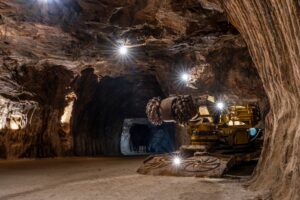
Managers for the Department of Energy’s Waste Isolation Pilot Plant (WIPP) near Carlsbad, N.M., said recently a new two-story administrative building is planned on the surface of the nation’s only disposal site for defense-related transuranic waste.
“A new two-story administration building for our mining and underground operations team will be constructed near the primary personnel hoist,” Ryan Flynn, deputy program manager for DOE’s Bechtel-led prime Salado Isolation Mining Contractors, said during a Nov. 4 public meeting. DOE could not provide a cost estimate for the building.
It will provide space for mining personnel as well as WIPP’s mine rescue team, Flynn said. He did not immediately provide a timetable or cost estimate for the administrative building. On another subject, Flynn and other WIPP representatives said they expect that Panel 8 will be filled with transuranic waste in mid-2028. WIPP will then start emplacing waste in underground Panel 11 shortly thereafter, Flynn said. Crews started disposing of waste in Panel 8 four years ago.
The head of nuclear remediation at the Department of Energy’s Savannah River Site in South Carolina told an advisory board Tuesday that the October fire at the facility did not harm employees or the public.
“At no time were employees or the surrounding community in danger,” Edwin Deshong, III, head of the site’s DOE Office of Environmental Management operations, told the Savannah River Site’s Citizens Advisory Board meeting. “More importantly, no radioactivity was released into the environment.”
Deshong said DOE would complete its investigation of the Oct. 28 fire at the Savannah River National Laboratory and subsequently share its findings with stakeholders. Deshong then moved on to other issues concerning the 310-square-mile federal complex at Aiken, S.C.
Following passage of six nuclear energy-related bills in the House last week, the nuclear industry should prepare to consider strategy changes, attorneys at the Pillsbury law firm said this week.
Many of the bills would make regulatory changes, such as accelerating the licensing process by removing uncontested hearings and offering more flexible licensing routes for fuel recycling and uranium enrichment facilities. Pillsbury said in a Tuesday analysis these many changes will have implications on the industry and companies should move accordingly.
The firm said companies, such as recycling developers, should evaluate if their technologies would qualify for the “proposed production-facility exclusion.” They also said uranium enrichment companies should figure out what kind of construction activities they could conduct earlier under the amended requirements.