Industry Takes Issue With DOE Revisions to Market Report
Kenneth Fletcher
WC Monitor
5/1/2015
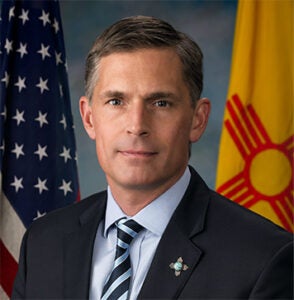
Sen. John Barrasso (R-Wyo.) is calling for more transparency and oversight by the Department of Energy on uranium transfers to the metal commodities firm Traxys that are used to fund cleanup work at the Portsmouth site after the recent appointment of former Deputy Energy Secretary Dan Poneman to the Traxys Board. Barrasso called Poneman’s appointment “deeply troubling” in an April 23 letter to Secretary of Energy Ernest Moniz. Since 2011, DOE has provided roughly $900 million in uranium to Fluor-B&W Portsmouth, the D&D contractor at the Portsmouth site, to fund cleanup activities, and that material was then sold exclusively to Traxys, making it a top uranium supplier, according to Barrasso’s letter. “It is therefore deeply troubling that Traxys appointed to its Board Mr. Poneman who led DOE as it initiated the uranium transfers which have financially benefitted Traxys. For that reason, DOE must not turn a blind eye to the terms under which Traxys acquires this uranium,” the letter states.
DOE does not review the contracts between FBP and Traxys, DOE Office of Nuclear Energy Principal Deputy Assistant Secretary John Kotek said last week at a House Oversight and Government Reform subcommittee hearing. But Barrasso is calling for more transparency in the process. “DOE should condition all future transfers of uranium to Fluor-B&W on the requirement that Fluor-B&W publicly disclose its contract(s) with Traxys. Only by fully disclosing the contract(s) will DOE be able to show that it puts the interests of the American public ahead of all others,” the letter states. DOE, Traxys and FBP did not respond to request for comment this week.
The Traxys concerns come amid a host of concerns with positions Poneman has taken since leaving DOE last October. Poneman has also taken over as CEO of the uranium enrichment firm Centrus Energy Corp., formerly known as USEC, which received substantial DOE support during Poneman’s tenure. That has prompted questions from Barrasso and Sen. Dianne Feinstein (D-Calif.), as well as an ongoing probe by the House Government and Oversight Reform Committee led by Rep. Cynthia Lummis (R-Wyo.), who chairs one of the committee’s sub-panels.
Industry Takes Issue With DOE Revisions to Independent Market Report
In another move regarding DOE’s uranium transfers, the industry group Uranium Producers of America is raising concern after recently released documents show that the Department requested revisions to an independent report on the potential impact of DOE’s uranium transfers on the domestic uranium market. The Department has commissioned Energy Resources International to produce several reports in recent years on the topic. While previous reports found that DOE’s proposed transfers would have “no adverse material impact” on the industry, in a draft 2014 report ERI said it could “no longer make such a definitive statement” after DOE increased its transfers. DOE said in comments to the draft report that only the Secretary of Energy can make a determination on the material impact, which was the wording used in the final version of ERI’s analysis, according to documents released last week by the House Oversight and Government Reform Subcommittee on the Interior.
UPA is taking issue with the changes proposed by DOE. “I’m shocked but not surprised DOE pushed to change an independent analysis that didn’t support the Department’s conclusions. DOE relied on ERI’s expertise only as long as it suited its purpose,” former UPA President Scott Melbye or the Uranium Energy Corporation said in a release. “We welcome the opportunity to work with the Department on a management plant to limit the impact of transfers on our industry. In 2008, we came to the table to work out a consensus-based management plan that put an annual cap on transfers. I’ve talked to Secretary Moniz about bringing the stakeholders back to the table, and we are hopeful DOE will take that step before it finalizes the next Determination.”