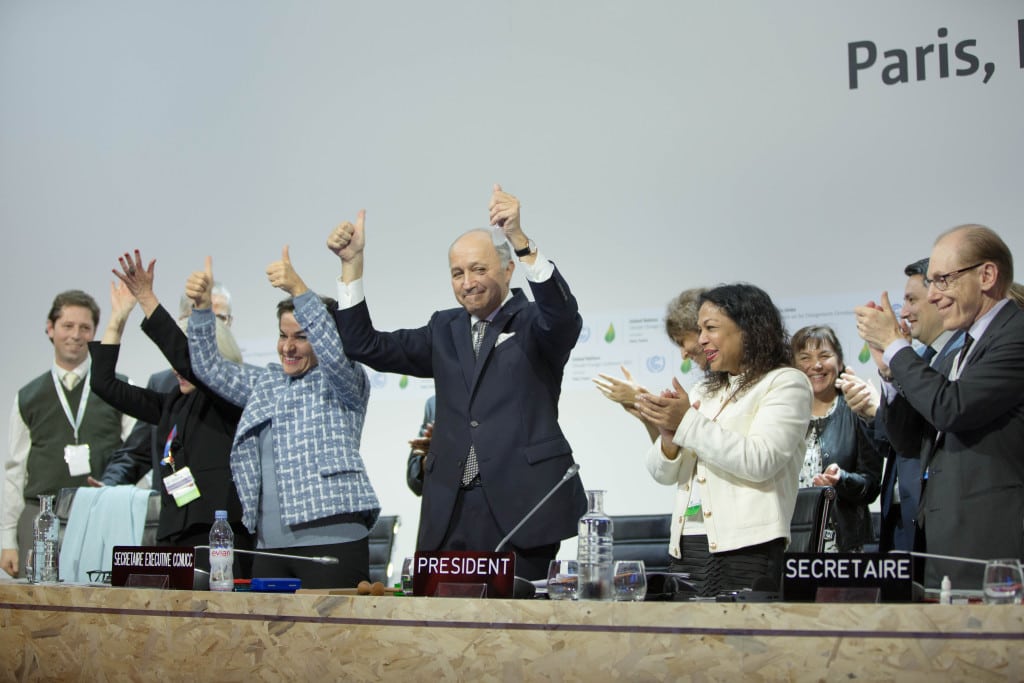
Subnational Entities Key to Closing Gap Between U.S. Policy and Pledge
-
Budget & Policy
Rep. Conaway Introduces Bill to Extend Carbon Storage Tax Credit
Rep. Mike Conaway (R-Texas) on Thursday introduced legislation making permanent the section 45Q tax credit for carbon dioxide sequestration. As written, the credit would expire as soon as the currently authorized 75 million tons of CO2 was stored. Roughly half of those credits have already been claimed. Conaway’s bill would remove the 75-million ton cap. […]
-
International
IEA Urges Canada to Continue CCS Development
As home to two of the world’s first operating large-scale carbon capture and storage demonstration projects, Canada has earned a pat on the back, but the country should not rest on its laurels, the International Energy Agency said in its 2015 review of Canada’s energy policy. The agency recommended that Canada “maintain and expand the […]
-
Innovation & Infrastructure
Southern Co. At Helm of Carbon Capture Test Center Network
Southern Co., developer of the Kemper County Energy Facility carbon capture and storage project and manager of the National Carbon Capture Center, has taken over leadership of the Carbon Capture International Test Center Network (ITCN), the company announced Wednesday. Through the network, carbon capture test facilities share knowledge in an effort to accelerate commercial deployment […]
-
Budget & Policy
Report Warns States to Avoid Historic Approach to Mass-Based Trading
States that meet the Environmental Protection Agency’s with a mass-based market-based system should avoid doing so under a historical allocation approach, according to a report issued Thursday by Advanced Energy Economy. Under such an approach emissions allowances are awarded to affected sources on the basis of historical generation. A historical allocation system would cause affected […]