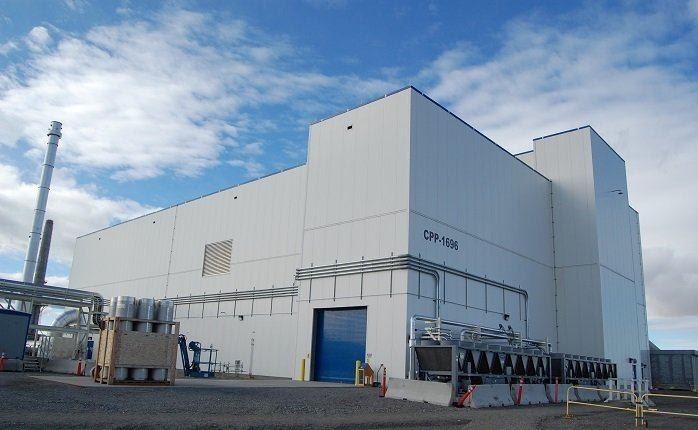
The Integrated Waste Treatment Unit (IWTU) at the Idaho National Laboratory has solidified about 400,000 gallons of radioactive sodium-bearing waste, the Department of Energy said Tuesday.
During the current processing run, crews have used the IWTU to treat 130,000 gallons of the liquid waste held at Idaho National Laboratory, DOE’s Office of Environmental Management (EM) said in a June 30 news release.
The IWTU, built to solidify about 900,000 gallons of high-level sodium-bearing waste at the lab into a more stable, granular form, started radiological operations in 2023, EM said in the press release. The liquid waste is held in underground tanks at the Idaho National Laboratory.
The state of Idaho’s Site Treatment Plan for the lab required the IWTU facility to process 15% of the waste annually based on a three-year rolling average, DOE said. The 400,000- gallon figure would translate to around 44% of the 900,000 -gallon total. At the end of March, the total stood at 312,000 gallons.
IWTU operators have increased the sodium bearing waste processing rate “from 1.0 gallon per minute to 1.4 gallons per minute over the past month,” according to a May 14 report from the Defense Nuclear Facilities Safety Board.
The treated granular waste is put into stainless steel canisters and stored onsite pending eventual disposal. The work is done by the DOE Idaho Cleanup Project’s Amentum-led contractor, the Idaho Environmental Coalition.
The current situation reflects significant progress for the $1.4-billion IWTU facility that faced construction delays and cost increases over the years, the Government Accountability Office reported in 2024.
The IWTU facility was initially built between 2007 and 2012 but never worked as envisioned. It was re-engineered and modified over the years before finally starting hot operations in 2023. The unit uses coal-powered steam reforming technology to solidify the liquid waste. A video on the facility is available online.
“Everyone associated with IWTU has consistently demonstrated the dedication and expertise that enables them to achieve and surpass important milestones,” said Nick Balsmeier, DOE’s acting manager for the Idaho cleanup. “Their efforts are making a significant impact and bring us one step closer to completing the mission.”