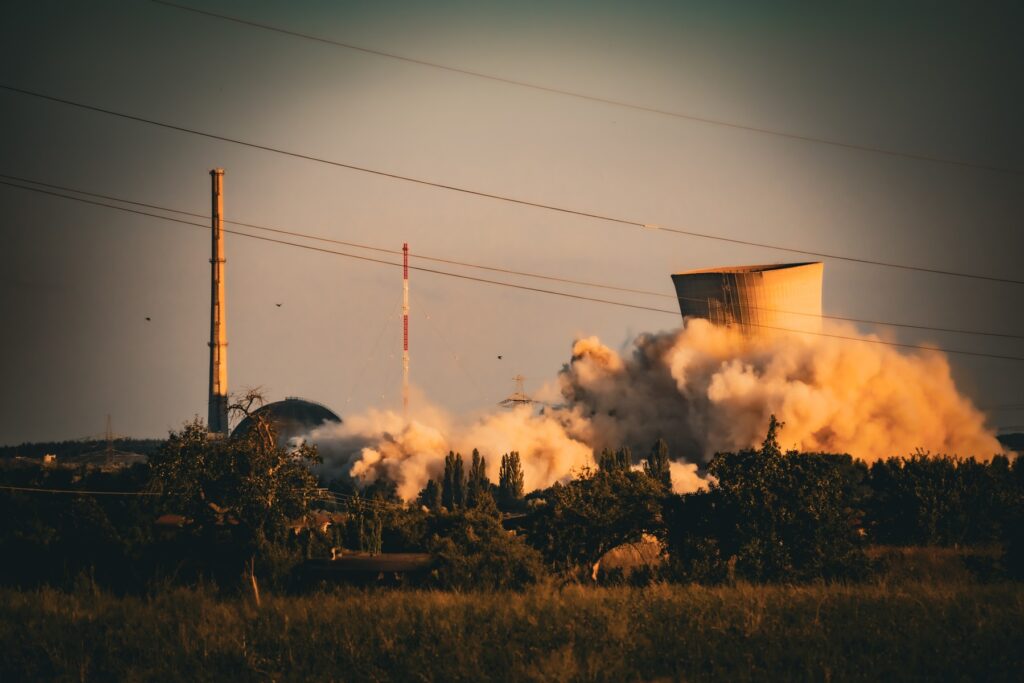
The San Onofre Nuclear Generating Station (SONGS) is on a path to complete its major decommissioning work by the end of 2028 and could reach final disposal in the near future, according to a recent report.
Rep. Mike Levin’s (D-Calif.) office released the 2026 SONGS report late October, touting the progress the shuttered plant has made decommissioning over the past several years. Since the inception of the SONGS Task Force in 2019, all spent nuclear fuel has been moved from wet pools to dry storage and more than 700 million pounds of material have been transported from the site, according to the report.
Additionally, 52 of the SONGS site’s 62 structures have been demolished, with both of the site’s containment domes to come down by the end of 2027.
“When I convened the SONGS Task Force in 2019, there was no clear path to move nuclear waste off our coastline,” Levin said in an Oct. 28 press statement. “Today, we can point to real progress at San Onofre and growing momentum at the federal level.”
Levin continued, “But more than 1,600 tons of spent nuclear fuel still sit just 100 feet from the Pacific Ocean. We cannot mistake progress for a permanent solution. I will keep working across party lines to secure the funding, reforms, and safe storage and disposal options needed to finally get this waste off our coast.”
While much of the decommissioning work is moving forward at the site, Levin is bullish on foreseeing a possible road to final disposal: the Department of Energy’s Nuclear Lifecycle Innovation Campus.
Levin sees the nuclear campus program as a means to potentially dispose of the waste that currently sits at SONGS, which is located near San Diego. According to the report, in order for the campuses to achieve its purpose, Congress “must act to modernize our nuclear waste laws in order to allow for the successful siting of a repository through a collaborative process.”
Other elected officials and DOE officials have made similar talking points of amending the Nuclear Waste Policy Act (NWPA). Amendments from 1987 to the NWPA legally made Yucca Mountain in Nevada the designated repository for the nation’s spent fuel. During the Barack Obama administration, plans to build a repository at Yucca were canceled.
Since then, DOE, the agency responsible for the final disposal of waste, has been sued for failing to meet its legal obligations of disposing of the waste. Officials have said removing the exclusivity of Yucca as the sole repository would open the door to multiple repositories.
DOE’s nuclear campus program is President Donald Trump’s take on the collaborative siting process to close the backend of the fuel cycle and disposal of the nation’s nuclear waste. In July, DOE announced five states: Idaho, Louisiana, Oklahoma, Tennessee and Utah, to be participants in the program and have signed memorandums of understanding to advance negotiations.
As of Nov. 3, no word has been announced about which one or multiple states will be selected as host states. The campus program also considers reprocessing some of the waste as nuclear fuel to supply domestic reactors.
According to the report, technical research has demonstrated waste from SONGS can be reprocessed, but it would be up to the states and communities interested to pursue the venture. Regardless of if the district reprocesses or not, permanent disposal would be a priority, the report said.