Shipments Halted as DOE Examines Potential Reactions In LANL Drums
Kenneth Fletcher
WC Monitor
5/16/2014
With shipments suspended for the past two weeks, it could soon be impossible to meet a high-profile June 30 commitment to New Mexico to remove aboveground transuranic waste from Los Alamos National Laboratory. The campaign has been the top priority for the Department of Energy’s cleanup program for the last two years. But shipments have been on hold since the week of May 2, when the Department began examining whether nitrate salts in some LANL drums led to a reaction that caused the Feb. 14 radiation release at the Waste Isolation Pilot Plant. Meeting the deadline is “still possible,” New Mexico Environment Department Secretary Ryan Flynn told WC Monitor this week. “But if they are not shipping by the end of the month, then they won’t be able to meet the deadline.”
After WIPP shut down three months ago due to the radiation release, LANL began shipping the waste to for temporary storage at Waste Control Specialists in order to meet a commitment to remove 3,706 cubic meters of transuranic waste by June 30. DOE said at the end of April just before the halting shipments that about 70 shipments remained in the LANL campaign, which was sending a maximum of 10 shipments per week to WCS. That means that about seven weeks of shipments are left at those rates, while only about six weeks remain until June 30. Meanwhile, it’s unclear how long it will take DOE to complete analyses to determine whether material in some of the LANL drums is at risk of causing an additional radiation release.
The June 30 deadline comes from a framework agreement developed in the wake of the 2011 Las Conchas wildfire, which came within miles of where transuranic waste is stored at Los Alamos. In early 2012, the Department and New Mexico announced the creation of a new framework agreement setting up the “3,706 Project”—a move that came as the Department also officially acknowledged that it would be unable to complete the overall cleanup of Los Alamos by 2015 as required in a Consent Order reached with the state. The campaign has overcome a number of hurdles including funding challenges, the extended government shutdown last fall and the suspension of operations at WIPP.
Transporting Waste Now Not an Acceptable Risk
The state took a hard stance on the deadline following the WIPP shutdown, stating that the removal effort should meet the deadline “come hell or high water." DOE and WIPP contractor Nuclear Waste Partnership subsequently worked out a deal to stage the waste at WCS while the repository is down. But given the potential safety risk discovered with the LANL drums, Flynn said that a pause in shipments was prudent. “But in light of the nitrate salt theory, we absolutely agreed that we need to address immediate potential risks,” he said. “We had no problem with DOE determining that we need to isolate that waste stream. At this point we need to assess whether that theory is viable. While we are still committed to completing removal as quickly as possible, transporting the waste right now is not a risk that I think is acceptable.”
‘We Haven’t Moved the June 30 Deadline’
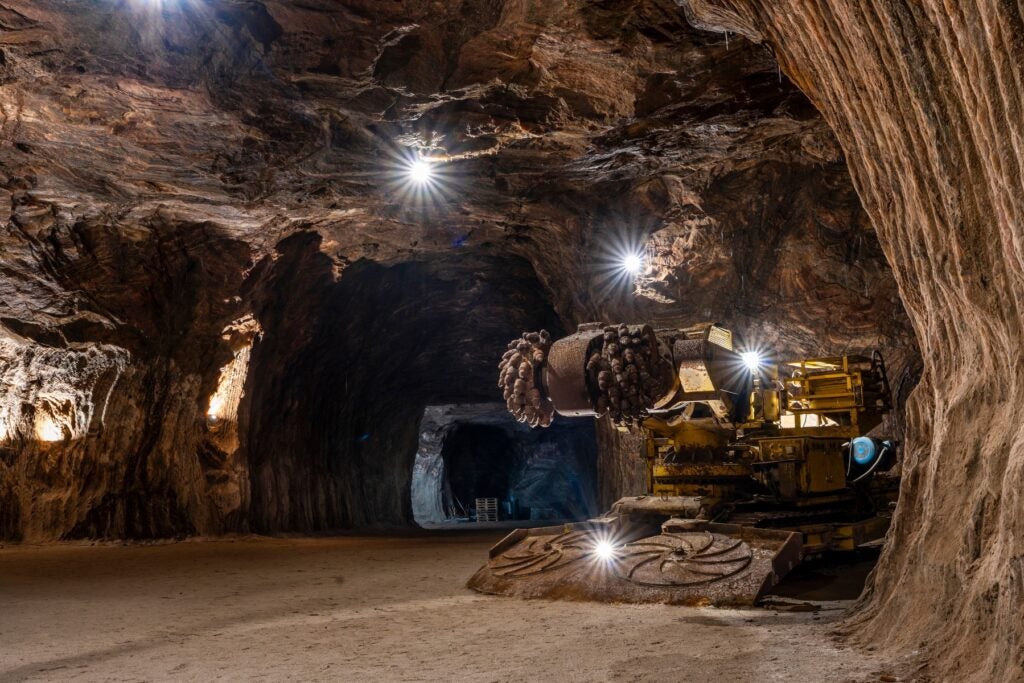
Wildfire season in New Mexico is once again approaching, Flynn noted. “We are very committed to getting all of the TRU waste out of Los Alamos as quickly as possible. We haven’t moved the June 30 deadline,” he said, adding later: “I don’t want to say that we are backing away from the deadline, but my responsibility is protect the public. It would be irresponsible to potentially expose the public to another risk from a reaction in those nitrate drums.” However, it is also “a major risk” to continue storing the waste aboveground at Los Alamos or WCS. “The fortunate thing is that incident occurred 2,000 feet underground and when no workers were in the underground. … This is why we store the waste down there,” he said, noting that it would have been an even worse scenario if a release occurred while a drum was being transported.
DOE this week did not give an update on the 3,706 campaign. When asked for comment on the status of the campaign, a DOE spokesman provided the following statement: “As part of the ongoing efforts to identify the cause of the February 14 event at the Waste Isolation Pilot Plant, we are evaluating all possible causes including the waste packages themselves. All possible scenarios will be thoroughly investigated until the cause of the event has been determined.”