RadWaste Monitor Vol. 9 No. 15
Visit Archives | Return to Issue
PDF
RadWaste & Materials Monitor
Article 1 of 8
April 08, 2016

Missouri Still Needs More Data on West Lake Samples

By Karl Herchenroeder

It remains unclear if there are human health concerns associated with radioactive material the Missouri Department of Natural Resources has identified on private property near the West Lake Landfill.

In its final report on the matter, issued April 1, the department said additional investigation is needed on at least two soil samples that recorded radioactivity readings about 20 to 30 percent higher than other readings in the same area. This is essentially the same conclusion the department drew in an interim report issued in January. The samples, which were sent to the Eberline Services laboratory after January’s field test, were tested for thorium, radium, uranium, and lead-210.

“Due to the discriminate and limited nature of investigation activities associated with this report, it would be inappropriate to use these results by themselves to make definitive conclusions regarding the absence, extent of presence, or potential health risk of radioactive contamination found at investigated sites,” Department of Natural Resources spokesman Tom Bastian said by email Thursday.

One of the samples was discovered immediately northwest of and adjacent to Area 2 of the West Lake Landfill, while the other was located on or immediately adjacent to restricted private property to the north, according to the department report.

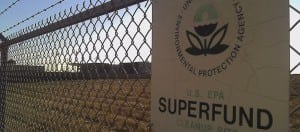
The landfill, which contains waste from the former uranium production facility at Mallinckrodt Chemical Works in St. Louis, has been the subject of criticism from Missouri lawmakers and residents. Last week, Missouri Attorney General Chris Koster lambasted the Environmental Protection Agency, saying it has never fully understood the extent of radioactive contamination at the site. The U.S. Senate in February passed legislation that would transfer remediation authority over the site to the Army Corps of Engineers’ Formerly Utilized Sites Remedial Action Program, while a companion bill has been introduced in the House.

Ed Smith, policy director for the Missouri Coalition for the Environment, said over the phone Tuesday that his group agrees with the Department of Natural Resources that further testing is needed. Still, he said there’s concern that there could be further off-site contamination and would like to see additional testing of material, particularly in the North Quarry of the adjacent Bridgeton Landfill.

“This site is like trying to find chocolate chips in cookie dough,” Smith said. “You can test a few places and not hit a chocolate chip, but that doesn’t mean that you’ve found all the chocolate chips, so we would like to see, as much as possible, grid testing to find the extent of the radioactivity.”

In an email last week, EPA spokesman Ben Washburn defended the agency, saying it has reviewed historical information and analytical data reports, and developed a conceptual site model to determine a proper sampling and analytical regimen for the West Lake site.

“EPA has extensively tested, and performed a variety of investigations, in the landfill complex that include locations in North Quarry of the Bridgeton Landfill,” Washburn wrote. “These investigations include but are not limited to the Comprehensive Phase I report and EPA’s ASPECT overflight of the entire complex.”

Total radionuclide activity in one of the samples in question was “notably more elevated compared to all other soil samples analyzed during the investigation,” according to the Department of Natural Resources report. Those readings exceeded unrestricted levels for thorium-230 and thorium-232, while more than 65 percent of the total activity in the sample was associated with the thorium-230 isotope.

The Missouri report says the other sample taken from private property showed thorium and radium activity near EPA unrestricted use levels, while gamma results showed readings higher than in all other areas surveyed. This sample, according to the report, contained red brick material, which may have been the source of the radioactivity. However, the report says the red brick might have been demolition debris originally located within the West Lake Landfill.

“Additional investigation may be warranted,” the report states, without specifying what the work will entail.

The department said it has notified EPA and “any affected private property owners” of the findings.

Also last week, EPA released a report showing that waste material at the West Lake Landfill is located closer than previously thought to an underground fire at the Bridgeton Landfill. While the footprint of radioactive impacted material at West Lake has been revised, the agency said in the report that health risks have not increased. EPA is currently working through plans to build an isolation barrier between the material and fire.

Comments are closed.