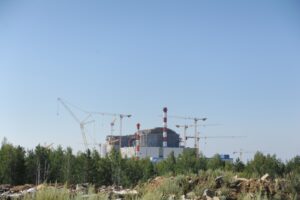
SANTA FE, N.M — State regulators and Department of Energy managers last week presented competing views on how to remedy a decades-old hexavalent chromium plume beneath and beyond the Los Alamos National Laboratory during a New Mexico Environment Department public meeting on ongoing efforts.
The plume, linked to old power plant operations at Los Alamos and first identified in the early 2000s, has migrated beyond lab boundaries onto Pueblo de San Ildefonso land, according to state officials. NMED said the meeting was intended to provide updates on monitoring data, interim cleanup measures and the status of its investigation.
The DOE’s Environmental Management Los Alamos Field Office said June 25 it supports restarting portions of an interim treatment system following a November 2025 shutdown. The feds argue injection wells help slow plume migration by forming a hydraulic barrier. DOE also said shutdowns ordered by the state have been followed by increases in contaminant concentrations in monitoring wells.
EM-LA and its legacy cleanup contractor, Newport News Nuclear BWXT-Los Alamos (N3B), said they reengaged subject matter experts from the December 2024 independent technical review, a panel of 15 specialists convened by EM-LA and NMED, to evaluate updated data and optimize the interim measures system.
One-time Environmental Management head Inés Triay, now with Florida International University, and Matthew Tonkin of S.S. Papadopulos & Associates contend NMED’s push to ‘land apply’ treated water — spraying it on the ground or into canyons — squanders a scarce groundwater resource while officials study long‑term disposal options.
State officials said monitoring well data show the plume is not contained on lab property, undercutting the primary goal of the interim measure. NMED pointed to rising chromium levels in a monitoring well located in the direction of groundwater flow. The state says the data suggest injection operations may have contributed to plume migration farther east and south. By contrast, DOE and its contractor cited falling concentrations at another monitoring point near the southern edge of the plume to argue that the current system is helping to contain.
“When we drill these wells, our conceptual site model seems to pivot more often than we would like,” said Caitlyn Martinez, water resources expert at the New Mexico Environment Department.