Publication Notice

GHG Daily will not be published on Monday in observance of Martin Luther King Jr. Day. Look for the next edition in your inbox on Tuesday, Jan. 19.

More on This Topic


Huck becomes NNSA Savannah River field office manager

Betty Huck has taken over as manager of the National Nuclear Security Administration’s Savannah River Field Office, overseeing more than $2.9 billion in annual contracts at the South Carolina site, according to a Nov. 2 press release.

Huck succeeds Michael Mikolanis as field office manager, after Mikolanis announced in September he was moving back to Los Alamos to lead that lab’s NNSA field office. Mikolanis  succeeds Ted Wyka, who retired in June as the Los Alamos field office manager.

Huck now leads nearly 100 federal employees responsible for overseeing and administering contracts at the Savannah River Site, including its management and operating contract. The contracts support a workforce of more than 5,000 people. She previously served as manager of NNSA’s Nevada Field Office at the Nevada National Security Site. 

In her new role, Huck will oversee the implementation of NNSA’s national security and nonproliferation missions at Savannah River Site, including program management, nuclear operations, security, quality assurance, environmental protection, safety and health, and key mission deliverables.

Huck has held multiple management positions within NNSA, overseeing contract performance and high-hazard and nuclear operations, non-nuclear research and development, strategic partnership programs,among others. 

Before joining NNSA, Huck spent 15 years supporting the Defense Department and the intelligence community in areas including nuclear energy, nuclear propulsion, advanced technologies, counterproliferation and counterterrorism. She holds a bachelor’s degree in nuclear engineering from Rensselaer Polytechnic Institute.

More on This Topic


The U.S. Capitol dome framed by trees with an overlay of paper currency, symbolizing federal budget appropriations.

WIPP batteries earmarked for NIOSH mine fire research

Three large Lithium-Ion batteries from the Department of Energy’s Waste Isolation Pilot Plant (WIPP), near Carlsbad, N.M., are being shipped to Pittsburgh where government researchers will study potential mine-fire risks. DOE and WIPP prime Salado Isolation Mining Contractors have reached an Inter-Agency Agreement with the National Institute of Occupational Safety and Health (NIOSH). The batteries […]


ECA anticipates likely Democratic chairs in next Congress

The Energy Communities Alliance (ECA) Wednesday gave its rundown on likely key committee leadership in the House and Senate when the Democratic Party majority takes the reins of Congress in January.

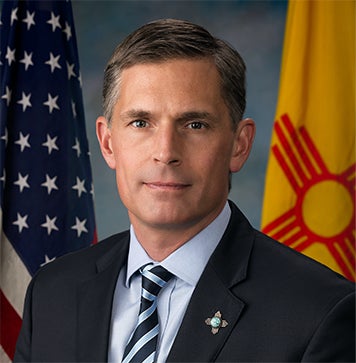
The Senate Committee on Energy and Natural Resources, which oversees Department of Energy programs and development on public lands is apt to be led by Sen. Martin Heinrich (D-N.M.), ECA said in an emailed summary.

The Senate Armed Services Committee will likely be chaired by Sen. Jack Reed (D-R.I.), ECA said. Meanwhile look for House Armed Services to be chaired by Rep. Adam Smith (D-Wash.).

The Senate Appropriations Committee could be chaired by Sen. Patty Murray (D-Wash.), ECA said. House Appropriations could be led by Rep. Rosa DeLauro (D-Conn.). The House Energy & Water subcommittee might be chaired by Rep. Marcy Kaptur (D-Ohio).

Senate Committee on Environment and Public Works, which oversees the Environmental Protection Agency and other programs, would likely be chaired by Sen. Sheldon Whitehouse (D-R.I.).

In This Issue

More on This Topic


Centrus reports mixed results in third quarter as HALEU market begins to take shape

Bethesda, Md.-based uranium broker Centrus Energy reported mixed results in its earnings for the third quarter, seeing a gain in its quarterly income, but a decrease in net revenue.

Net income for the third quarter ended Sept. 30 was $31.6 million, or about $1.53 a share, up from $3.9 million, or $0.21 a share, in the year-ago quarter. Centrus said in its Wednesday earnings report the near $28 million increase was driven by “a $46.4 million gain recognized from the fair value adjustment of warrant liabilities during the current period and an increase of $4.0 million in investment income.”

Quarterly revenue, on the other hand, was approximately $55.5 million, a drop from $74.9 million a year ago. Much of the revenue decrease came from Centrus’ low-enriched uranium (LEU) segment.

The company’s LEU segment was $31.8 million, a decrease from $44.8 million in the year-ago quarter. This was attributed to a drop in the volume of uranium sold. However, Centrus’ separative work units – or SWU – revenue increased to $14.1 million in this year’s quarter over last year’s quarter of $10.7 million.

Centrus’ other segment of technical solutions, which includes its high-assay low-enriched uranium (HALEU) work for the Department of Energy and other technical services, took a hit. The technical solutions segment was $23.7 million, down from $30.1 million in the year-ago quarter.

During the investor call held on Thursday morning, Centrus CEO Amir Vexler said the market demand for HALEU is growing. Much of Centrus’ current backlog and work is rooted in LEU, Vexler said, but the company has signed a handful of HALEU contracts with advanced reactor companies, such as Radiant Nuclear and Antares Nuclear.

“This market’s demand represents an incremental growth opportunity that continues to mature,” Vexler said during the call. “We have positioned ourselves to capitalize on this potential market, if and when it matures, to provide ourselves with further optionality. This optionality includes our flexibility to use plant HALEU capacity for various assays of LEU and LEU+.”

HALEU’s growing market demand comes as Centrus is now using its 16-centrifuge cascades to enrich HALEU for the commercial market, making it the first U.S.-owned commercial enricher since the gaseous diffusion days, Vexler said. Centrus has been contracted by DOE to build a demonstration HALEU program for several years.

Vexler touted the demonstration program as successful so far and is in discussions with DOE about “how to amend [it] and how to make a more wholesome agreement where this continues to serve the market.”

Vexler also outlined how the company is trying to meet national security demands and works with DOE’s National Nuclear Security Administration (NNSA) to do so. An Aug. 20 Government Accountability Office (GAO) report found that NNSA is facing a gap in $140 billion plans to build out more uranium enrichment capacity.

Vexler said, as of last week, Centrus’ supply chain is unobligated and has proven technology to meet the national security priorities. In November 2025, NNSA issued Centrus a sole source contract for the production of LEU for certain national security missions, Vexler said.

Vexler added that its new centrifuges are unobligated due to these demands and the company is further working to configure its supply chain to meet commercial and national security needs.

While the third quarter ended on Sept. 30, in October, Centrus acquired a manufacturing supplier, Westerman Holdings, and shipped its first new centrifuge up to its Piketon, Ohio uranium enrichment as a part of the facility’s multibillion expansion project.

More on This Topic


ECA anticipates likely Democratic chairs in next Congress

The Energy Communities Alliance (ECA) Wednesday gave its rundown on likely key committee leadership in the House and Senate when the Democratic Party majority takes the reins of Congress in January.

The Senate Committee on Energy and Natural Resources, which oversees Department of Energy programs and development on public lands is apt to be led by Sen. Martin Heinrich (D-N.M.), ECA said in an emailed summary.

The Senate Armed Services Committee will likely be chaired by Sen. Jack Reed (D-R.I.), ECA said. Meanwhile look for House Armed Services to be chaired by Rep. Adam Smith (D-Wash.).

The Senate Appropriations Committee could be chaired by Sen. Patty Murray (D-Wash.), ECA said. House Appropriations could be led by Rep. Rosa DeLauro (D-Conn.). The House Energy & Water subcommittee might be chaired by Rep. Marcy Kaptur (D-Ohio).

Senate Committee on Environment and Public Works, which oversees the Environmental Protection Agency and other programs, would likely be chaired by Sen. Sheldon Whitehouse (D-R.I.).

In This Issue

Wrap Up: GAO studies smaller NNSA staff; NRC advances EIS for Paducah enrichment; WIPP public meeting set; obituary; much more

The National Nuclear Security Administration’s (NNSA) federal workforce fell nearly 12% as the agency’s workload reached its highest level since the Cold War, according to a new Government Accountability Office (GAO) report.

NNSA’s federal workforce declined by 236 employees, from 1,991 in the first quarter of fiscal 2025 to 1,755 in the second quarter of fiscal 2026, GAO said in the Oct. 15 report. The reduction came as the agency oversees a roughly $200 billion, two-decade effort to modernize the nation’s nuclear weapons and related infrastructure.

The workforce reduction followed presidential directives issued in early 2025, which led NNSA to halt workforce planning and curtail hiring, according to GAO. A government-wide hiring freeze ran from the second quarter of fiscal 2025 through the first quarter of fiscal 2026, although national security personnel were exempt and NNSA hired 35 federal employees during that period.

The Nuclear Regulatory Commission issued the final environmental impact statement for Global Laser Enrichment’s (GLE) proposed laser enrichment facility located near the Department of Energy’s Paducah Site in Kentucky.

According to GLE’s Oct. 23 press release, NRC staff recommended issuing a license to construct and operate the facility. This issuance comes months after NRC published GLE’s draft environmental impact statement in April.

The proposed Paducah Laser Enrichment Facility, if constructed, would re-enrich depleted uranium tails from DOE’s legacy gaseous diffusion plant at Paducah. GLE said the re-enriched uranium tails will provide a new source of domestic uranium, conversion and enrichment production.

Berkeley, Calif.-based Deep Fission and Kansas’ Great Plains Development Authority have entered into a 25-year master energy purchase agreement on Oct. 20 that converts the company’s December 2025 letter of intent into a definitive agreement for a commercial project in Kansas. 

Under the agreement, if Deep Fission’s project reaches an initial goal of 150 megawatts of electricity for commercial operation by September 30, 2028, then the agreement could allow for the company to build up to 2,000 megawatts by 2031, subject to an additional energy demand, according to the press release. The Great Plains Development Authority will purchase electricity  from Deep Fission’s project. 

In December 2025, Deep Fission and the Great Plains Development Authority signed an agreement to authorize the reactor company to develop its test reactor in Parsons, Kan. under the Department of Energy’s reactor pilot program. 

Parsons Corp. Chief Financial Officer Matt Ofilos will resign Nov. 6 to pursue another professional opportunity, with former CFO George Ball returning on an interim basis as the company searches for a permanent successor.

Ofilos’ resignation is not related to any disagreement with Parsons over the company’s operations, policies or practices, the company said Oct. 28.

The Chantilly, Va.-based defense and technology contractor’s Board of Directors appointed Ball, a current board member and former Parsons CFO, to serve as interim CFO effective Nov. 6.

The Department of Energy’s Waste Isolation Pilot Plant (WIPP) near Carlsbad, N.M., will hold its next public meeting on Wednesday Nov. 4.

The New Mexico Environment Department has proposed modifying WIPP’s state operating permit for the second time in four years. The state and DOE have been in talks about the issue.

WIPP, managed for DOE, by Bechtel-led Salado Isolation Mining Contractors, is scheduled for 3 p.m. Mountain Time. The session will originate from the Pecos River Village Conference Center on Muscatel Avenue in Carlsbad. A link for virtual registration is available online. WIPP is the nation’s only disposal site for defense-related transuranic waste.

The Department of Energy’s prime contractor for the Waste Isolation Pilot Plant (WIPP) near Carlsbad, N.M., has hired Patrick Hefflinger as its new head of communications.

Bechtel-led Salado Isolation Mining Contractors announced Hefflinger’s appointment in a Monday news release.

Hefflinger, who has more than 15 years in the field, comes to WIPP after being a group vice president at the Ruder Finn public relations agency. He has also worked as a public affairs specialist for DOE’s Office of Environmental Management.

Finnish spent fuel management company Posiva Oy was granted an operating license on Oct. 22 for the encapsulation and its final disposal facility, Onkalo, for spent nuclear fuel in Olkiluoto, Finland, the company said.

The decision was approved by the government following a favorable safety assessment issued by Finland’s nuclear regulator, the Radiation and Nuclear Safety Authority, in August according to Posiva’s Oct. 22 press release. Posiva is the first company in the world approved to operate a final disposal facility for spent fuel, the company said.

“This is a great and historic day for both Posiva and Finland,” Posiva President and CEO Ilkka Poikolainen said in the release. “In addition to comprehensive expertise, the stability of the society and the predictability of the operational environment were prerequisites for the operating license.”

Obituary

Lupe Neudecker, a former administrator at Los Alamos National Laboratory, died Oct. 8 in Albuquerque, N.M. at age 94, according to an online obituary.

Neudecker volunteered at the Los Alamos Historical Museum, and after she and her husband retired they split time between Los Alamos and Albuquerque.


In This Issue

More on This Topic


Round Up: EnergySec Wright visits Palisades; Elementl Power signs $750 million deal with South Korean companies; Deep Fission, Kansas enter 25-year PPA; NRC looks for noms for its ACMUI

Secretary of Energy Chris Wright visited the Palisades Nuclear Plant in Covert Township, Mich. on Thursday, checking in on the United States’ first restart effort.

Wright was joined by the Department of Energy’s Office of Energy Dominance Financing Director Gregory Beard, Rep. Bill Huizenga (R-Mich.), Department of Agriculture’s Glen Smith and Holtec’s Kris Singh and Fadi Diya, according to Holtec’s press release. The visit comes nearly a week after Holtec recovered the tipped fuel assembly and resumed fuel loading activities.

Aside from the tipped fuel incident that was corrected, the Nuclear Regulatory Commission also issued a “chilled work environment” at the plant, outlining workers feeling discouraged to bring up safety concerns in two of the plant’s departments. Despite the setbacks, Wright said on his X account the Palisades plant will restart before the end of this year. 


Startup company Elementl Power signed a preliminary deal with South Korean investment firm DS Investment Partners to create a development partnership worth up to $750 million, the companies said Monday.

The partnership is aimed to provide a portion of funding needed for up to three of Elementl Power’s projects to meet final investment decisions, assist with regulatory activities and supply chain management, according to Element Power’s press release. The South Korean-led consortium would provide a portion of the funding in exchange for a significant minority ownership stake, Elementl Power said.

Additional financial and strategic investors could join in, as the agreement consists of a letter of intent and term sheet laying out proposed terms at the moment, according to the release. South Korean Samsung C&T Engineering and Construction Group will partake in the consortium as a potential investor.


Berkeley, Calif.-based Deep Fission and Kansas’ Great Plains Development Authority have entered into a 25-year master energy purchase agreement on Oct. 20 that converts the company’s December 2025 letter of intent into a definitive agreement for a commercial project in Kansas. 

Under the agreement, if Deep Fission’s project reaches an initial goal of 150 megawatts of electricity for commercial operation by September 30, 2028, then the agreement could allow for the company to build up to 2,000 megawatts by 2031, subject to an additional energy demand, according to the press release. The Great Plains Development Authority will purchase electricity  from Deep Fission’s project. 

In December 2025, Deep Fission and the Great Plains Development Authority signed an agreement to authorize the reactor company to develop its test reactor in Parsons, Kan. under the Department of Energy’s reactor pilot program. 


The Nuclear Regulatory Commission is seeking to fill two positions on its Advisory Committee on Medical Uses of Isotopes.

According to two Federal Register notices published Tuesday, NRC is calling for nominations for both a practicing interventional radiologist and nuclear pharmacist. The nominations for both of those positions on NRC’s Advisory Committee on Medical Uses of Isotopes are due by Dec. 28. 

Individuals interested in the positions must submit their resume or curriculum vitae and cover letter to NRC’s is Sara Hoenig, who can be reached at Sarah.Hoenig@nrc.gov. The Advisory Committee on Medical Uses of Isotopes, made up of 13 members, advises the NRC on regulating the use of radioactive materials in medical settings. 

In This Issue

More on This Topic


Wrap up: Parsons CFO resigns; NRC issues EIS for laser enrichment facility; Pantex gets CTO and more; Obituary

Parsons Corp. Chief Financial Officer Matt Ofilos will resign Nov. 6 to pursue another professional opportunity, with former CFO George Ball returning on an interim basis as the company searches for a permanent successor.

Ofilos’ resignation is not related to any disagreement with Parsons over the company’s operations, policies or practices, the company said Oct. 28.

The Chantilly, Va.-based defense and technology contractor’s Board of Directors appointed Ball, a current board member and former Parsons CFO, to serve as interim CFO effective Nov. 6.


The Nuclear Regulatory Commission issued the final environmental impact statement for Global Laser Enrichment’s (GLE) proposed laser enrichment facility located near the Department of Energy’s Paducah Site in Kentucky.

According to GLE’s Oct. 23 press release, NRC staff recommended issuing a license to construct and operate the facility. This issuance comes months after NRC published GLE’s draft environmental impact statement in April.

The proposed Paducah Laser Enrichment Facility, if constructed, would re-enrich depleted uranium tails from DOE’s legacy gaseous diffusion plant at Paducah. GLE said the re-enriched uranium tails will provide a new source of domestic uranium, conversion and enrichment production.


PanTeXas Deterrence LLC (PXD), the management and operating contractor for the Pantex Plant, has selected Emily Hunt as its first chief technology officer, creating a new executive role focused on modernization and research.

Hunt will serve as Pantex’s lead scientist and oversee the plant’s long-term technology and innovation strategy, including efforts to expand research and development capabilities supporting the National Nuclear Security Administration’s nuclear security mission.

The newly established position is intended to strengthen Pantex’s technical capabilities as the plant pursues modernization of its infrastructure and production operations, according to the site’s press release Tuesday. The release said the role reflects an increased focus on advancing scientific capabilities and supporting the modernization of the U.S. nuclear production enterprise.


The Department of Energy’s Waste Isolation Pilot Plant (WIPP) near Carlsbad, N.M., will hold its next public meeting on Wednesday Nov. 4.

The New Mexico Environment Department has proposed modifying WIPP’s state operating permit for the second time in four years. The state and DOE have been in talks about the issue.

WIPP, managed for DOE, by Bechtel-led Salado Isolation Mining Contractors, is scheduled for 3 p.m. Mountain Time. The session will originate from the Pecos River Village Conference Center on Muscatel Avenue in Carlsbad. A link for virtual registration is available online. WIPP is the nation’s only disposal site for defense-related transuranic waste.


The Department of Energy’s prime contractor for the Waste Isolation Pilot Plant (WIPP) near Carlsbad, N.M., has hired Patrick Hefflinger as its new head of communications.

Bechtel-led Salado Isolation Mining Contractors announced Hefflinger’s appointment in a Monday news release.

Hefflinger, who has more than 15 years in the field, comes to WIPP after being a group vice president at the Ruder Finn public relations agency. He has also worked as a public affairs specialist for DOE’s Office of Environmental Management. WIPP is the nation’s only disposal site for defense-related transuranic waste.


Obituary

Lupe Neudecker, a former administrator at Los Alamos National Laboratory, died Oct. 8 in Albuquerque, N.M. at age 94, according to an online obituary.

Neudecker volunteered at the Los Alamos Historical Museum, and after she and her husband retired they split time between Los Alamos and Albuquerque.

In This Issue

More on This Topic


Walsh: New Mexico, WIPP deal getting closer

KNOXVILLE, TENN. — The Department of Energy’s Assistant Secretary for Environmental Management (EM) Tim Walsh said here Wednesday the nuclear cleanup branch is drawing closer to a deal with New Mexico over state permit modifications for the Waste Isolation Pilot Plant (WIPP) near Carlsbad, N.M.

“So, we completed our mediation and it’s just with our general counsel,” Walsh said in response to a question at the Energy Technology and Environmental Business Association (ETEBA) conference. ‘I think there is actually a response back from our general counsel today back to New Mexico on a few questions surrounding appropriations. But hopefully we can get that wrapped up here in the next couple of weeks.”

The New Mexico Environment Department has been pressing WIPP to increase in-state shipments of transuranic waste from the Los Alamos National Laboratory.

During the question-and-answer session following his presentation, Walsh was also asked by Exchange Monitor about changing the name of the Office of Environmental Management to the Office of Nuclear Restoration and Revitalization by the end of the year.

The new name, approved internally at DOE, would “better capture” EM’s dual role of remediating contaminated land and returning it to beneficial use.” Walsh said.

“We are just going to roll it out the same time we roll out a realignment of our organization,” Walsh said. That should “hopefully” happen by the end of the year.

In This Issue

More on This Topic


DOE provides up to $5 billion in a conditional loan to Constellation for power plant uprates

Constellation Energy was issued a conditional loan by the Department of Energy of up to $5 billion dollars to increase its operating reactor fleet capacity by 1,100 megawatts.

Secretary of Energy Chris Wright and DOE’s Energy Dominance Financing Director Gregory Beard made the announcement at Constellation’s Byron Clean Energy Center in Ogle County, Ill. Tuesday afternoon.

Constellation intends to use these investments to provide uprates at its Braidwood, Byron, Clinton, Dresden, LaSalle and Quad Cities nuclear plants in Illinois. The company will also increase the generating capacities at the Calvert Cliffs plant in Maryland and Limerick plant in Pennsylvania.

Constellation said in its press release that DOE’s commitment builds on the private funding supporting the company’s uprate plans. The company has signed several deals with Google, Amazon and Meta to invest over $7 billion dollars to add over 1,100 megawatts to its current fleet through power output increases.

Constellation owns and operates the largest domestic nuclear fleet in 21 reactors across 12 sites.

“This is how America wins the race for energy abundance – by pairing private-sector demand and investment with smart federal financing to unlock more power from the nuclear plants we already have,” Joe Dominguez, Constellation chairman, president and CEO, said in the release. “Our agreements with Google and Amazon demonstrate how long-term customer commitments can incentivize billions of dollars in investment in new, reliable nuclear capacity.”

With the loan being conditional, Constellation is required to hit several conditions, such as financial, environmental and technical, before entering into a definitive agreement with DOE for the loan. This conditional loan was provided under DOE’s Utility Power Reactor Incremental Scaling Effort program, which was launched in March.

The program is aimed to bring additional power to the grid at existing plants through uprates. Earlier this month, DOE issued a $4.2 billion conditional loan to Vistra Corp to bring new 433 megawatts to the PJM region, which serves parts of 13 states and Washington, D.C.

In This Issue

More on This Topic


NNSA, nuclear cleanup execs among headliners at Knoxville conference

The Department of Energy’s heads of the National Nuclear Security Administration (NNSA) and Office of Environmental Management will headline the Energy Technology and Environmental Business Association (ETEBA) annual Business Opportunities and Technical Conference at the Knoxville Convention Center in Knoxville, Tenn. this week.

The annual conference will feature NNSA administrator Brandon Williams and Office of Environmental Management executive Tim Walsh and his deputy, Joel Bradburne, as keynote speakers.  Much of the event’s agenda will focus on recent trends in the nuclear cleanup and NNSA spaces. 

Chair of the House Appropriations Energy and Water subcommittee, Rep. Chuck Fleischmann (R-Tenn.) will also speak at the conference. 

The event’s opening ceremony is at 6 p.m. Eastern Time Tuesday with Rep. Tim Burchett (R-Tenn.) giving opening remarks. The formal program will commence on Oct. 28 following a keynote address from Walsh and Bradburne at 8:15 a.m. Eastern Time.

A full look at the agenda of the conference is available here.

In This Issue

More on This Topic


Round Up: Kentucky issues reactor pilot program solicitation; General Atomics to lead nuclear waste program; Colton joins DOE NE as senior adviser

Kentucky state’s nuclear energy department issued a request for information (RFI) late last week to gauge interest in its nuclear reactor pilot program.

According to the Oct. 16 RFI, the responses to the solicitation are due by Nov. 6 at 5 p.m. Eastern Time. Responses from utilities, nuclear reactor developers, prospective utility customers and other organizations are welcome to respond to the RFI. Submissions to the RFI should be made to the executive director of the Kentucky Nuclear Energy Development Authority, Sean Schaub, at his email address Sean.Schaub@uky.edu. 

The Kentucky Nuclear Energy Development Authority is in charge of the Nuclear Reactor Site Readiness Pilot Program after the state legislature passed a law, Senate Bill 57, this year to create the program. It is designed to provide funding for eligible nuclear projects with various costs, such as Nuclear Regulatory Commission licenses and permits. Grant applicants cannot receive more than $25 million per project, the Kentucky Nuclear Energy Development Authority said. 


General Atomics is taking the lead on a Department of Energy funded project to lower the cost of large-scale processing of nuclear waste, the company said Wednesday.

General Atomics will work with DOE’s Jefferson Lab and Oak Ridge National Laboratory and Stellant System, according to the company’s press release. It was contracted to develop a prototype radio frequency system using a magnetron combining, a technique that brings together the microwave power output of numerous magnetrons into a singular, high power radio frequency source.

The project is part of a program, Nuclear Energy Waste Transmutation Optimized Now or NEWTON, conducted by DOE’s Advanced Research Projects Agency-Energy. General Atomics said the goal of the project is “to develop a more efficient and affordable way to power the equipment used for transmutation, a process that transforms nuclear waste into forms that are easier to manage.”


Longtime Energy Communities Alliance nuclear policy specialist Kara Colton has joined the Department of Energy’s Office of Nuclear Energy as a senior adviser. 

Colton, who has also worked for the National Governors Association and as a consultant, announced her new federal position this week via her LinkedIn page. 

In This Issue


More on This Topic


Three universities form advanced nuclear workforce consortium

Arizona State University, Purdue University and the University of Tennessee have banded together to create a consortium focused on filling the pipeline for the advanced nuclear workforce. 

The New Nuclear Academic Consortium, announced on Oct. 14, the three public research universities are working on a regional and national effort to build up a new group of nuclear power workers. 

The consortium looks to build on each school’s capabilities in the nuclear energy sector. When it is launched, the consortium plans to invite other universities to join it in the following six to 12 months, according to the University of Tennessee press release. 

It is one of an increasing number of efforts to attract and train new workers for the nuclear sector. For example, both Westinghouse and Bechtel have separately formed regional workforce initiatives with the University of South Carolina to help grow the nuclear workforce.

In April, the Department of Energy awarded nearly $50 million across 10 universities for nuclear energy workforce development as a part of the agency’s Nuclear Reactor Safety Training and Workforce Development Program. 

The consortium idea began at Arizona State University, establishing virtual and technology-enabled academic programs. The school’s main initial contribution is a “suite of three to five undergraduate micro-certificates, launching this year, that will equip mechanical, civil, electrical, materials and systems engineering students with nuclear fluency,” according to the release. 

The University of Tennessee, which has a nuclear engineering program, is near the Department of Energy’s Oak Ridge Site where several advanced development projects are taking place. Purdue University operates the Purdue University Reactor Number One, a research reactor on campus that uses a fully digital safety and control system.

Just like many other domestic energy sectors, the nuclear industry is seeking more workers to meet the needs of increased nuclear power in coming years. 

Additionally, President Donald Trump’s administration seeks to grow the domestic nuclear fleet from nearly 100 gigawatts to 400 gigawatts by 2050. Nuclear industry experts during POWER Magazine’s Experience POWER said to achieve that goal, the industry would need to triple its workforce, which currently stands around 100,000 people. 

In This Issue


More on This Topic


Centrus buys manufacturing company in $116 million transaction

Centrus Energy acquired one of its manufacturing suppliers, Westernman Holdings, in a transaction for nearly $116 million, Centrus said Monday.

The near-$116 million acquisition was made up of a combination of $95 million cash that was on hand and $21 million of equity, Centrus said in its press release. Additionally, Westernman and all its business lines were acquired, and the company will become a subsidiary of Centrus, but Westerman will remain under the same company name. 

The company said the acquisition is expected to be “accretive to adjusted earnings per share in the first year following closing.”

Bremen, Ohio-based Westerman manufactures centrifuge casings and several other centrifuge parts for Centrus. The uranium broker said as a result of the transaction, it will also expand Westernman’s capabilities. Centrus hopes this transaction will help lower its project costs and create more efficiencies with an integrated supply chain.

“Westerman is a highly regarded, best-in-class supplier and fabricator for Centrus, the broader nuclear industry, and a number of other sectors,” Amir Vexler, Centrus president and CEO, said in the release. “Bringing Westerman in-house demonstrates our commitment to securing our supply chain to support our build-out while adding to our capabilities and expanding our customer base.”

This transaction comes as Centrus is actively expanding both its manufacturing capabilities in Oak Ridge, Tenn. and uranium enrichment capacities in Piketon, Ohio near the Department of Energy’s Portsmouth Site. 

In This Issue


More on This Topic


West Virginia drops out of race for DOE’s nuclear campus program

In a short turnaround, West Virginia formally removed itself from consideration for the Department of Energy’s Nuclear Lifecycle Innovation Campus program recently.

The state was selected to be the sixth state on a shortlist for the program on Sept. 8, but by Sept. 30, West Virginia withdrew itself after saying it would not be able to meet the requirements of the hosting agreement. 

The Washington Post reported Monday that Jefferson County, which figured prominently in West Virginia’s nuclear campus plan, was caught off guard by its inclusion in the state nuclear program. The news was previously broken by West Virginia news outlets. 

The West Virginia Office of Energy penned a letter to DOE Sept. 30, informing the department of its withdrawal.

“On behalf of the West Virginia Office of Energy (WVOE), thank you and the U.S. Department of Energy (DOE) for considering West Virginia to host the Nuclear Lifecycle Innovation Campus (NLIC),” the West Virginia state office wrote.

The office continued, “While we are unable to execute the Hosting Agreement and commit fully to its requirements, West Virginia remains fully committed to supporting President Trump and Secretary Wright’s vision for a national nuclear renaissance. Please know that we stand ready and willing to support the DOE, its NLIC initiative and future NLIC recipients.”

According to West Virginia’s memorandum of understanding with DOE, made public by a public records request from West Virginia local news outlet Charleston Gazette-Mail, the state had an interest in bringing advanced nuclear technologies there, such as small modular reactors and nuclear fuel recycling. The state even had interest in interim storage facilities for spent fuel and selected four areas, one in Boone County, two in Jackson County and another in Jefferson, for its proposed campus.

Like Jefferson County officials, Boone County told local news outlet WCHS Eyewitness News they were not made aware of these plans by state officials either.

In a Sept. 27 X post, West Virginia Gov. Patrick Morrissey refuted local news outlets on the state mulling the possibility of managing waste and also accepting and managing out-of-state spent fuel and high-level radioactive waste. Morrisey said the state was pursuing adding nuclear power and manufacturing to its portfolio, but not necessarily long-term or permanent waste management.

“We are pursuing nuclear generation and manufacturing to bring high-paying jobs to West Virginia,” Morrisey said in the social media post. “Our recent application to the U.S. Department of Energy was part of that effort. We want to build on our existing strengths in coal and natural gas to create more jobs and opportunity, stronger communities, and a higher standard of living. But West Virginia will not be a dumping ground for nuclear waste. Period.”

DOE officials have gone on record saying spent fuel management was the essential backbone of the nuclear campuses.

More on This Topic


Virginia SCC staff calls for rejection of NextEra, Dominion proposed merger in current form

NextEra Energy and Dominion Energy’s merger could be jeopardized as the Virginia State Corporation Commission’s staff urge the commission to reject the proposal as it currently stands.

In a Monday 201-page filing, the Virginia State Corporation Commission staff said the proposed merger application fails to prove that the merger would provide adequate service to Virginia customers at just and reasonable rates. The staff additionally said it did not believe the merger commitments would do enough to maintain Dominion Energy Virginia staffing to provide adequate service to Virginia customers.  

“Staff believes the merger commitments and supplemental merger commitments are not sufficient to ensure the corporate separateness of DEV [Dominion Energy Virginia] from NextEra’s other businesses,” according to the document. “Therefore, staff concludes that the proposed merger would expose DEV to additional financial and business risks of NextEra’s unregulated, competitive businesses that could threaten DEV’s ability to provide adequate service to its customers at just and reasonable rates.”

Virginia Gov. Abigail Spanberger (D), who opposes the merger, said in a Monday press release that if the merger is approved, then she would call for a six-year freeze to electricity rates and tripling monthly customer bill credits. However, Spanberger continued to call for the Virginia State Corporation Commission to reject the $67 billion merger, if the proposal remains unchanged.

“As governor, I will continue to advocate aggressively on behalf of Virginians over the coming months, and I remain deeply skeptical that the proposed $67 billion merger, as currently structured, will adequately protect consumers and deliver meaningful public benefits,” Spanberger said in the release. “Without enforceable commitments that meaningfully prioritize ratepayers, lower energy costs, protect Virginia’s utility workforce, and advance Virginia’s energy goals, the State Corporation Commission should reject this merger.”

While Virginia State Corporation Commission staff urges the full commission to reject the current proposal, it recommends changes to the merger that would make it more favorable. It recommended that Dominion Energy Virginia have an independent board of directors post-merger to make local decisions and have the commission require Dominion Energy Virginia to maintain its employee levels in the state for the next 10 years.

NextEra and Dominion announced their proposed merger in May and filed their paperwork with several agencies in July.

In This Issue


More on This Topic


Wrap up: William & Mary deemed AUKUS Center of Excellence; Kiewit expands in Knoxville; GAO recommends DOE role clarification; more

William & Mary is expanding its role in the AUKUS submarine partnership as the university works to build a pipeline of talent and strengthen the allied submarine industrial base. 

The university, designated the U.S. academic home for an AUKUS Center of Excellence, signed a five-year agreement with Adelaide University this summer and received grants to develop the center and support U.S.-U.K. cooperation on defense industrial resilience, according to a university press release. The effort will focus on submarine production, advanced manufacturing, supply-chain resilience and workforce development. 

William & Mary students also worked with the Navy’s Submarine Industrial Base Program and a defense supplier supporting submarine production, gaining experience in efforts to expand allied undersea capabilities.


In another sign of East Tennessee’s growth as a nuclear hub, Kiewit Nuclear Solutions announced Wednesday it is planning a major office expansion in Knoxville.

The expanded office at 1431 CenterPoint Boulevard, Suite 150, will gradually be renovated to accommodate another 300 employees, up from 50 currently, according to Kiewit. It will provide a base for Kiewit to expand its support for various nuclear work, including operations by the Department of Energy, National Nuclear Security Administration (NNSA), and commercial nuclear projects. The existing office space for the company at Knoxville will undergo renovation in phases, Kiewit said in the release.  Kiewit expects to show off the new digs during an open house sometime in the spring of 2027.

DOE’s Oak Ridge Site, home of Oak Ridge National Laboratory and the Y-12 National Security Complex, is roughly 25 miles or a 35-minute car trip from Knoxville. Just a couple of weeks ago, Amentum opened a new office headquarters in Oak Ridge.


The Government Accountability Office (GAO) is recommending Congress consider clarifying the roles of the Department of Energy and its regulators when remediated lands from Cold War and Manhattan Project sites are transferred to local communities.

In a report released this month, GAO also urged DOE to “direct cleanup sites to evaluate cleanup costs and schedule based on multiple potential future land uses as part of its cleanup decisions,” according to the congressional watchdog.

Such an approach could help DOE’s Office of Environmental Management in its work on future land issues, GAO went on to say.


Years after the Department of Energy cancelled the Mixed Oxide (MOX) Fuel Fabrication Facility at the Savannah River Site (SRS) in South Carolina, a company based in France is making ambitious plans for MOX at the nuclear complex.

The original multi-billion-dollar MOX project, meant to convert weapons grade plutonium into mixed-oxide fuel that could be used in commercial reactors, was terminated in 2018.

But in a September appearance before the South Carolina Governor Nuclear bAdvisory Council, Dustin Greenwood, the vice president of operations for Paris-based newcleo, said the company submitted earlier this year to the Nuclear Regulatory Commission initial paperwork for a reactor that could use MOX.

In This Issue

More on This Topic