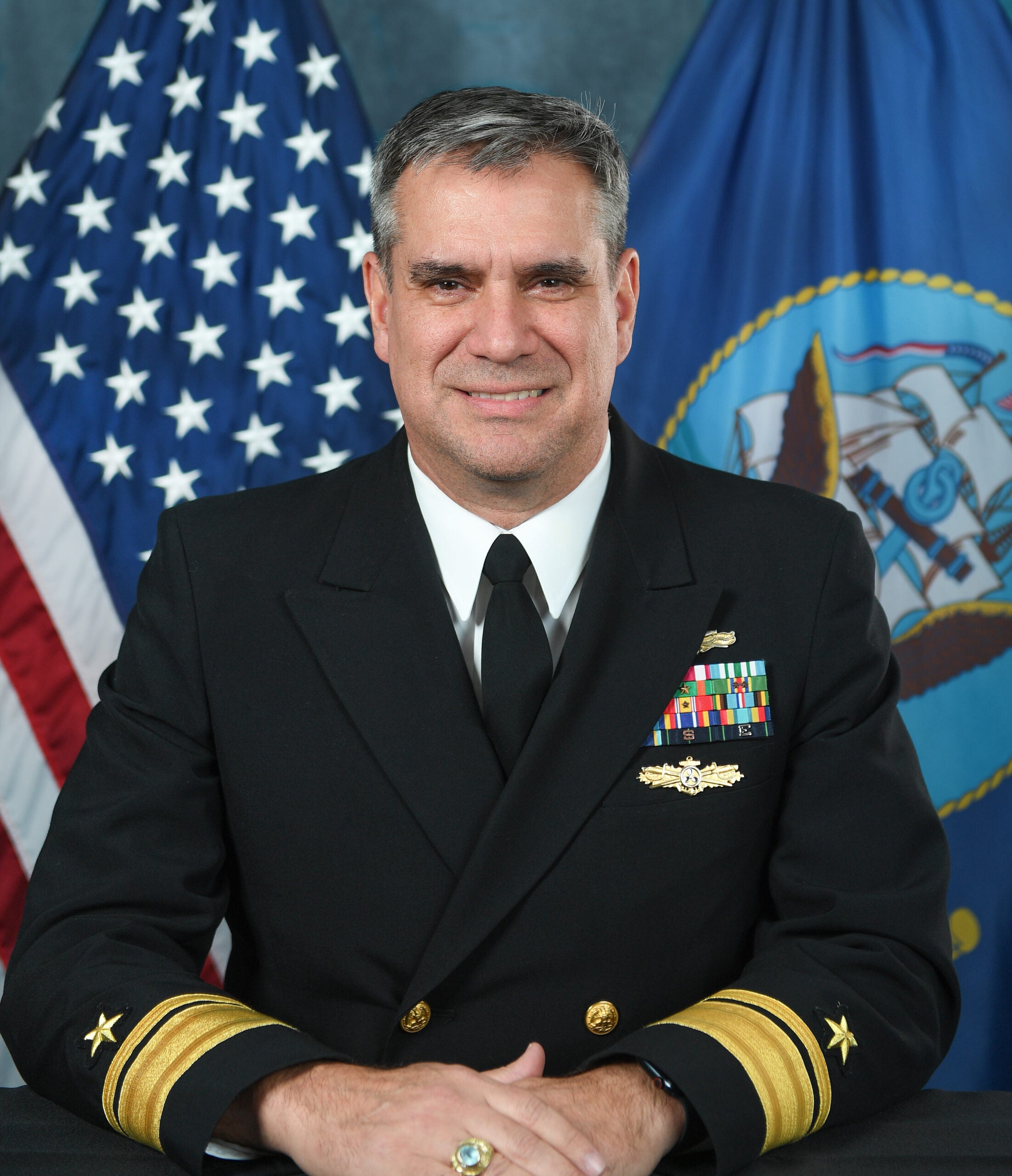
ARLINGTON, VA. – The Navy must accelerate its strategic weapons programs into production and become less tolerant of schedule delays, according to Rear Adm. Doug Williams, head of the Navy’s Strategic Systems Programs.
Williams, speaking at the Naval Submarine League symposium here last week, pointed to ongoing work on the Trident II D5 Life Extension 2, the W93 warhead, Conventional Prompt Strike and the nuclear-armed sea-launched cruise missile (SLCM-N) as examples of the Navy’s expanding strategic portfolio.
The W93/Mk7, being developed with the National Nuclear Security Administration, passed Milestone B in August and entered engineering and manufacturing development, while Conventional Prompt Strike Phase Two is on track to field the system on Zumwalt-class destroyers and later Block V Virginia-class submarines, Williams said. The Navy is also pursuing an aggressive SLCM-N schedule, with limited operational capability required by the end of fiscal 2032 and initial operational capability by 2034, he added.
The Navy cannot afford to allow development programs to linger as it confronts workforce shortages and supplier constraints across the defense industrial base, Williams said.
“We got to get out of development,” Williams said. “We have to, regardless of whatever you build … you have got to get yourself out of design and development, and you have got to get yourself into production.”
Moving into production is critical not only to fielding weapons but also to strengthening the broader supplier network, Williams said. “That transition into production is so incredibly important because that’s when everything gets energized,” he said, noting that activity eventually reaches suppliers deep into the industrial base.
Williams also called for a more aggressive approach to schedules, arguing that the Navy cannot allow traditional acquisition timelines to dictate delivery. “We must be intolerant of slipping schedules,” he said. At the same time, he cautioned against pursuing perfection when a sufficiently capable system could be fielded sooner.
“Good enough wins battles. Good enough wins wars,” Williams said.