Mike Nartker
House and Senate appropriators are seeking independent investigations into sweeping changes the Department of Energy is making to its operating directives, warning that the effort could weaken safety controls and oversight across DOE nuclear facilities.
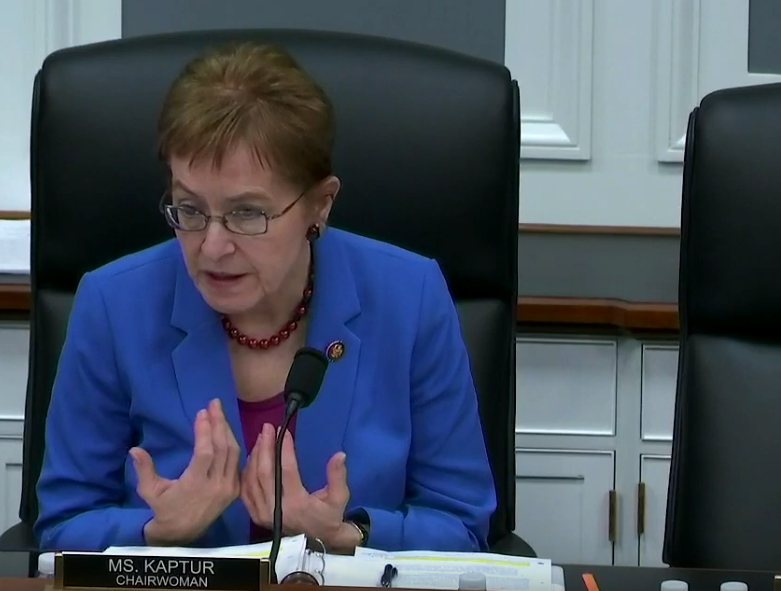
Rep. Marcy Kaptur (D-Ohio), ranking member of the House Appropriations Energy and Water development subcommittee, and Sen. Patty Murray (D-Wash.), ranking member of the Senate Appropriations Energy and Water Development Subcommittee, sent letters to the DOE Office of Inspector General, Defense Nuclear Facilities Safety Board and Government Accountability Office requesting reviews of the changes. Both lawmakers wrote about these letters in statements on their websites Nov. 20.
The lawmakers particularly expressed concern about Project Velocity, under which DOE is revising 46 operating directives and canceling four orders. The orders being canceled include requirements for tracking safety incidents and worker injuries and mechanisms allowing workers to formally challenge technical decisions they believe could compromise safety.
“While the Department claims Project Velocity modernizes operations by shifting from procedural compliance to performance-based accountability, we are concerned that these sweeping rollbacks weaken critical safety protections,” Kaptur and Murray wrote to the DOE inspector general.
The lawmakers also questioned the transparency surrounding the revisions, including who participated in the process and what criteria DOE used to determine which directives would be modified or canceled.
In their letter to the DNFSB, Kaptur and Murray cited concerns about the scale and speed of changes affecting nuclear facility safety, quality assurance, conduct of operations, worker training and incident reporting. They warned that the changes could weaken safety controls and diminish independent federal oversight.
The lawmakers told GAO that Project Velocity represents a “massive expansion of regulatory rollback” that could shift core responsibilities to management and operating contractors without adequate safeguards and potentially increase taxpayer costs and liabilities.
Kaptur and Murray requested detailed responses and reviews from all three agencies within 30 days, saying independent oversight is necessary to protect workers and public health at DOE’s nuclear laboratories, facilities and sites. This is the second time both lawmakers have written a letter about Project Velocity, the first being in a Sept. 16 letter.
The two senior Democrats figure to have more clout come January when their party will control the majority of both congressional chambers. This is not the first time the pair have expressed misgiving about Project Velocity, having written Secretary of Energy Chris Wright in September.

 Wayne Barber

Reinvigorating the Defense Nuclear Facilities Safety Board (DNFSB) is vital to halting an erosion in safety and oversight across the Department of Energy weapons complex, participants in an Arms Controls Association webinar said recently.
With Democrats set to take control of Congress and gain Senate seats in valuable DOE nuclear states such as Texas and South Carolina, getting bipartisan nominees to the federal safety watchdog should be a top priority, the panel said.
The DNFSB, set up by Congress in 1988 as a five-member panel of bipartisan experts, needs to at least restore a three-member quorum, said Don Hancock, director of the Nuclear Waste Program and Administrator of Southwest Research and Information Center in New Mexico. The DNFSB is currently down to one member.
DNFSB was created as part of a national push amid “pressure from concerned citizens and workers combined with dramatic revelations of unsafe and reckless operations” at government nuclear installations, said Daryl Kimball, executive director of the Arms Control Association. Kimball served as moderator of the panel.
While DNFSB lacks actual enforcement teeth, it is meant to provide independent advice and recommendations to DOE nuclear defense installations. While the secretary of energy is not required to follow DNFSB recommendations, the secretary must respond to them publicly.
“Today, as the DOE and the National Nuclear Security Administration try to ramp up nuclear weapons production, they are reversing course,” Kimball said. The Arms Control Association executive said DOE’s Project Velocity, targeted by some Democrats, apparently seeks to “weaken safety regulations and oversight of nuclear weapons production-related facilities.”
“In addition, the DOE is denying information and access requests from the DNFSB, and the White House has failed to nominate the requisite number of board members, jeopardizing the safety board’s ability to carry out its duties,” Kimball said.
The federal watchdog panel has no nominees currently pending in the Senate, said Joyce Connery. Connery, who owns her own consulting firm, is a former member and chair of DNFSB during both Democratic and Republican administrations.
The lone member Particia Lee is currently not classified as either acting chair or vice chair. Lee’s term is scheduled to end in October 2027. The weakened DNFSB is in no real position to carry out hearings on health and safety at DOE defense installations, Connery said.
The relationship with DOE has “waxed and waned” and is currently in a “trough,” Connery said.
DNFSB members and their field inspectors are frequently the “quiet super heroes” of nuclear health and safety at DOE nuclear defense installations, said Miya Burke, the Program Manager for the Hanford Challenge citizens group. The DOE Hanford Site in Richland, Wash. is regarded as the most contaminated nuclear site in the Western Hemisphere. Hanford was used for decades to make plutonium.
The weekly and monthly reports filed by DNFSB staff inspectors, while filed well after the fact, are still often the first way the general public has to find out about accidents at defense nuclear sites, Burke said.