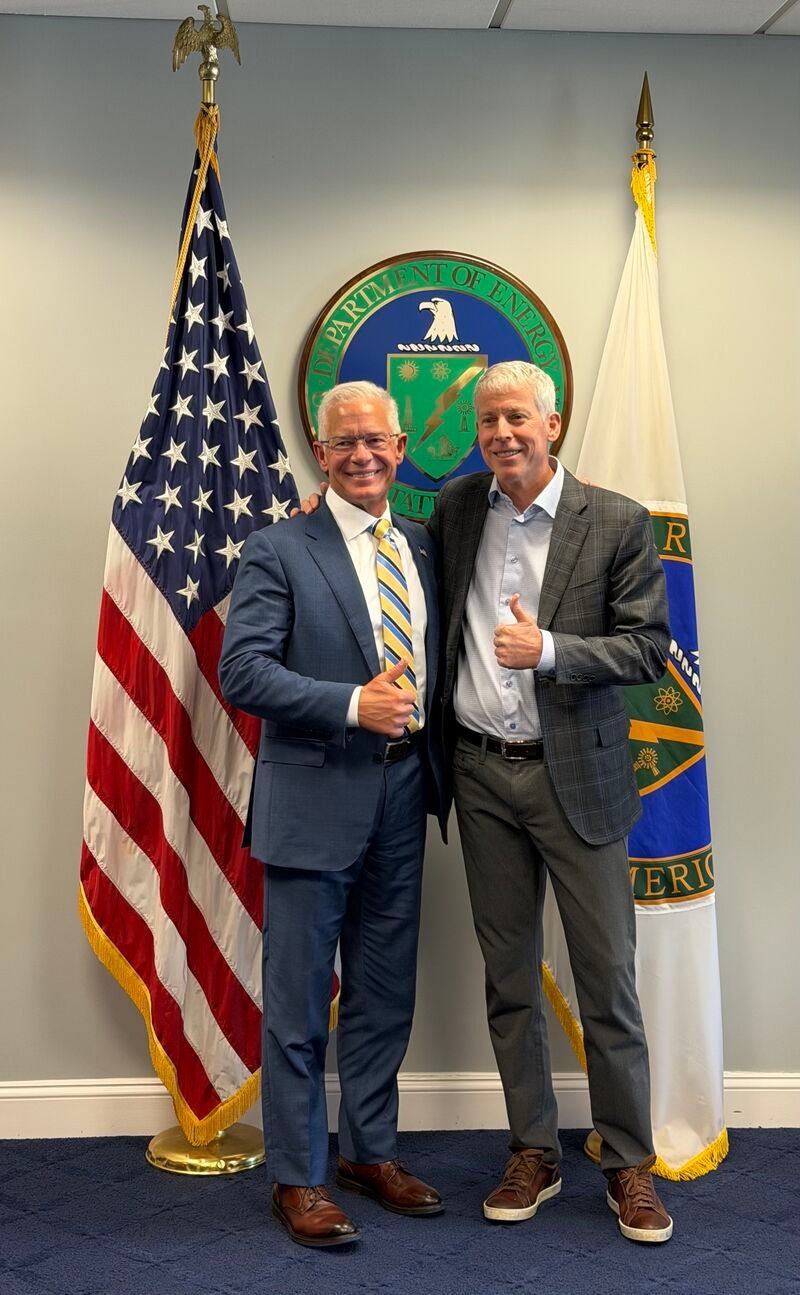
WASHINGTON, D.C. – Tim Walsh, the Department of Energy Assistant Secretary for Environmental Management, told a Senate panel Wednesday that his office is serious about solidifying tank waste at the DOE’s Hanford State in Washington state.
Walsh appeared before the Senate Armed Services Committee alongside Secretary of Energy Chris Wright as well as National Nuclear Security Administration (NNSA) chief Brandon Williams on fiscal 2027 budget request issues.
While Environmental Management (EM) has finally started to vitrify lower-level tank waste into glass at Hanford’s Waste Treatment Plant, the DOE nuclear cleanup office plans to embrace both glass and a concrete-like grout at Hanford, Walsh said. This combination of technologies is one reason the Savannah River Site in South Carolina has been able to address large quantities of liquid tank waste, he added.
“At the Hanford site, operations of the Direct Feed Low Activity Waste system has treated over one million gallons of tank waste and started solidifying it in glass in October 2025,” according to the jointly-submitted DOE testimony by all three officials.
“As the system continues to operate, Hanford is, in parallel, adopting a dual glass-and-grout strategy to speed up cleanup and disposal without sacrificing safety or effectiveness,” according to the DOE testimony. The Office of Environmental Management is embracing a “glass-plus approach to solidifying the 56 million gallons of tank waste,” according to DOE’s written remarks.
“The department is committed to fulfilling our obligations to the people of Washington and the American taxpayer to complete the cleanup mission successfully and without wasting hard-earned taxpayer dollars,” according to the joint statement.
“The DOE team in Idaho will continue operating the Integrated Waste Treatment Unit, addressing transuranic waste and providing services for the Department’s Office of Naval Reactors,” the three DOE officials said in the statement. In New York, the West Valley Demonstration Project will take the next steps to reduce environmental risks following completion of a major demolition last year.
While Hanford is DOE’s largest, most contaminated site, the New York-state owned West Valley Demonstration Project is one of the smallest nuclear cleanup sites. Both Walsh and Secretary Wright assured Sen. Kirsten Gillibrand (D-N.Y.) they would support reauthorization of the West Valley cleanup legislation, which is due to expire within a year.
The administration’s $8.2 billion Environmental Management (EM) budget request would be $386 million less than the $8.56 billion enacted by Congress for fiscal 2026.