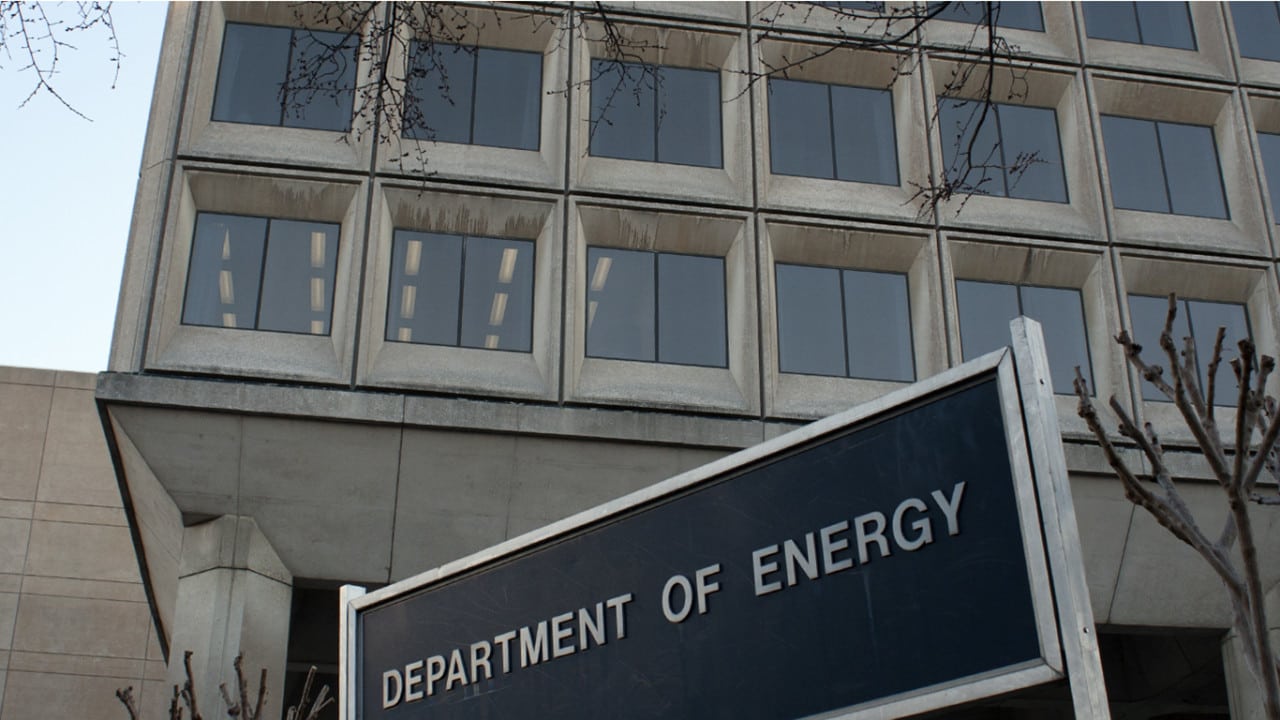
WASHINGTON – The Department of Energy could consider using the Nuclear Waste Fund to help fund waste management-related facilities to go online at Nuclear Lifecycle Innovation Campuses.
During the House Energy and Commerce’s Energy subcommittee hearing Tuesday, DOE’s Assistant Secretary for Nuclear Energy Ted Garrish told the panel that the department and Congress need to work together to get the campuses online. Garrish said DOE has been considering using the Nuclear Waste Fund to help fund part of the initiative, including reprocessing facilities.
The Nuclear Waste Fund is a U.S. Treasury account formed to fund the country’s efforts to build storage and permanent disposal of high-level radioactive waste. Created through the Nuclear Waste Policy Act, the fund is estimated to be around $51 to $56 billion. The fund is financed by a fee of 0.1 cents per kilowatt-hour charged on electricity generated by commercial nuclear units.
DOE has been sued, and in many cases successfully, by nuclear utilities over the years for damages from the Nuclear Waste Fund for the agency failing to uphold its responsibility of disposing of their waste at a national repository.
Many of the lawmakers questioned Garrish on what funding would look like for the hubs, as the fund has been solely focused on permanent disposal of radioactive waste. Vice Chair of the House Energy subcommittee Randy Weber (R-Texas) asked Garrish whether he agreed that Congress should not raise rates on the developing nuclear campus program.
Garrish told Weber DOE could consider $56 billion from the Nuclear Waste Fund to kickstart the program, but also understands the reluctance to restart the fees for a program if it does not serve its purpose, which is to permanently store waste. He said the private sector will play a large role in funding, saying DOE expects $51 billion in outside private investment for the program.
Garrish emphasized that Congress and DOE need to work together on best overseeing the funds.
“To me, the important thing is the fund to be used for the purpose it was intended primarily and that is to bury the waste or final disposition,” Garish told Rep. Jennifer McClellan (D-Va.). “There has been some discussion as to whether or not we’re going to have reprocessing and it reduces the amount of waste and whether or not there is any logic to having other things covered for that purpose.”
Garrish continued, “I really would like to know how Congress feels about that and the allocation of these funds and we would like to cooperatively work through a program with you to determine what makes the most sense.”
DOE also has ideas that loans could be used to help fund the initial reprocessing facilities that are to reduce the toxicity or amount of waste at the campuses, Garrish said Rep. Doris Matsui (D-Calif.) when she asked about how the Nuclear Waste Fund would be used. The loan money would eventually be repaid to the Nuclear Waste Fund. However, he reiterated that there would have to be a discussion with Congress.
The collection of the Nuclear Waste Fund fees was put on hold in 2014 after a federal appellate court ordered the suspension after plans for the Yucca Mountain repository in Nevada were canceled during the Barack Obama administration.
A second panel of nuclear industry officials and representatives succeeding Garrish chimed in on the use of the Nuclear Waste Fund. Maria Korsnick, Nuclear Energy Institute (NEI) president and CEO, said restarting the fees should not be considered as of now. With over $50 billion in the Nuclear Waste Fund, Korsnick told Weber that NEI believes the money, if spent wisely, could address all the waste from the current and future fleet.
“Enactment of new legislation, execution of a hosting agreement, completion of a recycling demonstration, or operation of non-disposal campus facilities should not itself trigger fee collection,” Korsnick said in her written testimony. “No fees should be assessed until the federal government begins performing the used-fuel responsibilities for which commercial generators and their customers have already paid billions of dollars.”
Korsnick said multiple safeguards need to be put in place to make sure that a project for final disposal is being achieved, including the restart of fee collection being contingent on federal-performance milestones.
If DOE were to tap into the Nuclear Waste Fund, Nuclear Waste Strategy Coalition’s Greg White suggested that some of that funding be allocated to creating an independent waste management organization to take over responsibility from DOE to lead the national waste management program. White said the organization could be funded through the interest accrued on the Nuclear Waste Fund instead of the fund itself. Creation of such an entity outside DOE has been discussed for many years.