Sen. Deb Fischer (R-Neb.) criticized the omission of funding for the nuclear-armed sea-launched cruise missile from the fiscal 2027 budget request, warning the absence of appropriated funding could jeopardize the Navy’s ability to meet a congressionally mandated deadline.
Speaking to Acting Navy Secretary Hung Cao on Tuesday during a Senate Armed Services Committee hearing, Fischer said she was “disappointed” that the administration’s fiscal 2027 request did not include money for the nuclear-armed, sea-launched cruise missile (SLCM-N) program. Congress has directed the Navy to field the program by 2032.
“Our adversaries are not hesitating to expand their nuclear arsenals,” Fischer said, arguing the Navy “must prioritize SLCM-N appropriately” to meet the statutory timeline.
Cao defended the budget decision, saying Navy officials, including Vice Adm. Johnny Wolfe, director of the Navy’s Strategic Systems Programs office, had determined that current funding levels are sufficient for near-term execution.
“We all looked hard at this with Johnny Wolf,” Cao said, adding that Wolfe believes the roughly $2 billion provided through the fiscal 2026 budget and recent reconciliation legislation “is the right amount of money that we have currently that can be executed with fiscal responsibility.”
Cao suggested the administration could seek additional funding in a future budget request.
“I think, FY 28, you’ll see an additional ask,” he said, describing the current approach as part of a phased funding strategy.
Fischer, however, warned that relying on future appropriations requests leaves the program vulnerable to congressional delays, particularly if lawmakers continue passing stopgap spending bills.
“If the money is not put in a budget request and is not part of the appropriations process, you’re behind the eight ball to begin with,” Fischer said.
The Nebraska Republican said ensuring stable funding for SLCM-N is necessary both to satisfy legal requirements and to preserve military options for the president and combatant commanders amid growing nuclear threats.
“I want to make sure that the funding will be there no matter how this Congress may act,” Fischer said.
Brandon Williams, head of the National Nuclear Security Administration (NNSA), said similarly at a hearing in April. “The funding from the reconciliation process is carrying the project forward at pace,” Williams said. “We’re ahead of schedule, and we’re going to be able to deliver a warhead, W80-5, ahead of the Navy’s needs. We’re on track.”
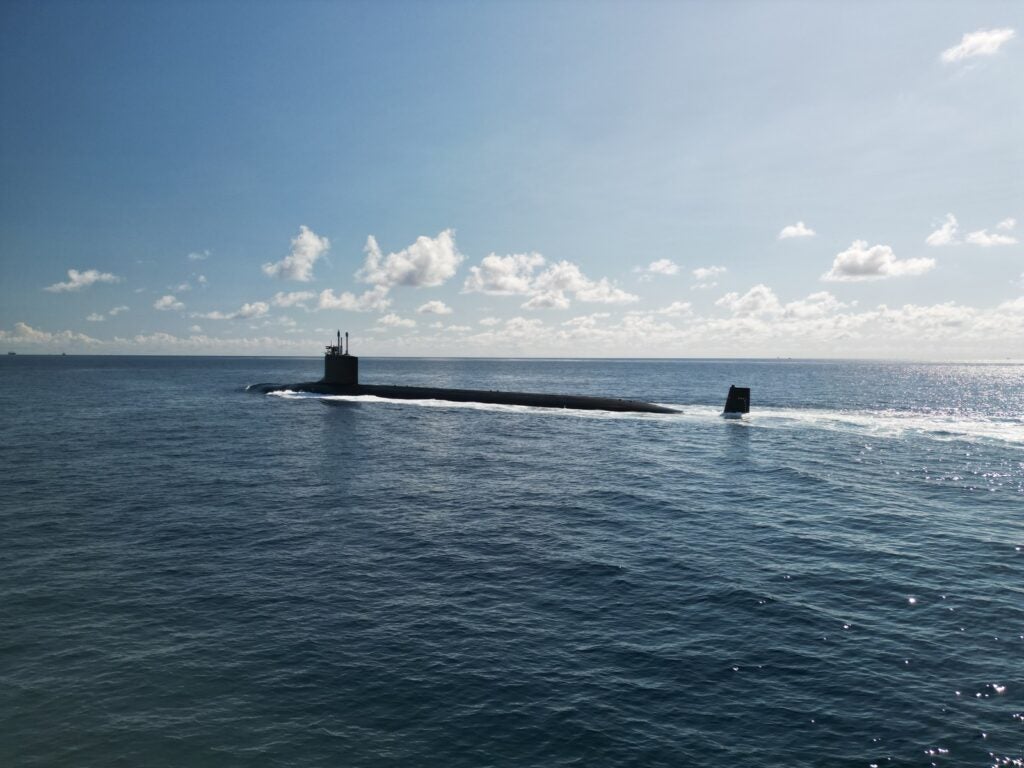
The W80-5 program was announced at Exchange Monitor’s Nuclear Deterrence Summit in January as a new variant of the W80 warhead family that would go on SLCM-N. SLCM-N is a planned missile system that would be deployed on the Virginia-class submarines, and on the potential future Trump-class warships.
Congress had ordered that SLCM-N be developed by the Navy and use a W80-4 variant, but in a 2024 congressional testimony, Jill Hruby, then-administrator of NNSA, said the agency needed $70 million in funding for the sea-launched W80-4. However, Hruby also testified that year that the agency would look into alternatives to the W80-4 that might “be simpler to do without disrupting our current production flow.”