The Senate Thursday passed a minibus bill 82-15 that includes appropriations for Energy and Water development, which would provide $25.4 billion in funds to the National Nuclear Security Administration (NNSA).
The Office of Management and Budget issued a statement of support for the minibus, indicating President Donald Trump will sign the bill when it reaches his desk.
“This package saves a key program to save families on their energy bills, sustains our investments in scientific research, and protects essential funding for our public lands and Tribes, among so much else,” Sen. Patty Murray (D-Wash.), Ranking Member of both the full Senate Appropriations Committee and the Energy and Water Development Subcommittee, said in a statement Thursday. “Passing these bills reasserts Congress’ power of the purse and will prevent this administration from having the legal authority to decide for itself how to spend these taxpayer funds again.”
The bill was released by top appropriators in the Senate and House last week on both sides of the aisle, and was passed 397-28 in the House Jan. 8. Congress has until Jan. 30 to either get all twelve spending plans passed or pass another stopgap spending bill, lest the government shut down again due to a lapse in funding.
While a topline is not listed for the Department of Energy’s semi-autonomous agency in charge of maintaining the nation’s nuclear weapons stockpile, $25.4 billion is the sum of the funds that would go to weapons activities, naval reactors, defense nuclear nonproliferation and federal salaries. That is $200 million above the White House’s request.
The bill would provide $20.4 billion for weapons activities, which would include $186 million for the nuclear-armed, sea-launched cruise missile and $1.13 billion for the Savannah River Plutonium Processing Facility. That number is $400 million above the White House’s budget.
For defense nuclear nonproliferation, the bill would provide $2.4 billion, or $115 million over President Donald Trump’s budget. This has been a controversial figure in the House in particular, with some Democrats saying the House’s subcommittee number of less than $2 billion was too low.
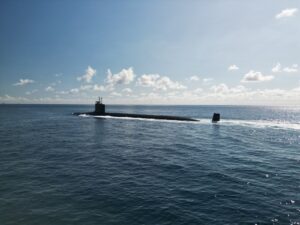
Naval reactors, which includes Columbia-class reactor systems development, would receive $2.13 billion, around $200 million less than the White House requested. Finally, federal salaries and expenses for NNSA would receive $525 million to remain available until Sept. 30, 2027.