MONIZ ANNOUNCES NEW 19-MEMBER ADVISORY BOARD

Todd Jacobson
GHG Monitor
8/30/13

New Energy Secretary Ernest Moniz is reconstituting the Secretary of Energy Advisory Board, expanding a panel that was resurrected under predecessor Steven Chu. The 19-member panel, an increase from the 12-member advisory board under Chu, will be chaired by former SLAC National Accelerator Laboratory Director Persis Drell and former Under Secretary of Energy John Deutch, and is expected to meet quarterly, and “other times as needed,” the Department of Energy said earlier this week.

Four standing subcommittees will focus on DOE’s four major mission areas: science, energy, nuclear security and environmental stewardship. Ad hoc task forces also may be created in specific areas. The advisory board is scheduled to hold its first open meeting Sept. 13 at DOE headquarters. The Board includes three holdovers from its 2012 makeup: Deutch, United Technologies Corporation Senior Vice President for Science and Technology Mike McQuade and HIS Cambridge Energy Research Associates Founder Daniel Yergin. The rest of the members are:

  • Natural Resources Defense Council President Frances Beinecke;
  • Georgia Tech Provost and Executive Vice President for Academic Affairs Rafael Bras;
  • UCLA Chancellor Emeritus Albert Carnesale;
  • Rensselaer Polytechnic Institute President Shirley Ann Jackson;
  • National Institute of Standards and Technology Physicist Deborah Jin;
  • Alfred P. Sloan Foundation President and MIT Professor of Economics, Emeritus Paul Joskow;
  • Former Under Secretary of Energy for Science Steve Koonin;
  • Former Nuclear Regulatory Commission Chairman Richard Meserve;
  • Harvard University School of Engineering and Applied Sciences Dean Cherry Murray;
  • Former White House Chief of Staff John Podesta;
  • Former Assistant Secretary for Energy Dan Reicher;
  • North Bridge Venture Partners General Partner Carmichael Roberts;
  • Monsanto Company Renewables and Sustainability Technology Lead Martha Schlicher;
  • Former National Security Adviser Brent Scowcroft; and
  • ConocoPhillips Chief Technology Officer Ram Shenoy.
More on This Topic


Kaptur, Murray seek investigations into DOE Project Velocity safety rollbacks

House and Senate appropriators are seeking independent investigations into sweeping changes the Department of Energy is making to its operating directives, warning that the effort could weaken safety controls and oversight across DOE nuclear facilities.

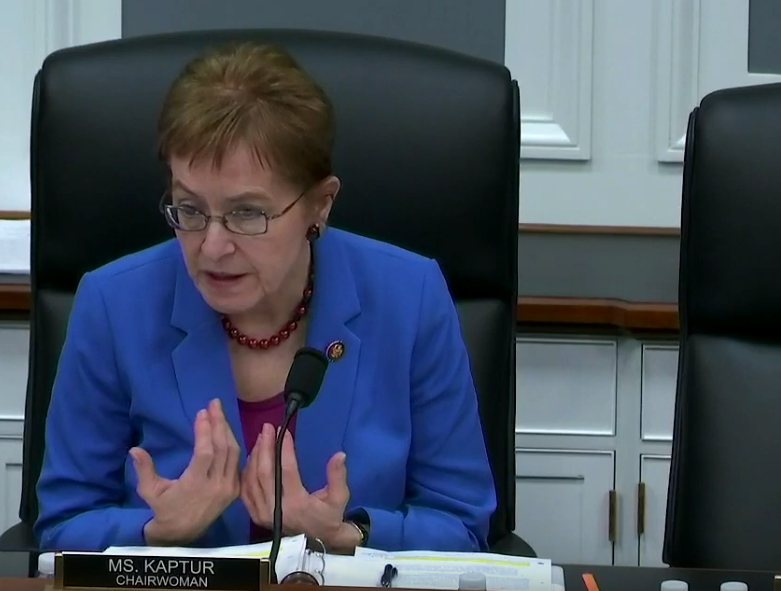
Rep. Marcy Kaptur (D-Ohio), ranking member of the House Appropriations Energy and Water development subcommittee, and Sen. Patty Murray (D-Wash.), ranking member of the Senate Appropriations Energy and Water Development Subcommittee, sent letters to the DOE Office of Inspector General, Defense Nuclear Facilities Safety Board and Government Accountability Office requesting reviews of the changes. Both lawmakers wrote about these letters in statements on their websites Nov. 20.

The lawmakers particularly expressed concern about Project Velocity, under which DOE is revising 46 operating directives and canceling four orders. The orders being canceled include requirements for tracking safety incidents and worker injuries and mechanisms allowing workers to formally challenge technical decisions they believe could compromise safety.

“While the Department claims Project Velocity modernizes operations by shifting from procedural compliance to performance-based accountability, we are concerned that these sweeping rollbacks weaken critical safety protections,” Kaptur and Murray wrote to the DOE inspector general.

The lawmakers also questioned the transparency surrounding the revisions, including who participated in the process and what criteria DOE used to determine which directives would be modified or canceled.

In their letter to the DNFSB, Kaptur and Murray cited concerns about the scale and speed of changes affecting nuclear facility safety, quality assurance, conduct of operations, worker training and incident reporting. They warned that the changes could weaken safety controls and diminish independent federal oversight.

The lawmakers told GAO that Project Velocity represents a “massive expansion of regulatory rollback” that could shift core responsibilities to management and operating contractors without adequate safeguards and potentially increase taxpayer costs and liabilities.

Kaptur and Murray requested detailed responses and reviews from all three agencies within 30 days, saying independent oversight is necessary to protect workers and public health at DOE’s nuclear laboratories, facilities and sites. This is the second time both lawmakers have written a letter about Project Velocity, the first being in a Sept. 16 letter.

The two senior Democrats figure to have more clout come January when their party will control the majority of both congressional chambers. This is not the first time the pair have expressed misgiving about Project Velocity, having written Secretary of Energy Chris Wright in September. 

In This Issue

More on This Topic