Staff Reports
WC Monitor
2/5/2016
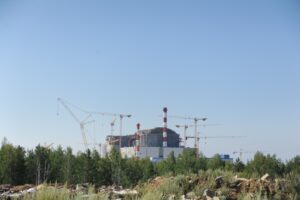
The Savannah River Site’s salt waste contractor announced Wednesday that it laid off 123 workers as construction of the Salt Waste Processing Facility (SWPF) nears 95 percent completion. In a brief statement, Frank Sheppard, Parsons vice president and SWPF program manager, said construction will be completed in the spring, so the company made planned changes to the makeup of the workforce. "In the coming months, our focus will continue to shift from construction to startup and commissioning of the plant, which once operational in 2018, will exponentially increase processing rates at the Savannah River Site tank farms in an effort to empty the site’s high-level radioactive waste tanks," Sheppard said.
Once operable, SWPF will separate the highly radioactive cesium and actinides from the salt solution found in the SRS waste storage tanks. After completing the separation process, the cesium and actinide waste will be sent to the nearby Defense Waste Processing Facility (DWPF). The remaining decontaminated salt solution will be mixed with grout at the Saltstone Disposal Facility Permit for disposal on-site.
The SWPF was initially projected to cost $1.32 billion for construction and commissioning. But in September 2014, DOE reported a new projected cost of $2.3 billion. Regardless, the SWPF is expected to be another key facility in the SRS waste program, along with DWPF which converts the liquid waste into a glass form that allows for safe storage on-site until a federal repository is made available. When SWPF begins operating, liquid waste processing at the Savannah River Site is expected to jump from 1.5 million gallons a year to about 6 million gallons, according to site officials.
The SWPF has been a hot-button topic issue in recent months in South Carolina. The South Carolina Department of Health and Environmental Control, or SCDHEC, has not yet decided if it will seek nearly $170 million from the Department of Energy for a missed deadline at the facility. The Energy Department missed the initial startup date for the facility on Oct. 31, 2015. Since that point, SCHDEC has had the authority to fine the Department of Energy $105,000 a day starting at the earlier date of Sept. 30, 2011, according to the Saltstone Disposal Facility Permit signed on Oct. 3, 2006. The permit states that several tasks were to be completed before the 2011 date, including operation of the waste transfer lines for the SWPF.
The state agency temporarily forfeited its power to fine the Energy Department two days before the Oct. 31 deadline when Ken Taylor, a SCDHEC manager, wrote a letter to SRS Manager Jack Craig stating that SCDHEC would wait at least until Dec. 18 before deciding if it would attempt to levy penalties. Since the letter was sent, both agencies have worked to renegotiate deadlines, schedules, and funding commitments for startup of the Salt Waste Processing Facility. On Tuesday, SCDHEC spokesman Jim Beasley said discussions are continuing after the state agency reported in December that it was shooting for a mid-January date to wrap up talks. There have been no new projections for when discussions will finish. "We are considering all options at this time regarding the missed milestone, including assessment of penalties," Beasley said. The Department of Energy also confirmed that talks are ongoing.