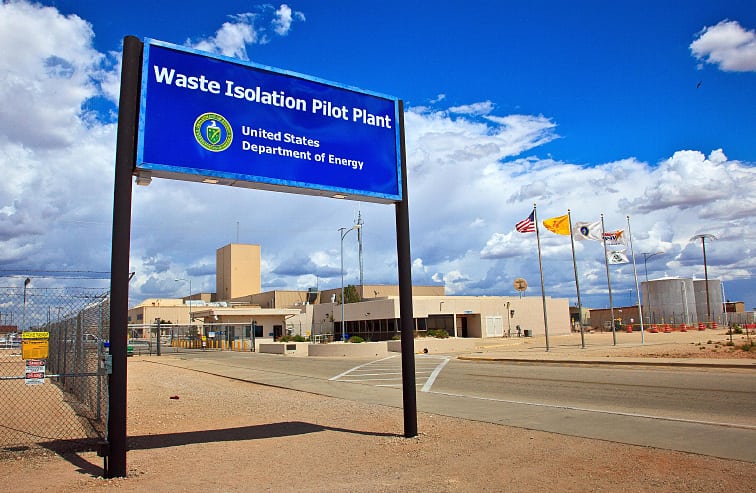
The Department of Energy announced Friday that it had given approval for the Waste Isolation Pilot Plant in New Mexico to resume waste storage operations after nearly three years. The initial waste emplacement should be carried out next month following final, limited ground control operations, DOE said.
The announcement comes a week after the New Mexico Environment Department formally signed off on WIPP’s reopening.
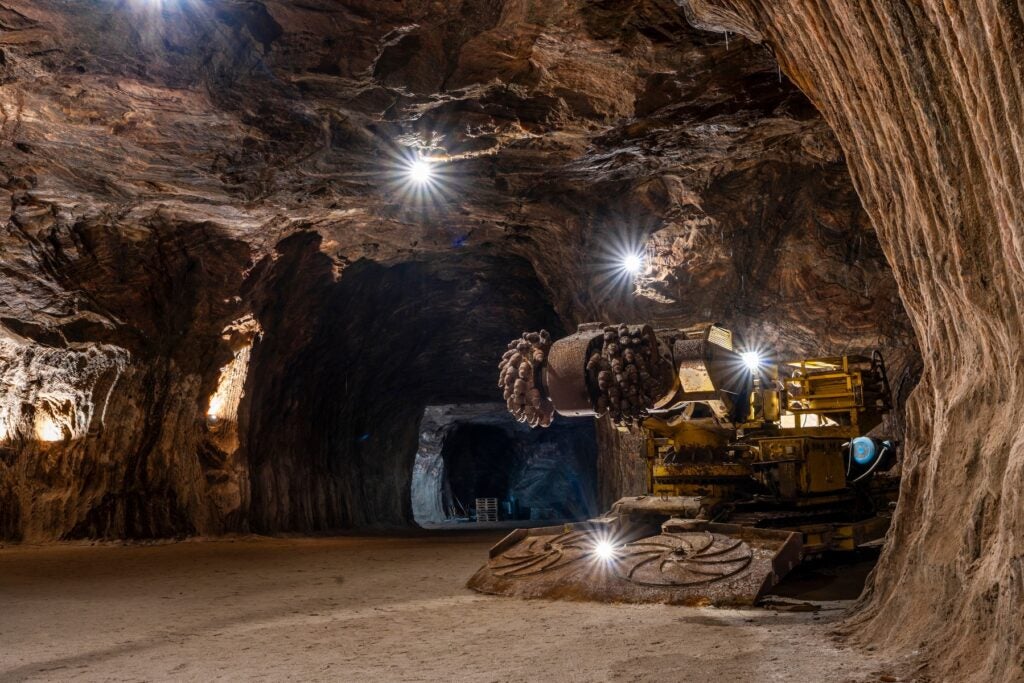
WIPP, the nation’s only permanent disposal facility for the radioactively contaminated material and equipment known as transuranic waste, has been closed since a fire and subsequent, unrelated radiation release in February 2014. What followed was a long recovery process and multiple assessments of the site’s readiness to reopen, capped off by a recently concluded DOE operational readiness review.
DOE said its authorization demonstrates that all necessary corrective actions uncovered in the last two operational readiness reviews have been addressed. The DOE team had identified 36 necessary corrective actions in areas including emergency preparedness, waste acceptance, and fire protection: 21 that had to be addressed before reopening and 15 that could be dealt with alongside waste emplacement.
“Extensive efforts to identify and implement corrective actions have resulted in a facility that is safer today and we look forward to the facility soon resuming its highly critical mission to dispose of the nation’s defense transuranic waste,” Todd Shrader, manager of DOE’s Carlsbad Field Office, said in the release.
Waste emplacement will begin with material stored above ground at WIPP in the Waste Handling Building. Officials have said it would take two to three months to begin accepting transuranic waste that has been stranded at other sites in the DOE complex.
The ground control involves floor leveling in WIPP’s Panel 7, the storage area in which the radiation release occurred. “As always, safety takes the top priority and an official date for waste emplacement resumption will be confirmed when the minor ground control work is completed,” DOE said.
The department on Friday added a number of documents to its WIPP Recovery Website, including the reports from the DOE operational readiness review team and the contractor operational readiness review team.
The New Mexico Environment Department on Dec. 16 gave DOE its OK to reopen WIPP. In doing so, the state mandated that DOE and WIPP prime contractor Nuclear Waste Partnership (NWP) bury the waste marooned above ground at the site no later than June 30.
If DOE and NWP cannot resume disposal operations by then, “the Permittees shall request an extension of time in accordance with its Permit no later than June 16, 2017,” Kathryn Roberts, director of the department’s Resource Protection Division, wrote in a Dec. 16 letter to Shrader and Philip Breidenbach, NWP president and project manager.
The approval to reopen followed the state agency’s review of WIPP’s surface and underground areas earlier this month.
In a separate Dec. 16 letter to Shrader and Breidenbach, NMED Hazardous Waste Bureau chief John Kieling said inspectors noted two violations of state permit conditions during their visit: the absence in the WIPP above-ground Waste Handling Building of a safety shower, which was instead installed in a nearby structure; and “Failure to maintain a clearly legible label or marking on all contact-handled mixed waste packages indicating the package contains mixed waste.” Both issues have been addressed, the second while the inspection was still underway, Kieling said.
The state agency issued the operating permit DOE and NWP require under federal law to operate the deep-underground repository.
DOE Funding for Tribes
Separately, DOE this week announced it would award more than $600,000 to the Confederated Tribes of the Umatilla Indian Reservation in Pendleton, Ore., and the Nambe Pueblo in New Mexico to support “activities to ensure the safe transportation” of nuclear waste to WIPP.
Both cooperative agreements stretch over five years and would help the tribes ensure safe transportation of waste through Pueblo lands via transportation planning, and also train and equip the tribes to respond to an emergency related to WIPP shipments, DOE said in separate press releases.
The Confederated Tribes in Oregon would receive $375,000. Pendleton sits along Interstate 84, southeast of DOE’s Hanford Site near Richland, Wash.
The Namble Pueblo would receive $250,000. The pueblo is near Santa Fe, along the route that transuranic waste would be transported on its way to WIPP in southeastern New Mexico.