Weapons Complex Monitor Vol. 37 No. 26
Visit Archives | Return to Issue
PDF
Weapons Complex Monitor
Article 2 of 8
July 01, 2026

New Mexico, DOE differ on combating Los Alamos chromium plume

By Staff Reports

SANTA FE, N.M — State regulators and Department of Energy managers last week presented competing views on how to remedy a decades-old hexavalent chromium plume beneath and beyond the Los Alamos National Laboratory during a New Mexico Environment Department public meeting on ongoing efforts.

The plume, linked to old power plant operations at Los Alamos and first identified in the early 2000s, has migrated beyond lab boundaries onto Pueblo de San Ildefonso land, according to state officials. NMED said the meeting was intended to provide updates on monitoring data, interim cleanup measures and the status of its investigation.

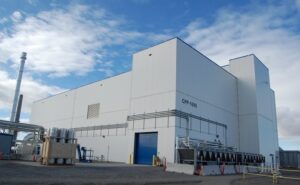
The DOE’s Environmental Management Los Alamos Field Office said June 25  it supports restarting portions of an interim treatment system following a November 2025 shutdown. The feds argue injection wells help slow plume migration by forming a hydraulic barrier. DOE also said shutdowns ordered by the state have been followed by increases in contaminant concentrations in monitoring wells.

EM-LA and its legacy cleanup contractor, Newport News Nuclear BWXT-Los Alamos (N3B), said they reengaged subject matter experts from the December 2024 independent technical review, a panel of 15 specialists convened by EM-LA and NMED, to evaluate updated data and optimize the interim measures system. 

One-time Environmental Management head Inés Triay, now with Florida International University, and Matthew Tonkin of S.S. Papadopulos & Associates contend NMED’s push to ‘land apply’ treated water — spraying it on the ground or into canyons — squanders a scarce groundwater resource while officials study long‑term disposal options.

State officials said monitoring well data show the plume is not contained on lab property, undercutting the primary goal of the interim measure. NMED pointed to rising chromium levels in a monitoring well located in the direction of groundwater flow. The state says the data suggest injection operations may have contributed to plume migration farther east and south. By contrast, DOE and its contractor cited falling concentrations at another monitoring point near the southern edge of the plume to argue that the current system is helping to contain. 

“When we drill these wells, our conceptual site model seems to pivot more often than we would like,” said Caitlyn Martinez, water resources expert at the New Mexico Environment Department. 

Concentrations above New Mexico’s 50 parts‑per‑billion groundwater standard have been detected in multiple wells, including a new deep monitoring well on Pueblo de San Ildefonso land installed after the technical review was completed. State officials said those results underscore the need to make phased changes to the interim cleanup system rather than quickly expanding injection. The federal government lacks a specific legal limit for toxic hexavalent chromium, regulating it instead under a broader 100 parts-per-billion standard for total chromium.

NMED officials said the dispute has entered an enforcement phase. In February 2026, the department issued administrative compliance orders alleging injection and discharge violations and failures to update interim-measures plans and implement corrective actions beyond laboratory boundaries. NMED is seeking a phased interim-measures plan that would expand extraction, develop alternative injection sites, add monitoring wells and use temporary disposal options while new infrastructure and permits are pursued. 

State staff emphasized long-term ingestion of hexavalent chromium can increase cancer risk and that comprehensive monitoring of the regional aquifer will continue regardless of the status of the interim treatment system. Exceedances are in monitoring wells, not drinking taps. DOE and NMED agree that there is no immediate threat to public or private drinking water wells.

Local officials and community advocates at the meeting urged NMED to move quickly on enforceable remedies, warning that cleanup decisions could outlast the current state administration.

In a follow-up response, NMED said DOE is “decades away from characterizing the plume” and that the department and DOE would not begin selecting a final remedy until characterization work is complete.

Comments are closed.