Senate Absent From Strategic Forces ‘Pre-Conference’ NDAA Talks

Todd Jacobson
WC Monitor
9/19/2014

With work on the Fiscal Year 2015 Defense Authorization Act pushed back until after the November Congressional elections, House and Senate Armed Services Committee members began meeting this week for “pre-conference” talks, but Senate authorizers were absent when House members of the Strategic Forces subcommittee gather for discussions. According to Congressional aides, Senate authorizers didn’t participate in the Strategic Forces “pre-conference” talks Sept. 18 because of a scheduling conflict. House Armed Services Committee spokesman John Noonan declined to comment on the talks, and the office of Sen. Mark Udall (D-Colo.), the chairman of the Senate Strategic Forces Subcommittee, did not respond to a request for comment.

The House passed its version of the FY 2015 NDAA this summer, but the Senate hasn’t acted despite hope that the chamber could take up the bill this month. That leaves the lame duck period after the elections for lawmakers to conference on the bill, and this week’s “pre-conference” talks were designed as a way to engage lawmakers as the conference process begins. The talks are just preliminary, aides said, and the idea is not to have members commit to anything in particular. “Ideally you want to have everyone but either way it’s an opportunity for members to participate and be engaged and focus on issues that are important to them,” one Congressional aide told WC Monitor.

The Strategic Forces talks are expected to draw House Republicans and Democrats, but without Senators there, it’s unclear how valuable the discussions will be. Congressional aides said the idea for the talks germinated with House members, and any effort to get them engaged early would prove valuable during formal conference discussions.


In This Issue


More on This Topic


HASC chair: $350B defense reconciliation ‘not going to happen’

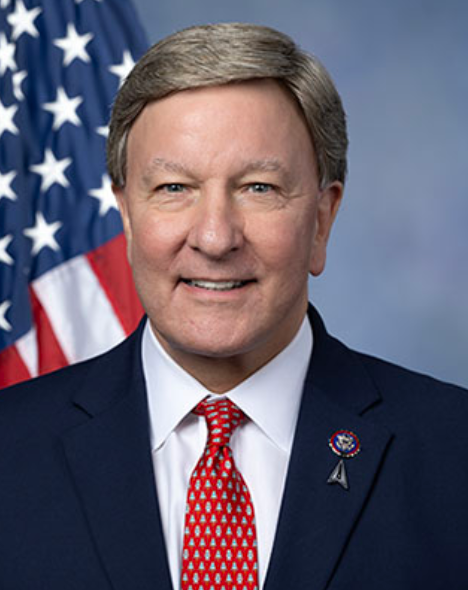
The House Armed Services Committee chair said a $350 billion defense reconciliation bill “is not going to happen,” but suggested a “skinnied down” version of about $100 billion could pass before Congress adjourns.

Rep. Mike Rogers (R-Ala.), during a Hudson Institute discussion last week, also threw his support behind shifting some items from the Trump administration’s $350 billion mandatory spending request over to the base budget, a move the Senate Appropriations backed in its recently-released fiscal year 2027 defense appropriations bill. 

“You may have guessed that,” Rogers said, throwing cold water on the prospects for passing a $350 billion reconciliation bill. “It’s going to have to be skinnied down to deal with, first and foremost, the hole in the defense budget that Venezuela and Iran have created… But if they can skinny that reconciliation down from $350 [billion] down to $100 [billion] or somewhere in that nature, there is a path for that.”

“It makes it easier to migrate the essential things out of reconciliation into the baseline [budget] if you can take some of them off the table. If not, then it’s a bigger hurdle,” Rogers added. 

President Donald Trump and Defense Secretary Pete Hegseth have recently reiterated the administration’s push for Congress to pass at least $350 billion in defense funds via the reconciliation process to achieve a total $1.5 trillion fiscal 2027 topline. However, a pathway has yet to be formed for how congressional Republicans may move forward on passing a large party-line defense funding bill with only weeks left to work in the current Congress before Democrats take over majority control of both chambers in January. 

Both the House and Senate Armed Services Committee’s current version of the fiscal 2027 National Defense Authorization Act (NDAA) do not include items from the Trump administration’s mandatory spending request, with the two panels’ marking their defense policy bills to the White House’s requested $1.15 trillion base topline for defense. 

Rogers said it was a “big deal” to get the increase from the current $903 billion base defense topline, adding it now provides “about a quarter of a trillion dollars that you can work with to migrate” items over from the reconciliation request.

In This Issue

More on This Topic