WRAP UP

Tamar Hallerman
GHG Monitor
10/11/13

IN CONGRESS

The Senate Energy and Natural Resources Committee unanimously approved Elizabeth Robinson’s nomination to be Under Secretary of Energy for Management and Performance by voice vote during a meeting this week. Robinson had breezed through her confirmation hearing before the panel last month. The Under Secretary position, created as part of a DOE reorganization effort announced in July, oversees the Department’s offices of Environmental Management and Legacy Management, as well as several other support offices. Robinson currently serves as NASA’s Chief Financial Officer, and has also previously held positions at the White House Office of Management and Budget and the Congressional Budget Office, among others.

IN THE STATES

The Kansas Supreme Court unanimously rejected the air permit issued to the proposed Sunflower coal plant late last week. The ruling invalidated the pollution permit granted to Sunflower Electric Power Corp. by the Kansas Department of Health and Environment in December 2010 for an 895 MW coal plant planned for Holcomb, Kan. The justices argued that the Department failed to adequately require the plant to adhere to stricter emissions standards finalized by the Environmental Protection Agency before the permit was issued. The Kansas Department of Health and Environment must now reconsider Sunflower’s permit and take into account all current air pollution regulations finalized since its initial assessment of the project. Environmental groups like the Sierra Club and Earthjustice, which both strongly opposed the project, said the ruling is enough to effectively kill the $3 billion Sunflower project. “With new standards in effect since the project was first proposed, the likelihood of the expansion plant legally meeting those standards or finding financial backing for unneeded coal-fired generation are dim,” Earthjustice said in a release. Sunflower officials vowed to continue with the project in a statement.

New Jersey lawmakers are considering rejoining the Regional Greenhouse Gas Initiative (RGGI), Bloomberg reported this week. The news organization said the New Jersey State Assembly’s Telecommunication and Utilities Committee heard arguments Oct. 10 about rejoining the regional cap-and-trade scheme. New Jersey was one of 10 Northeast states to initially join RGGI when it was established in 2005. However, Republican Gov. Chris Christie pulled the state from the program in November 2011, arguing that the scheme did not reduce emissions and gave New Jersey a competitive disadvantage compared to neighbor Pennsylvania, which is not a member of RGGI. Christie, who is running for reelection next month, has vetoed two bills in recent years that would have forced the state to rejoin RGGI. Environmental groups also sued the state of New Jersey last year aimed at compelling the state to rejoin. RGGI Inc., the company that oversees the cap-and-trade scheme, recently announced plans to tighten its emissions cap 45 percent by next year.

IN THE INDUSTRY

Mississippi Power said it has successfully synchronized the steam turbine generator at its Kemper County facility to the electric grid over the weekend. “While commissioning activities and equipment testing will continue in the combined cycle portion of the plant, this milestone signals the readiness of the steam turbine to power the generator and produce electricity,” the utility said in a release. The Southern Company subsidiary said that 6,000 construction workers remain onsite in eastern Mississippi as startup activities continue on the new-build 582 MW integrated gasification combined cycle plant. The news comes a week after the utility announced that construction on Kemper is behind schedule and that it would not be able to achieve Kemper’s planned in-service date in May 2014. Mississippi Power attributed the delay to “abnormally wet weather and lower-than-planned construction labor productivity.”

The Sierra Club said this week that 150 coal plants have been announced for retirement nationwide since 2010. The environmental group’s Beyond Coal Campaign celebrated this week’s announcement that the Brayton Point Power Station in Massachusetts would be mothballed in mid-2017. “By moving our country off of dirty, dangerous coal, we are creating new opportunities for clean energy and thousands of new American jobs to protect workers and public health,” Michael Brune, executive director of the Sierra Club, said in a statement. The announcement brings the Sierra Club’s Beyond Coal Campaign one step closer to its goal of shuttering one-third of the country’s coal plants by the end of the decade. The American Coalition for Clean Coal Electricity quickly slammed the Sierra Club for celebrating the news. “Sierra Club’s celebration of its 150th coal plant retirement is akin to partying at the funeral of the families and communities whose livelihoods have been devastated by these plant closures,” Senior Vice President of Communications Laura Sheehan said in a statement.

Eileen Claussen, the longtime president of the Center for Climate and Energy Solutions (formerly the Pew Center on Climate Change), announced plans this week to step down after 15 years at the organization’s helm. A former Assistant Secretary of State and a high-ranking official at the Environmental Protection Agency and the National Security Council, Claussen co-founded and led C2ES since its inception. “But after 15 years as president, I feel it’s time to step aside,” Claussen said in a statement. “I’ll be pursuing new endeavors, such as teaching and consulting.” Claussen said she plans to remain involved with C2ES even after she steps down and that she plans to continue as head of the group until a successor is named during the first quarter of 2014. Last year, C2ES notably led efforts to incentivize CO2 enhanced oil recovery under the National Enhanced Oil Recovery Initiative. 

ON THE INTERNATIONAL FRONT      

The European Investment Bank announced plans this week to begin selling CO2 allowances to fund carbon capture and renewable energy technologies under the second round of the New Entrants Reserve (NER 300) clean energy competition. The bank said it would commence gradually selling off the 100 million in set-aside emissions credits on the European Union’s Emissions Trading System in mid-November. NER’s first tranche of 200 million CO2 credits awarded €1.2 billion ($1.62 billion) to 23 renewable energy projects and no money to large-scale CCS projects. Only one CCS demonstration project was submitted to compete under NER’s second round. It will be competing against 32 ‘innovative renewables’ projects. The European Investment Bank said awards will likely be made to projects in mid-2014. Credits are currently trading at roughly €4.80 ($6.50) each.

More on This Topic


Panelist calls DNFSB reps “quiet superheroes” of DOE nuclear safety

Reinvigorating the Defense Nuclear Facilities Safety Board (DNFSB) is vital to halting an erosion in safety and oversight across the Department of Energy weapons complex, participants in an Arms Controls Association webinar said recently.

With Democrats set to take control of Congress and gain Senate seats in valuable DOE nuclear states such as Texas and South Carolina, getting bipartisan nominees to the federal safety watchdog should be a top priority, the panel said.

The DNFSB, set up by Congress in 1988 as a five-member panel of bipartisan experts, needs to at least restore a three-member quorum, said Don Hancock, director of the Nuclear Waste Program and Administrator of Southwest Research and Information Center in New Mexico. The DNFSB is currently down to one member.

DNFSB was created as part of a national push amid “pressure from concerned citizens and workers combined with dramatic revelations of unsafe and reckless operations” at government nuclear installations, said Daryl Kimball, executive director of the Arms Control Association. Kimball served as moderator of the panel.

While DNFSB lacks actual enforcement teeth, it is meant to provide independent advice and recommendations to DOE nuclear defense installations. While the secretary of energy is not required to follow DNFSB recommendations, the secretary must respond to them publicly.

“Today, as the DOE and the National Nuclear Security Administration try to ramp up nuclear weapons production, they are reversing course,” Kimball said. The Arms Control Association executive said DOE’s Project Velocity, targeted by some Democrats, apparently seeks to “weaken safety regulations and oversight of nuclear weapons production-related facilities.”

“In addition, the DOE is denying information and access requests from the DNFSB, and the White House has failed to nominate the requisite number of board members, jeopardizing the safety board’s ability to carry out its duties,” Kimball said.

The federal watchdog panel has no nominees currently pending in the Senate, said Joyce Connery. Connery, who owns her own consulting firm, is a former member and chair of DNFSB during both Democratic and Republican administrations.

The lone member Particia Lee is currently not classified as either acting chair or vice chair. Lee’s term is scheduled to end in October 2027. The weakened DNFSB is in no real position to carry out hearings on health and safety at DOE defense installations, Connery said.

The relationship with DOE has “waxed and waned” and is currently in a “trough,” Connery said.

DNFSB members and their field inspectors are frequently the “quiet super heroes” of nuclear health and safety at DOE nuclear defense installations, said Miya Burke, the Program Manager for the Hanford Challenge citizens group. The DOE Hanford Site in Richland, Wash. is regarded as the most contaminated nuclear site in the Western Hemisphere. Hanford was used for decades to make plutonium.

The weekly and monthly reports filed by DNFSB staff inspectors, while filed well after the fact, are still often the first way the general public has to find out about accidents at defense nuclear sites, Burke said.

In This Issue

More on This Topic


Recent House bills have implications for nuclear growth: Pillsbury law firm

Following passage of six nuclear energy-related bills in the House last week, the nuclear industry should prepare to consider strategy changes, attorneys at the Pillsbury law firm said this week.

Many of the bills would make regulatory changes, such as accelerating the licensing process by removing uncontested hearings and offering more flexible licensing routes for fuel recycling and uranium enrichment facilities. Pillsbury said in a Tuesday analysis these many changes will have implications on the industry and companies should move accordingly.

The firm said companies, such as recycling developers, should evaluate if their technologies would qualify for the “proposed production-facility exclusion.” They also said uranium enrichment companies should figure out what kind of construction activities they could conduct earlier under the amended requirements.

Schedules and contracts should be considered to be reviewed in the event that the bills get passed in the Senate, the analysts said. If the uncontested hearings are removed and the Advisory Committee on Reactor Safeguards is reorganized, then companies reevaluate how these changes would affect its deployment schedule.

“For early construction, address license-denial risk, redesign costs and financing conditions before committing capital,” the law firm said.

In the Senate, several of the nuclear bills passed in the House are being considered as a part of a proposed substitute amendment to the Bipartisan American Affordability and Jobs Act of 2026, which was passed on Nov. 19.

For companies that have operated under the Department of Energy’s authorization, the attorneys said they should be prepared to disclose some of their information. Companies with DOE-authorized projects “should establish defensible positions on proprietary and controlled information and prepare to explain publicly disclosed safety analyses and authorization conditions,” the attorneys wrote.

This recommendation comes after the House passed the Department of Energy Nuclear Transparency Act Nov. 11. This bill seeks to receive more openness regarding DOE’s authorization of its nuclear facilities. Similar transparency language is being considered part of the Senate’s Bipartisan American Affordability and Jobs Act. 

The push for nuclear energy is garnering bipartisan support in both the chambers and legislation is seemingly moving forward towards enactment. However, the firm said the legislation may be passed in the new Congress that starts on Jan. 3, 2027.  In that case, companies continue to evaluate its strategies and congressional relationships to “identify opportunities to advance their nuclear policy priorities,” according to the analysis

Since returning to session after the midterm elections, both the House and Senate are making bipartisan efforts to accelerate nuclear development and construction. 

In This Issue


More on This Topic


Nevada’s Dem Attorney General, Ford, wins governor’s race

Democrat Aaron Ford, currently Nevada’s attorney general, was elected governor earlier this month, defeating Republican incumbent Joe Lombardo.

Ford claimed more than 51% of the vote against Lombardo. Ford also finished ahead of an independent and a none- of-the- above option, according to CBS News.

As attorney general, Ford sued and eventually settled with the Department of Energy and its National Nuclear Security Administration (NNSA) over storage of plutonium at the Nevada National Security Site.

In addition to Steven Horsford (D), two other Nevada Democrats active on Nevada National Security Site issues also won re-election on Nov. 3: Dina Titus defeated Republican Carrie Ann Buck and Rep. Susie Lee defeated Republican Marty O’Donnell .

Titus has proposed a bill to block the Donald Trump administration from reviving U.S. explosive nuclear weapons testing. Horsford and Lee are active on that issue as well.  Lee supports expanding access to health benefits for individuals suffering from health effects from toxic radiation exposure at the Nevada DOE site.

Much of the state’s recent history on nuclear matters revolves around opposition to the use of Yucca Mountain for a deep underground repository for high-level nuclear waste. “The site’s designation in 1987 was a political not a scientific decision, and repeated studies have confirmed its unsuitability,” the Nevada Commission on Nuclear Projects said in a January press release. 

In This Issue

More on This Topic


Gov.-elect Blackburn has Fleischmann on list for Senate seat

Sen. Marsha Blackburn’s (R-Tenn.) victory in the Tennessee governor’s race earlier this month will create an opening in the U.S. Senate and a senior House Appropriations member might be interested in the job.

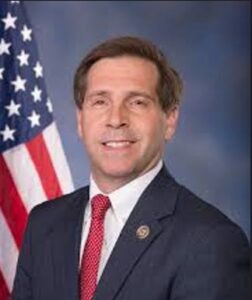
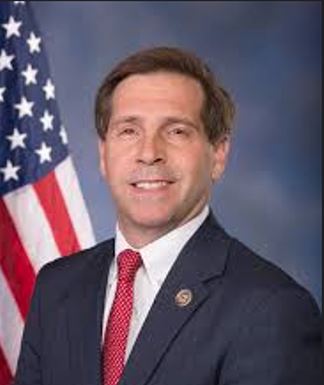
The Nashville Banner newspaper reported Nov. 7 that Rep. Chuck Fleischmann is under consideration for the post. The Congressman, whose district includes much of the Oak Ridge Site,  is currently the chair of the House Appropriations Energy & Water subcommittee, which helps set funding for the Department of Energy and its National Nuclear Security Administration (NNSA).  

The newspaper listed Fleischmann among Blackburn’s “final four” individuals whom she might appoint to the Senate until a special election is held in 2028.

The other three potential GOP appointees are Rep. Tim Burchett, who oversees the House Oversight Committee’s subcommittee on Delivering Government Efficiency; Glenn Jacobs, the mayor of Knox County and ex-professional wrestler; and Tennessee Deputy Gov. Stuart McWhorter.

Fleischmann recently said in Tennessee media reports that he would be interested in the seat and thinks the Senate needs “people like myself who know policy who can work with people of both parties to get things done.”

Gov.-elect Blackburn would make the appointment after her inauguration in January. On Nov. 3, Blackburn defeated Democrat Jerri Green by nearly 45% to 43%. In the Senate Blackburn has served on committees such as Finance as well as Commerce. She chaired a Commerce subcommittee on Consumer Protections.

Tennessee’s incumbent Gov. Bill Lee (R) decided not to seek re-election.

In addition to nuclear development planned around the Oak Ridge Site by the Tennessee Valley Authority and entities, Tennessee is also one of the states in the running for one of DOE’s Nuclear Lifecycle Innovation Campus centers. Ex

In This Issue

More on This Topic


Trump urges lame duck Senate to ‘immediately’ move on $350B defense reconciliation

President Donald Trump last week urged Senate leadership to move “IMMEDIATELY” on a reconciliation bill that would include $350 billion for defense.

The call arrives as Republicans navigate a lame duck session with a waning number of workdays remaining to craft final defense appropriations and policy bills before majority control soon shifts to Democrats. Then there is the matter of avoiding a looming government shutdown by Dec. 11, setting up tenuous prospects for completing a large party line reconciliation bill.

“I rebuilt our Military in my First Term, and we’re doing it AGAIN, bigger and better than ever before!” Trump wrote in a social media post. “The Radical Democrat Majority in the next Congress has already made it clear that their Number One Agenda is to BLOCK and RESIST this historic investment in our National Security. They want to leave our Warriors weak, and unguarded, but the American People want their Warriors SAFE and STRONG.”

Trump has told media outlets, such as 60 Minutes, that he was willing to work with the Democrats on issues such as immigration.

“Our Military must be strong, powerful, and respected,” Trump added. “Republicans must deliver for our Warriors. The Democrats never will. The time is NOW.”

Trump’s renewed push for $350 billion in defense funds via reconciliation, part of a proposed plan for a $1.5 trillion fiscal 2027 defense topline, follows Defense Secretary Pete Hegseth’s recent calls reiterating a need for the significant funding task “regardless of what happens in the midterms.” 

“It’s not hyperbolic to state whether or not we rebuild our military to meet the threats of the future will depend on funding the president’s vision for $1.5 trillion,” Hegseth said in October. “And our goal, come hell or high water, and we’re working shoulder to shoulder with the [Joint Chiefs] chairman and the joint staff to get it, is to make sure we hit that number on behalf of the president and the country.”

Sen. Chris Coons (D-Del.), who is in line to be the Senate’s top defense appropriator beginning in January, threw cold water last week on any GOP plans for a $350 billion reconciliation bill, or any defense reconciliation bill, before a new Congress is sworn in early next year. 

“There is no path forward on defense reconciliation. There never has been,” Coons told Exchange Monitor affiliate Defense Daily.

“Bluntly, the fact that [Republican Appropriators] Sen. [Mitch] McConnell (R-Ky.), Sen. [Susan] Collins (R-Maine), and Sen. [Lisa] Murkowski (R-Alaska) months ago said to the secretary, ‘You do not have the votes for reconciliation. Begin working now to make sure that you don’t have huge piles of broken glass in this appropriations process,’ and they did nothing, suggests that they don’t take seriously the legislative input of Congress,” Coons added. 

Sen. Patty Murray (D-Wash.), set to be chair of the full Senate Appropriations Committee come January, told Defense Daily last week that it is unlikely that Republicans will bring up a $350 billion fiscal 2027 reconciliation bill in the lame duck session.

Hegseth has said the Pentagon could ask for “potentially more” beyond the current $350 billion reconciliation request.

Democrats’ widespread victories in the midterms election likely signals the prospects of passing a $350 billion defense request via reconciliation are highly unlikely in the next Congress, when the party takes majority control of both chambers.

Exchange Monitor affiliate Defense Daily first published a version of this story.

In This Issue


More on This Topic


Kaine: Lame duck session makes headway on NDAA, other funding

[#Beginning of Shooting Data Section] Nikon D3X 1/9/2013 13:24:03.66 Time Zone and Date: UTC-5, DST:OFF RAW (14-bit) Image Size: L (6048 x 4032), FX Lens: 85mm f/1.4G Artist: Copyright: Focal Length: 85mm Exposure Mode: Manual Metering: Matrix Shutter Speed: 1/200s Aperture: f/7.1 Exposure Comp.: 0EV Exposure Tuning: ISO Sensitivity: ISO 100 Optimize Image: White Balance: Preset manual d-1, 0, 0 Focus Mode: AF-C AF-Area Mode: Single AF Fine Tune: OFF VR: Long Exposure NR: OFF High ISO NR: OFF Color Mode: Color Space: Adobe RGB Tone Comp.: Hue Adjustment: Saturation: Sharpening: Active D-Lighting: Normal Vignette Control: Normal Auto Distortion Control: Picture Control: [SD] STANDARD Base: [SD] STANDARD Quick Adjust: 0 Sharpening: 3 Contrast: Active D-Lighting Brightness: Active D-Lighting Saturation: 0 Hue: 0 Filter Effects: Toning: Map Datum: Image Authentication: OFF Dust Removal: [#End of Shooting Data Section]

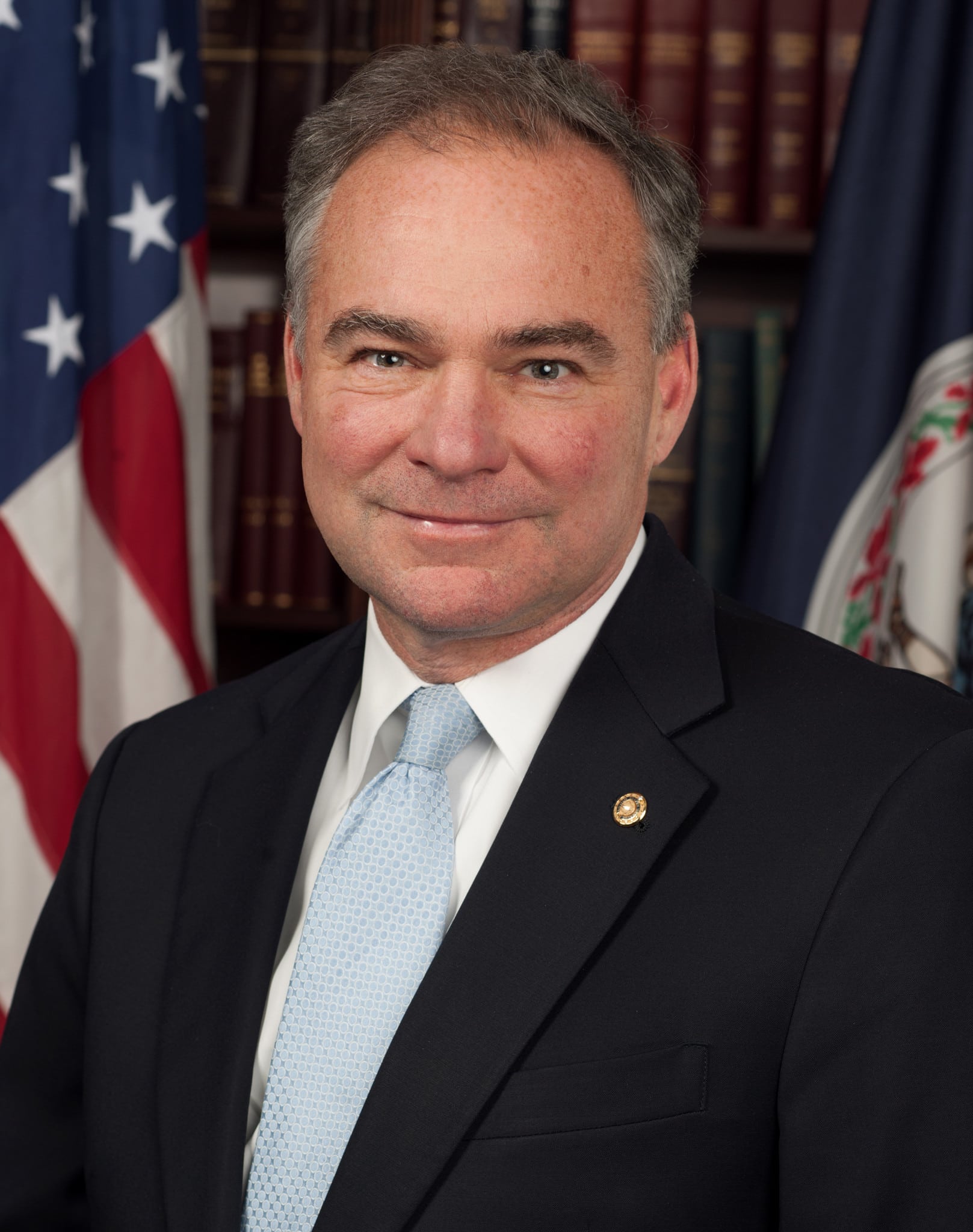
WASHINGTON, D.C. – The House and Senate will likely release the conferenced version of the fiscal 2027 National Defense Authorization Act (NDAA) in a “couple weeks,” a staffer for Sen. Tim Kaine (D-Va.) told Exchange Monitor Tuesday.

The defense policy bill also sets spending caps for appropriations bills. It also authorizes funding for the Department of Energy’s semi-autonomous National Nuclear Security Administration (NNSA). 

Kaine discussed NDAA and other defense-related funding during the lame duck session with the Exchange Monitor in the halls of the Capitol Tuesday. Kaine asked his staffer to provide a bit more specifics on possible NDAA timing. 

“The NDAA, I mean, the good news is, you know, it’s being pre conferenced,” Kaine told the Monitor. A conferenced version of the bill results from taking both chambers’ versions of the bill, setting aside and working out the parts that are “mostly agreed on,” and debating the more “controversial and challenging” parts, Kaine said.

“This year, you know, for kind of an… not completely unique, but a little bit unusual this year, the NDAA has really been riding with the approps [appropriations] discussion,” Kaine said. “Because with the request of such an increase in the budget, then you combine approps requests, reconciliation requests, supplemental requests, um, at such a big increase that, you know, the natural question is, okay, where’s the 67% extra coming from? 
Is it coming out of Medicaid, Medicare, or is it coming from somewhere else? So it really is riding heavy with the approps discussion right now.”

Kaine is referring to the Donald Trump administration’s proposed plan to achieve $1.5 billion in defense spending for fiscal 2027, which would include $350 billion in defense reconciliation funding.

Kaine added he thinks both the NDAA and appropriations bills will “get resolved at the same time.”

The first hint that both chambers were preparing to conference their versions of the NDAA came from a Nov. 10 letter from Sen. Chris Van Hollen (D-Md.) to both chambers’ majority and minority leaders to exclude provisions from the final bill “that would further entrench concerning aspects of the U.S.-Israel defense and intelligence relationship at a time when the Israeli government’s actions are increasingly undermining U.S. interests and values.” The letter’s addressed leaders include Senate Minority Leader Chuck Schumer (D-N.Y.), whom Van Hollen is in a race with for the Majority Leader position in a closed-door election Dec. 1.

The House would authorize $32.76 billion in funding for NNSA, while the Senate would authorize a little less at $32.31 billion. Both would authorize more than the White House requested at just over $32 billion.


In This Issue


More on This Topic


Gov.-elect Blackburn eyes Fleischmann, others for Senate seat

Sen. Marsha Blackburn’s (R-Tenn.) victory in the Tennessee governor’s race earlier this month will create an opening in the U.S. Senate and a senior House Appropriations member might be interested in the job.

The Nashville Banner newspaper reported Nov. 7 that Rep. Chuck Fleischmann is under consideration for the post. The Congressman, whose district includes much of the Oak Ridge Site,  currently the chair of the House Appropriations Energy & Water subcommittee, which helps set funding for the Department of Energy and its National Nuclear Security Administration (NNSA).  

The newspaper listed Fleischmann among Blackburn’s “final four” individuals whom she might appoint to the Senate until a special election is held in 2028.

The other three potential GOP appointees are Rep. Tim Burchett, who oversees the House Oversight Committee’s subcommittee on Delivering Government Efficiency; Glenn Jacobs, the mayor of Knox County and ex-professional wrestler; and Tennessee Deputy Gov. Stuart McWhorter.

Fleischmann recently said in Tennessee media reports that he would be interested in the seat and thinks the Senate needs “people like myself who know policy who can work with people of both parties to get things done.”

Gov.-elect Blackburn would make the appointment after her inauguration in January. On Nov. 3, Blackburn defeated Democrat Jerri Green by nearly 45% to 43%. In the Senate Blackburn has served on committees such as Finance as well as Commerce. She chaired a Commerce subcommittee on Consumer Protections.

Tennessee’s incumbent Gov. Bill Lee (R) decided not to seek re-election.

In This Issue


More on This Topic


Kaine agrees with Colby on value of AUKUS review

[#Beginning of Shooting Data Section] Nikon D3X 1/9/2013 13:24:03.66 Time Zone and Date: UTC-5, DST:OFF RAW (14-bit) Image Size: L (6048 x 4032), FX Lens: 85mm f/1.4G Artist: Copyright: Focal Length: 85mm Exposure Mode: Manual Metering: Matrix Shutter Speed: 1/200s Aperture: f/7.1 Exposure Comp.: 0EV Exposure Tuning: ISO Sensitivity: ISO 100 Optimize Image: White Balance: Preset manual d-1, 0, 0 Focus Mode: AF-C AF-Area Mode: Single AF Fine Tune: OFF VR: Long Exposure NR: OFF High ISO NR: OFF Color Mode: Color Space: Adobe RGB Tone Comp.: Hue Adjustment: Saturation: Sharpening: Active D-Lighting: Normal Vignette Control: Normal Auto Distortion Control: Picture Control: [SD] STANDARD Base: [SD] STANDARD Quick Adjust: 0 Sharpening: 3 Contrast: Active D-Lighting Brightness: Active D-Lighting Saturation: 0 Hue: 0 Filter Effects: Toning: Map Datum: Image Authentication: OFF Dust Removal: [#End of Shooting Data Section]

ARLINGTON, Va. – Sen. Tim Kaine (D-Va.) said the administration’s 2025 review of AUKUS was a valuable tool for assessing the challenges facing the trilateral submarine partnership.

The challenges include infrastructure investments in Australia and the pace of U.S. Virginia-class submarine production, according to Kaine. 

“Well, I do think it was productive,” Kaine told the Exchange Monitor in the halls of the Capitol Tuesday when asked about Undersecretary of Defense for Policy Elbridge Colby’s positive comments on the review of the trilateral agreement. “It really gave me a roadmap when I was there, but it’s also given me a roadmap and asking some hard questions here, because the report pointed out, you know, challenges with the pace of production on Virginia-class and some other issues that we have to own on our side.”

Colby, speaking during the Naval Submarine League’s annual symposium last week, said the administration’s 2025 review was “the best thing that ever happened to AUKUS because it’s like a real shake-up, like okay, we’re going to actually do this. Here’s how it’s going to work, and we’re going to give you as much heads up as possible.” He added AUKUS would have been undermined if they were only hoping for the best.

Kaine said he traveled to Australia about three months after the review was completed, holding 37 events in four cities over seven days, 35 of which were AUKUS-related.

“So questions in Bridge’s report about things like, you know, will the Australians make the investments in infrastructure, then, well, we not only got to ask them, we got to go see the buildings that are being done in Perth, Adelaide, and Sydney to accommodate AUKUS,” Kaine said.

Kaine said he supports AUKUS and believes the review helped identify areas that could become weaknesses in the partnership.

In This Issue

More on This Topic


China busy mapping undersea areas around U.S. operations

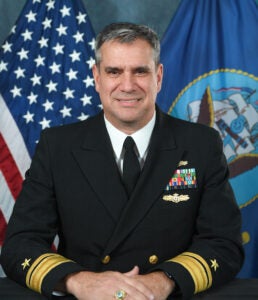
ARLINGTON, Va. – China’s expanding submarine production and seabed-mapping challenge the U.S. undersea advantage that underpins both conventional operations and the nation’s deterrent, as Beijing is increasingly targeting areas around key American operating locations, according to Vice Adm. Chris Cavanaugh.

Cavanaugh, commander of U.S. Pacific Fleet Submarine Forces, said China has launched eight Shang-class submarines in less than four years and could produce 20 to 30 similar submarines over the next decade as Beijing expands its capabilities and industrial base.

“China is doing the engineering work and the industrial base development to narrow that gap significantly,” Cavanaugh said during the Naval Submarine League’s annual symposium here Thursday.

In terms of nuclear security implications, China is expanding both its attack and ballistic-missile submarine forces, while also developing the infrastructure and information needed to operate across the undersea domain. Cavanaugh said China is conducting seabed mapping and oceanographic collection around areas where the U.S. operates and maintains critical infrastructure.

A Reuters investigation cited by Cavanaugh traced Chinese seabed mapping activities involving dozens of vessels near Taiwan, the Philippines, Guam and Hawaii.

“The work takes place in areas where they assess that we operate,” Cavanaugh said. “It takes place in areas they assess we have infrastructure.”

For U.S. strategic forces, greater Chinese undersea surveillance could complicate efforts to maintain the secrecy and freedom of movement that have historically helped protect the nation’s ballistic-missile submarines and sustain a credible sea-based nuclear deterrent.

Cavanaugh said the proliferation of sensors, underwater gliders and uncrewed systems is challenging longstanding assumptions about U.S. access and freedom of movement. “The ocean is not becoming transparent,” he said, but the changes are placing a premium on persistent, distributed surveillance.

The U.S. Pacific submarine force conducted more than 100 uncrewed-system missions and logged more than 10,000 hours of integrated undersea surveillance in 2026, Cavanaugh said. He added the U.S. retains an undersea advantage based on its equipment, crews and operational experience, but warned that the advantage “is real, but it is not guaranteed.”

In This Issue


More on This Topic


Fairbanks Morse Defense starts building sub component site with AUKUS investment

Fairbanks Morse Defense last week broke ground on a $60 million manufacturing facility that will increase production on Virginia-class naval propulsion components funded in part from international AUKUS funds.

The company on Oct. 20 broke ground on the third Center of Excellence at the existing Bird-Johnson Propeller Company facility in Pascagoula, Miss., which it said should “effectively double” capacity to produce naval propulsion systems.

The installation costs $60 million, which includes a $27 million U.S. Navy investment via its partnership with the non-profit BlueForge Alliance that is working to support the industrial base. Of the Navy investment, $22 million of that is tied to Australia’s contribution to the U.S. Submarine Industrial Base under AUKUS Pillar I.

“Australia is contributing a total of $3 billion to uplift the U.S. SIB [Submarine Industrial Base] and support AUKUS objectives, with the first $2 billion received last year,” Matt Marburger, deputy director for AUKUS and International, said in a Navy statement. “We are investing these funds purposefully to activate and align our industrial base to deliver the capability our submarine force requires.

Australia’s funding contribution to the U.S. Submarine Industrial Base is focused on improving maintenance and production capacity of Virginia-class attack submarines to enable the planned sale of three to five boats to Australia in the 2030s before it later starts building the SSN-AUKUS submarines in the 2040s.

The Navy said the AUKUS Integration and Acquisition office, in collaboration with the U.S. Submarine Industrial Base program office, developed a spending plan to invest Australia’s funds in the most high-impact areas and maximize the impact of its contribution to the U.S. industrial base. The Navy said the new facility will be capable of producing propulsors, propellers, rotors and other related critical components for multiple shipbuilding programs.

Exchange Monitor affiliate Defense Daily first published a version of this story. 

In This Issue

More on This Topic