Weapons Complex Monitor Vol. 37 No. 16
Visit Archives | Return to Issue
PDF
Weapons Complex Monitor
Article 3 of 9
April 23, 2026

WTP early glassmaking to hit full stride by 2028

By Staff Reports

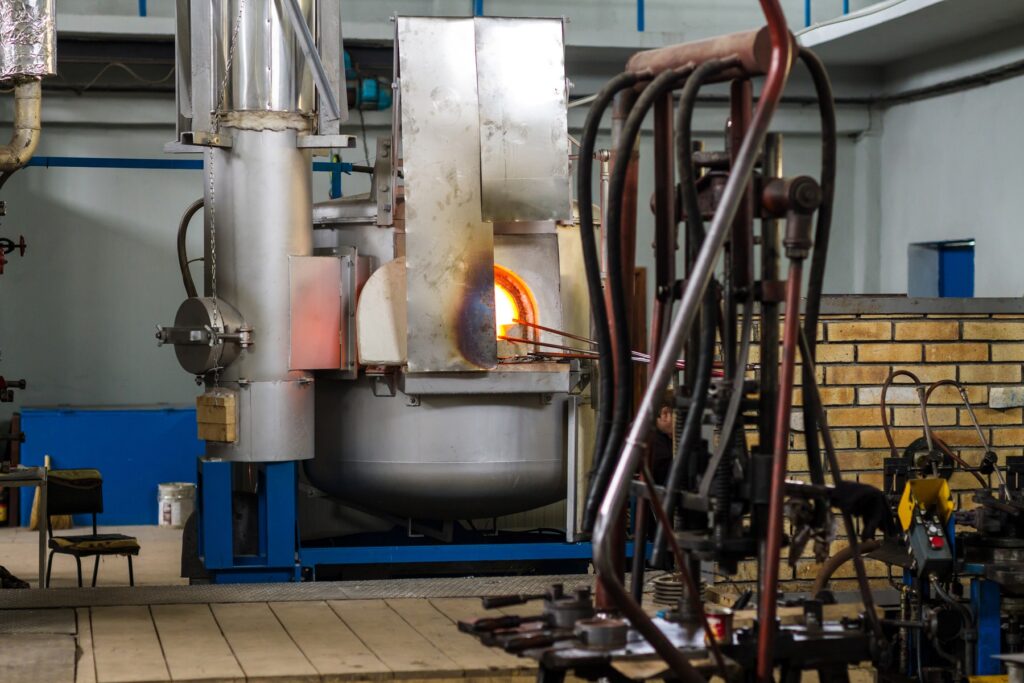
The Hanford Site’s Waste Treatment Plant (WTP) should reach full speed for turning less radioactive waste into solid glass form by October 2028, Department of Energy officials told the Hanford Advisory Board Wednesday in Richland, Wash.

By that point, the plant should be  converting about 2 million gallons of low-level tank waste into glass form annually, according to the briefing from Mat Irwin, DOE assistant manager for the Waste Treatment Plant and Hanford Field Office Manager Ray Geimer. 

The update on the vitrification plant was featured during the regular meeting of the HAB panel.  

The Direct-Feed Low-Activity Waste Facility at the plant is completing its sixth month of operations. Since October 2025, the facility has solidified roughly 80,000 gallons of the 56 million gallons of radioactive liquid and hazardous waste. That is up from 40,000 gallons as of the 2025 Christmas break, a Bechtel National official told Exchange Monitor in January. 

The 56 million gallons, held in 177 underground tanks, some of which have leaked, are the residue of Hanford’s decades as a plutonium production site. 

During its opening months, the multibillion-dollar Waste Treatment Plant has been going through a number of starts and stops, DOE officials said. “The challenge is how to fine-tune the operational parameters,” Irwin said during the Wednesday session. A copy of his slides is available here

The periods of continual glass production will gradually grow longer over the next three years, Irwin said.

“We’ve got to keep encouraging our folks at the [vitrification] plant to get that running at full capacity,” DOE’s Geimer told the board.

Low-level waste accounts for most of the volume but less of the radionuclides than the high-level waste in the tanks. Hanford is not scheduled to start vitrifying high-level waste into glass until 2033. But the WTP does not have sufficient capacity to handle all the low-level waste. As a result, DOE is exploring plans to solidify much of the less-radioactive waste into a concrete-like grout.

The Government Accountability Office has estimated that grouting could save the DOE Office of Environmental Management billions of dollars compared to the cost of building and operating a second waste vitrification plant to make glass. 

In testimony this week before a Senate panel, DOE’s assistant secretary for Environmental Management Tim Walsh said Hanford is moving forward with a “glass-plus” plan that will augment the WTP with grout operations. 

Also Wednesday, HAB heard that the Washington Department of Ecology has calculated that $6.76 billion would be needed from Congress for Hanford cleanup in fiscal 2027. The figure is based upon Hanford’s lifecycle cleanup costs, said an Ecology spokesperson. Hanford’s fiscal 2026 budget is $3.35 billion out of Environmental Management’s total $8.5 billion. The Donald Trump requested roughly $2.95 billion for Hanford in fiscal 2027. That would be out of a proposed total Environmental Management office budget of $8.2 billion. 

Comments are closed.