Under the continuing resolution President Barack Obama signed Thursday after weeks of congressional bickering totally unrelated to nuclear programs, the Energy Department’s legacy nuclear-cleanup office is now funded at a slightly higher level than the White House requested for fiscal 2017.
With the season’s only must-pass bill out of the way, Congress now adjourns until mid-November so members can campaign ahead of the U.S. election on Nov. 8. By the time lawmakers return to Washington to begin earnest negotiation on a permanent 2017 budget, either Hillary Clinton or Donald Trump will have been elected president of the United States.
With a straight extension of 2016 funding. DOE’s Office of Environmental Management would be budgeted at about $510 million a month: roughly 2 percent higher than the White House’s requested rate for the fiscal year that begins Saturday.
That funding is part of the stopgap budget bill that freezes federal spending at fiscal 2016 levels and leaves the Energy Department with an annualized budget of $29.5 billion through Dec. 9.
The most glaring funding gap for DOE’s Cold War-waste-cleanup mission under the continuing resolution was addressed in bill language that grants Energy Secretary Ernest Moniz the authority to fund uranium enrichment cleanup at the Portsmouth Site in Ohio and the Paducah Site in Kentucky at greater-than-2016 levels.
For 2017, the White House requested a 14 percent increase for the Portsmouth site, and a three percent increase for Paducah. The sites are managed by a single DOE field office.
Portsmouth, which is about to start building another on-site waste disposal facility to deal with some of the detritus of ongoing uranium decommissioning and decontamination work there, would have faced an annualized shortfall of about $80 million — $6.5 million or so a month — had not lawmakers made special provision for the site in the stopgap budget bill. Also driving the shortfall is a persistent slump in spot prices for uranium; DOE pays for Portsmouth cleanup not only with appropriated funds, but by bartering uranium to site cleanup contractor Fluor-BWXT Portsmouth, which then sells the material on the open market.
Paducah and Portsmouth essentially got the only open assurance that projected funding needs will be met during two months of stopgap spending.
The White House had also requested fiscal 2017 spending increases, respectively of 4 and 5 percent, for liquid waste cleanup at the Hanford Site near Richland, Wash., and at the Savannah River Site near Aiken, S.C. Similarly, the administration sought 4-percent funding increases for cleanup at both the Nevada National Security Site and the West Valley Demonstration Project in upstate New York.
Meanwhile, a larger issue remains: how the two chambers of Congress will reconcile their differing funding priorities for the Environmental Management office after they return from their home states and the campaign maelstrom.
In terms of raw funding, the 2017 energy spending bills the House and Senate produced this summer before the appropriations process collapsed are only about 3 percent apart. The Senate’s recommendation is the higher of the two, with some $6.4 billion for Environmental Management.
Among the major differences between the two bills, Sens. Maria Cantwell (D-Wash.) and Patty Murray (D-Wash.) helped set the budget for the mostly solid waste cleanup at Hanford under the Richland Operations Office at about $840 million — some 9 percent below current levels, but 17 percent more than requested and 11 percent more than the House proposed.
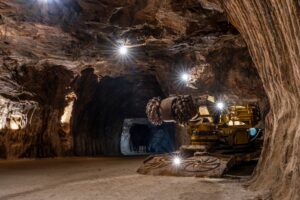
To pay for that plus-up, the Senators proposed smaller appropriations than did the House for DOE’s Idaho Site and the Waste Isolation Pilot Plant (WIPP) near Carlsbad, N.M. WIPP, the underground salt mine, is DOE’s only disposal facility for equipment and material contaminated by elements heavier than uranium.
At the DOE National Cleanup Workshop earlier this month, Rep. Mike Simpson (R-Idaho), the House’s top DOE appropriator, said he was confident that he and Sen. Lamar Alexander (R-Tenn.), chairman of the Senate Appropriations energy and water subcommittee, would need only a few days to iron out the differences in their proposed 2017 spending bills.
Even if they can, there is no guarantee the appropriations process will not again go down to the wire, or that lawmakers maneuvering in the lame duck for bargaining power over a new presidential administration will not force another extension of 2016 funding.
Some industry officials who spoke with Weapons Complex Monitor in the final month of fiscal 2017 said the short-term continuing resolution just signed would not put too sharp a crimp on their businesses. However, these people warned, a longer extension of prior-year funds might have harsher consequences across the DOE complex.