Nuclear Security & Deterrence Monitor Vol. 30 No. 01
Visit Archives | Return to Issue
PDF
Nuclear Security & Deterrence Monitor
Article 1 of 10
January 08, 2026

Bipartisan appropriations minibus that includes Energy and Water passes on the House floor

By Sarah Salem

A three-bill minibus appropriations bill that includes funds for Energy and Water development, including $25.4 billion to the National Nuclear Security Administration (NNSA), passed the House floor 397-28 Thursday.

The bill was released by top appropriators in the Senate and House Monday on both sides of the aisle. Congress has until Jan. 30 to either get all twelve spending plans passed or pass another stopgap spending bill, lest the government shut down again due to a lapse in funding.

House appropriations Ranking Member Rosa DeLauro (D-Conn.) said on the House floor there is not a single “poison pill policy rider” – meaning an unrelated, often controversial amendment that is snuck into a major policy or spending bill and either forces its defeat or  – in the package, which she said was a “testament to the good faith of these negotiations that both sides agreed to drop provisions the other found objectionable.”

“I know some of my Democratic colleagues may be reticent to support a funding package for an administration that has been rife with abuse since the day they took office,” DeLauro continued. “I understand your concerns, and I share them. But abandoning the appropriations process only empowers the president and the Office of Management and Budget to continue manipulating federal spending as a partisan weapon.

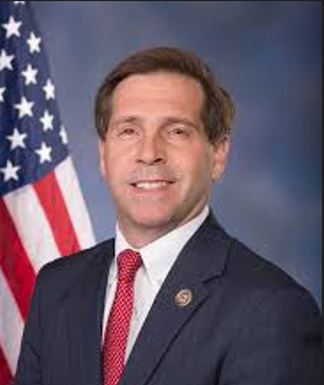
Rep. Chuck Fleischmann (R-Tenn.), chairman of the House Appropriations Energy and Water subcommittee, praised the bill on the House floor for “prioritizing the continued modernization of the nuclear weapons stockpile and the United States Navy nuclear fleet.”

Fleischmann told the Exchange Monitor in the halls of the Capitol Thursday he was “very pleased” with the “robust” funding for modernization programs in NNSA, and said while he made sure Republican priorities were in the bill he thinks the “minority is cooperating” since Democrats in the House and Senate “got some key things that they needed.”

Fleischmann added he thinks the Senate will pick the bill up “very quickly,” but “obviously they’re going to need 60 votes.”

“The bills were negotiated with that in mind,” Fleischmann added. “We want to keep that momentum going,” and since the minibus bill includes the first three of twelve appropriations bills, he hopes that the Senate can pass it, the president can sign it, and then Congress can “move to the next three, and then move to the final three. It just keeps the process flowing.”

“This package rejects President Trump’s push to let our competitors do laps around us by slashing federal funding for scientific research by upwards of 50% and killing thousands of good jobs in the process,” Sen. Patty Murray (D-Wash.), ranking member of both the Senate Appropriations committee and Energy and Water subcommittee, said in a statement Monday. “Importantly, passing these bills will help ensure that Congress, not President Trump and Russ Vought, decides how taxpayer dollars are spent—by once again providing hundreds of detailed spending directives and reasserting congressional control over these incredibly important spending decisions.”

Murray added, “It is so important we pass full-year funding bills again and refuse to cede power to this administration, and I hope that Republicans will work with us to do that as we pass the remainder of our funding bills.”

Defense Environmental Cleanup, which accounts for the bulk of funds for the DOE Office of Environmental Management, would receive nearly $7.4 billion. Non-defense Environmental Cleanup would receive $322 million. The document says $865 million will be deposited into the DOE’s Uranium Enrichment Decontamination and Decommissioning Fund.

The bill would also again fund the Defense Nuclear Facilities Safety Board (DNFSB) at $42 million.

While a topline is not listed for the Department of Energy’s semi-autonomous agency in charge of maintaining the nation’s nuclear weapons stockpile, $25.4 billion is the sum of the funds that would go to weapons activities, naval reactors, defense nuclear nonproliferation and federal salaries. That is $200 million above the White House’s request.

The bill would provide $20.4 billion for weapons activities, which would include $186 million for the nuclear-armed, sea-launched cruise missile and $1.13 billion for the Savannah River Plutonium Processing Facility. That number is $400 million above the White House’s budget.

For defense nuclear nonproliferation, the bill would provide $2.4 billion, or $115 million over President Donald Trump’s budget. This has been a controversial figure in the House in particular, with some Democrats saying the House’s subcommittee number of less than $2 billion was too low.

“I think Republicans and Democrats all realized that the nonproliferation aspect of the NNSA is very important, and nobody does that better in any other country,” Fleischmann told the Monitor. “We do that better than anybody on earth,” he continued, while adding Democrats put more of an “emphasis” on nonproliferation “whereas Republicans including myself put more of an emphasis on modernizing and keeping our nuclear stockpile strong. What it comes down to is a choice of repository decisions, sometimes with very limited choices. This time we got very robust funding.”

While funding for the Uranium Processing Facility at the Y-12 National Security Complex, which abuts Fleischmann’s district, was lower for fiscal 2026 at $730 million than the $841 million the House requested for fiscal 2025, Fleischmann attributed that to it being a “different year, different priorities,” a justification for sticking with the appropriations process, he added. “The needs on the reservations change, the needs of the projects change” year by year, he said.

Naval reactors, which includes Columbia-class reactor systems development, would receive $2.13 billion, around $200 million less than the White House requested. Finally, federal salaries and expenses for NNSA would receive $525 million to remain available until Sept. 30, 2027.

According to the minibus package, the Department of Energy’s nuclear cleanup office would receive in excess of $8.5 billion, counting all three major tranches of its funding.

“With passage of these three measures, we will have full-year funding in place for many of our most crucial programs,” House appropriations committee chairman Tom Cole (R-Okla.) said in Tuesday’s House rules committee hearing on the bill. He added that with the bill, the “Army Corps of Engineers will continue its important work of water development and flood control, as will the Department of Energy’s critical programs, including maintenance of our nuclear weapons stockpile.”

“I could go on and on, but I think the Committee sees the point: this three-bill package provides funding for countless critical programs that assist Americans every single day of the year,” Cole continued.

Comments are closed.