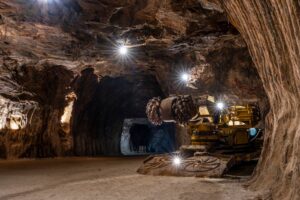
Nobody was hurt last month when a four-foot broken slab of concrete fell 1,400-feet down a utility shaft at the Department of Energy’s Waste Isolation Pilot Plant (WIPP) near Carlsbad, N.M., according to a safety board report.
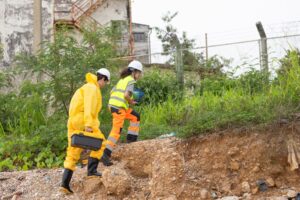
Likewise, no equipment was damaged in the May 27 incident that happened while a subcontractor crew from Harrison Western Shaft Sinkers was repairing a water leak near a construction joint in the concrete liner of the Utility Shaft. That is according to a report dated June 6 from the Defense Nuclear Facilities Safety Board (DNFSB).
“Workers were working on the galloway work platform in the shaft and began drilling holes into the shaft wall to create injection ports for grouting, according to the DNFSB staff report. A Galloway is basically a platform used in mining operations. “During this activity, an approximately 4-foot by 1-foot by 6-inch section of concrete liner spalled and fell approximately 1,400 feet to the bottom of the shaft.”
No workers had access to the area below the platform while the work was taking place, according to the DNFSB report.
Utility shaft repair work was halted after the concrete fell down the shaft. WIPP prime contractor Salado Isolation Mining Contractors, which is led by Bechtel, and various subcontractors are looking at preventive measures to limit additional concrete breaking during the work, according to DNFSB.
DOE did not immediately comment by deadline Thursday.