DNFSB WANTS TO UPDATE DOE DIRECTIVES REVIEW PROCESS

The Department of Energy’s directives revision process is “too cumbersome” and creates confusion, Defense Nuclear Facilities Safety Board Chairman Peter Winokur said in a letter earlier this month to Energy Secretary Ernest Moniz. In his April 4 letter, which was made public only recently, Winokur urged Moniz to review the directives revision and updating process to “eliminate barriers to the timely correction of identified problems and to eliminate any misalignment between practice and written guidance.” Winokur noted that a revision to the DOE standard for preparing documented safety analyses was two years past former Energy Secretary Steven Chu’s commitment to revise the standard by March 31, 2012. “A cumbersome and untimely approach to document revision delays correction of identified problems,” Winokur said in the letter. “Further, delay fosters confusion when operational practice diverges from outdated written guidance.”

Winokur also noted that nuclear explosives safety study terms like “pre-start” and “post-start” don’t make sense for operations that have already begun, which the NNSA has tried to correct by issuing a “process deviation” directing the use of different names for ongoing operations. A second “process deviation” is in the works, he noted. “Process deviations, however, create an inconsistency between practice and the as yet unrevised DOE directives governing nuclear explosive safety. Rather than issuing process deviations, it would be more prudent to expeditiously revise the directives such that practice and written guidance are fully aligned.”

More on This Topic


Hegseth pushes for Defense reconciliation with at least $350B regardless’ of midterms outcome

Defense Secretary Pete Hegseth said last week the Trump administration plans to continue its push for at least $350 billion, “potentially more,” in defense funds via the reconciliation process “regardless of what happens in the midterms.” 

Hegseth’s doubling down on the push for a $1.5 trillion fiscal 2027 defense topline, to include the $350 billion sought through reconciliation, comes amid the department’s move to establish a new four-star Autonomous Warfare Command. He noted the mandatory spending request, or government funding channeled through any avenue other than annual appropriations, includes more than $50 billion for unmanned systems. 

“We’re lockstep on that with the White House. We’ll ensure, regardless of what happens in the midterms, we’re running fast immediately with the [congressional] committees to ensure that that reconciliation bill,” Hegseth said during a panel discussion at the Association of the U.S. Army’s annual conference in Washington D.C., “at a minimum of $350 [billion for defense], potentially more, ultimately fills up what this department needs in order for the president to ensure that we reestablish deterrence and rebuild the military around the world.”

“It’s not hyperbolic to state whether or not we rebuild our military to meet the threats of the future will depend on funding the president’s vision for $1.5 trillion,” Hegseth added. “And our goal, come hell or high water, and we’re working shoulder to shoulder with the [Joint Chiefs] chairman and the joint staff to get it, is to make sure we hit that number on behalf of the president and the country.”

While the government is currently operating under stopgap funding legislation with Congress having yet to pass final fiscal ‘27 appropriations bills or a negotiated reconciliation bill, Hegseth said Pentagon leaders’ “number one priority” is ensuring the department secures the full $1.5 trillion request. 

“Especially when you look at the deferred maintenance and the [continuing resolutions] that the services have had to endure for years and years and the chronic underfunding that’s existed,” Hegseth said. “Add that to the bureaucracy which adds more to the personnel costs and exquisite systems which crowds out [operations and maintenance funding] and certainly doesn’t leave any opening for any new innovations or new investments or new entrants.”

Prospects for passing another GOP-led reconciliation bill remain tenuous, with many lawmakers having yet to back the large defense spending request, to include lead Republican appropriations pushing back against the use of mandatory rather than discretionary funding for several top Pentagon priorities, and with Congress potentially facing a change in majority control in the next Congress following the upcoming midterms.

“The president recognizes all of this and said, ‘Hey, we would love to do it through the regular budget process but if we cannot then we’ll do it through reconciliation.’ And we will ensure, whether it’s $350 [billion] as a minimum [in] a reconciliation bill or more, that we meet the president’s expectation,” Hegseth said on Wednesday. 

Exchange Monitor affiliate Defense Daily first published a version of this story.

In This Issue

More on This Topic


Key House, Senate races in DOE nuclear cleanup complex

With less than three weeks to go before the Nov. 3 general election, here is a look at some of the key House of Representatives and Senate races around Department of Energy nuclear cleanup sites.

The sites and races are listed alphabetically. 

Energy Technology Engineering Center in California: Rep. Brad Sherman (D) is running for re-election against Republican Larry Thompson.

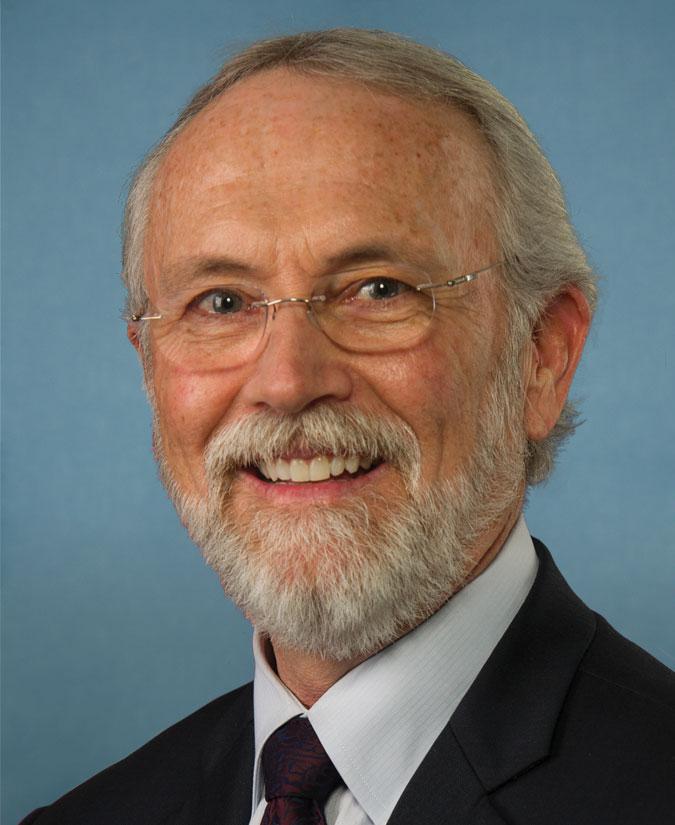
Hanford Site in Washington: Republican Amanda McKinney and Democrat John Duresky will square off to fill the seat being vacated since longtime incumbent Dan Newhouse (R) in Washington’s fourth congressional district elected not to seek a new term. McKinney is a member of the Yakima County Commission while Duresky is a retired Air Force major. Newhouse, a longtime incumbent, is one of the few remaining Republicans in Congress who voted to impeach President Donald Trump after Trump supporters attacked the U.S. Capitol on Jan. 6, 2021.

Idaho National Laboratory: Incumbent Rep. Mike Simpson (R) cruised to an easy win in the GOP primary in May and will face Democrat Ellie Gilbreath in the general election. Gilbreath is an attorney and mediator. Simpson, a member of the House Appropriations Committee, has served in the House since January 1999. In the Senate, incumbent Jim Risch (R), a member of the Senate Energy & Natural Resources Committee, is running for re-election against Independent Natalie Fleming and Libertarian Matt Loesby. Democrat David Roth dropped out of the race. 

Lawrence Berkeley National Laboratory in California: Rep. Lateefah Simon (D) is seeking re-election against fellow Democrat Jamie Joyce under California’s top-two primary system. California as a state sometimes practices intra-party general elections.

Lawrence Livermore National Laboratory in California: Rep. Aisha Wahab (D) won a special election in August to serve out the remainder of the term of Rep. Eric Swalwell, who resigned after several sexual assault allegations.  A former member of the California State Senate, Wahab is an information technology manager. In the general election, Wahab will face another Democrat, Melissa Hernandez, who won the party’s primary and is a member of the board of directors for Bay Area Rapid Transit. 

Los Alamos National Laboratory in New Mexico: Rep. Teresa Leger Fernández (D) is seeking her fourth term against Martin Zamora (R), a member of the New Mexico House of Representatives. Leger Fernández is on the House Rules Committee and Natural Resources Committee. In the Senate: Incumbent Ben Ray Luján (D) is seeking re-election against Republican Larry Marker, who won the GOP primary.  

Moab Uranium Mill Tailings Remedial Action (UMTRA) Project in Utah: Rep. Mike Kennedy (R) is running for re-election against Democrat Johnny Larsen. 

Nevada National Security Site: Incumbent Democrat Rep. Steven Horsford will seek re-election against Republican Copy Whipple, who won the GOP primary. Whipple describes himself as a rancher and businessman. 

Oak Ridge Site in Tennessee: Rep. Chuck Fleischmann (R) , currently chair of the House Appropriations Energy & Water subcommittee, is another longtime GOP congressman defending his seat. He will face Anna Golladay (D) in the general election. Golladay, who won her party’s primary, has a background as a consultant, business operator and associate pastor in the United Methodist Church. In the Senate: Bill Hagerty (R) is running for re-election against Democrat Marquita Bradshaw.

Paducah Site in Kentucky: Incumbent Rep. James Comer (R) is running for re-election against Democrat Drew Williams, who has a bachelor’s degree from Murray State University and has worked in the construction industry. Comer is chair of the House Oversight and Government Reform Committee. In the Senate: With the retirement of long-serving Republican incumbent Mitch McConnell, the seat is being sought by Republican Congressman Andy Barr and Democrat Charles Booker, a former member of the Kentucky legislature. 

Portsmouth Site in Ohio: Rep. David Taylor (R ) is seeking re-election against Democrat Jen Mazzuckelli, a high-school English teacher. In the Senate race: Republican incumbent John Husted, a former lieutenant government appointed to fill the unexpired Senate term of Vice President J.D. Vance, will defend the seat against Democrat Sherrod Brown. Brown served three terms in the U.S. Senate before losing his seat in 2024. 

Sandia National Laboratories in New Mexico: Rep. Melanie Stansbury (D) is seeking re-election against Republican Ndidiamaka (Didi) Okpareke, a pharmacist who won the GOP primary. 

Savannah River Site in South Carolina: Longtime Republican incumbent Joe Wilson is seeking re-election against Democrat Zyon Khalifa, an attorney who won his party’s primary. In the Senate: Republican Sen. Darline Graham, appointed to the seat following the death of her brother Lindsey Graham this summer, and who also won the GOP Senate primary, will seek a full term against Democrat Annie Andrews.  

West Valley Demonstration Project in New York: Incumbent Republican Nick Langworthy is running for re-election against Aaron Gies for the Democratic Party and the Working Families Party.

Waste Isolation Pilot Plant in New Mexico: Rep. Gabe Vasquez, a Democrat,  is seeking re-election against Republican Greg Cunningham.  

More on This Topic


Congress forages for answers on the logistics of DOE’s nuclear campus program

WASHINGTON — Nuclear industry experts and Congress continue to navigate the early development stages of the Department of Energy’s Nuclear Lifecycle Innovation Campus program.  During the Senate Environment and Public Works Committee’s Wednesday hearing, multiple senators sought further understanding of the inner workings, such as funding, interagency partnerships and disposal of different types of wastes, […]