The Department of Energy’s $8.2 billion budget request for its nuclear cleanup branch would help support everything from artificial intelligence (AI) to new emergency facilities.
That is among the tidbits emerging from the DOE Office of Environmental Management’s (EM) 437-page budget justification posted online last week.
DOE said an initiative, the AI Research and Development (R&D) Roadmap, was developed by the Savannah River National Laboratory in South Carolina with support of the Network of National Laboratories for Environmental Management and Stewardship during fiscal 2026.
“The R&D Roadmap identified focus areas for AI as an enabling technology for accelerating cleanup while reducing costs, risks, and long-term liabilities across EM mission areas focused initially on tank waste,” according to the budget document.
In fiscal 2027, which starts Oct. 1, EM will implement the roadmap recommendations and develop the EM Lighthouse Challenge to accelerate the EM mission, by leveraging the American Science Cloud (AmSC).
The Lighthouse Challenge is being done in conjunction with DOE’s flagship Genesis Mission, according to the budget justification.
“To support EM’s 2040 vision, the Lighthouse Challenge will develop full-scale AI foundation models using EM’s unparalleled 30+ years of operational data from large-scale nuclear processing facilities such as the Defense Waste Processing Facility and the Salt Waste Processing Facility at the Savannah River Site. This experience will be used to help ease growing pains at new facilities such as the Waste Treatment Plant at the Hanford Site in Washington state, DOE said.
Here are some lower-tech notes from the justification document:
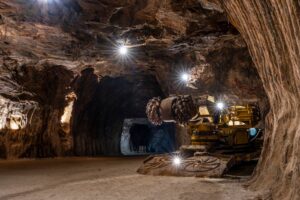
DOE made a one-time payment to the state of New Mexico during 2025 for road improvements for Waste Isolation Pilot Plant (WIPP) WIPP route-related road infrastructure projects. No similar payment is planned for fiscal 2027, DOE said in its official budget document. Improving the roads leading to the nation’s only underground disposal site for defense transuranic waste has been a concern for years.
By March of 2027 DOE’s Office of Environmental Management plans to Identify and develop treatment technology for calcine waste at the Idaho National Laboratory. DOE is supposed to treat 1.2 million gallons of calcine at the laboratory by the end of 2035.
At the Paducah Site in Kentucky, Installation of the new Fire Department Facility is planned for fiscal 2028 to replace a 1950’s vintage facility. Crews finished building a new emergency operations center at Paducah in 2023.