ENERGYSOLUTIONS MAKES NEW SENIOR MANAGEMENT CHANGES

Mike Nartker
WC Monitor
1/10/2014

EnergySolutions is starting off the new year with a set of senior management changes. As part of a new “consolidation” of the company’s management team, Mark Morant and Alan Parker have been named to oversee Projects; and Products, Projects and Technology, according to EnergySolutions spokesman Mark Walker. “Mark Morant is President and Alan Parker is COO. As part of Alan’s responsibilities Alan has operational control of all projects globally across the U.S., Europe and Canada,” Walker said in a written response. Morant previously held the title of President of Products and Technology, while Parker previously held the position of President of Projects and Government Group. Also as part of the reorganization, Billy Morrison has been named President of EnergySolutions’ Government Group. In addition, Ken Robuck has been named co-President of the company’s Logistics, Processing and Disposal, along side John Christian. “The changes to our business units will improve our operational efficiency and strengthen the company for future growth,” Walker said.

EnergySolutions has also hired Zack Smith to serve as Vice President of Operations, reporting to Morrison. Smith comes to EnergySolutions from the Department of Energy, where he last served as Deputy Manager of the Savannah River Operations Office. In a Dec. 31 message to employees, Smith said he is set to retire from federal service in “early January 2014.” In a statement, Walker said, “We are excited about the addition of Zack Smith to our Senior Leadership team. His broad executive experience in nuclear operations, project startup and decommissioning as well as his ability to work with the various stakeholders including state regulators, federal leadership, unions etc will be a significant asset to us as we move forward on our strategic initiatives.”


In This Issue

More on This Topic


Environmental scientists in protective suits surveying contaminated soil at an industrial cleanup site.

WIPP contractor taps new communications director

The Department of Energy’s prime contractor for the Waste Isolation Pilot Plant (WIPP) near Carlsbad, N.M., has hired Patrick Hefflinger as its new head of communications. Bechtel-led Salado Isolation Mining Contractors announced Hefflinger’s appointment in a Monday news release. Hefflinger, who has more than 15 years in the field, comes to WIPP after being a […]


Invites go out to new HAB appointees; Nevada advisory board closing up?

The Department of Energy’s Office of Environmental Management (EM) said Tuesday appointment letters have gone out to replacement members for a revamped Hanford Advisory Board (HAB) in Washington state.

Meanwhile, the chair of EM’s Site-Specific Advisory Board for the Nevada National Security Site said the local advisory panel has been told it will be disbanded or “sunsetted” at the end of fiscal 2027, which would be Sept. 30, 2027.

Those are among the takeaways from Tuesday’s online meeting of the EM Site-Specific Advisory Board chairs.

During the meeting, Nevada Advisory Board Chair Eddie Williams asked DOE Assistant Secretary for Environmental Management Tim Walsh for details on the plan to discontinue the Nevada panel. Walsh replied he plans to be in Las Vegas in a few weeks and could discuss it in person then. Williams also voiced concern about how locals can still provide input on the Nevada National Security Site after the advisory panel closes.

“You are probably going to look around and notice, Hanford is absent from the board today,” meeting moderator Eric Roberts said during the online session. Letters to the new members, who were selected by EM headquarters in Washington, D.C., went out last week, Roberts noted.

DOE’s Environmental Management office informed HAB in August that it wanted to “modernize” the Hanford board, reducing its headcount from 38-to-20 members and bringing its procedures more in line with the other seven advisory boards for the Cold War and Manhattan Project sites.

A spokesperson for the Washington state Department of Ecology, state regulator for Hanford, said in an email response to Exchange Monitor Tuesday the agency has not received any list of the new HAB members yet.  

During his presentation, Walsh stressed reindustrialization of the nuclear cleanup sites as well as the upcoming issuance of something called the “Vision 2040” document that will discuss accelerating site remediation and economic development.

In This Issue

More on This Topic


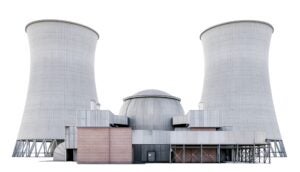
A nuclear power plant facility featuring two large cooling towers alongside a domed reactor containment building.

NRC issues final EIS for GLE’s planned Paducah enrichment facility

The Nuclear Regulatory Commission issued the final environmental impact statement for Global Laser Enrichment’s (GLE) proposed laser enrichment facility located near the Department of Energy’s Paducah Site in Kentucky. According to GLE’s Oct. 23 press release, NRC staff recommended issuing a license to construct and operate the facility. This issuance comes months after NRC published […]


Santa Susana watchdog criticizes DOE cleanup approach, seeks timeline

A watchdog group is pressing the Department of Energy for clarity on its remediation plans at the Santa Susana Field Laboratory in California, saying a proposed change in approach could delay work and leave contamination in place.

Melissa Bumstead, founder of Parents Against SSFL, told Exchange Monitor that DOE is moving away from the background cleanup required by its agreement with California toward a “multiple lines of evidence” approach. The latter is one of three new soil cleanup alternatives under consideration. Bumstead believes the change could amount to a “risk-based cleanup” that allows more contamination to remain. The group has not received a firm timeline for the outstanding documents and decisions, she said.

The Boeing Company, NASA and the Department of Energy are the three parties responsible for cleaning up the 2,850-acre site located 30 miles from downtown Los Angeles. DOE and its predecessor agencies did decades of nuclear metals research at the Energy Technology Engineering Center (ETEC). The last of the ETEC buildings was torn down in 2021. 

The sprawling SSFL site, between Chatsworth and Simi Valley, was developed for rocket engine testing and nuclear research. Its ETEC site included 10 small reactors used for research from the 1950s into the 1980s.

Cleanup advocates contend that California’s final environmental review, released in June 2023, allows much of the contaminated acreage to remain above background levels, rather than requiring removal of all contamination attributable to site operations. Bumstead said DOE’s soil cleanup in Area IV has not begun and described the work as roughly a decade behind schedule. 

In a March 6, 2025 public scoping meeting Josh Mengers, federal site director for ETEC, called the original lookup-table values “not implementable.”

“It’s a list of reasons why they can’t and they won’t, and nobody is standing up to them,” Bumstead said.

DOE’s 2018 final environmental impact statement estimated $774 million for a soil cleanup alternative intended to meet contamination limits in its 2010 administrative order with California regulators. The estimate covers Area IV and the affected Northern Buffer Zone, not the entire site or all DOE cleanup work.

 In 2018, a California Department of Toxic Substances Control (DTSC) timeline projected cleanup work would begin in 2019 and could finish in 2034. DTCS is coordinating with DOE on a draft soil cleanup plan, which DTSC expects DOE to release for public review and comment in 2029. 

DOE’s prime cleanup contractor, North Wind Portage, was awarded a $1.9 million extension in 2023, bringing the value of its environmental work task order at DOE’s portion of SSFL to $66.4 million. CDM Smith, a subcontractor, conducts groundwater testing and supports cleanup planning. Both companies declined to comment.

DOE’s Office of Environmental Management said it is working with DTSC on final cleanup plans for soil and groundwater, each with its own timeline and opportunities for public input. The agency said it and its contractors have remediated or demolished more than 270 structures, including the final 18 DOE-owned buildings in Area IV. Above-ground demolition and waste removal were completed in 2022, and interim groundwater measures have removed more than 97,000 gallons of contaminated groundwater since 2017.

“DOE remains committed to a scientifically sound, implementable cleanup at ETEC,” Mengers said.

EM-ETEC’s October newsletter described ongoing groundwater treatment pilot projects, sampling and monitoring efforts but announced no final soil cleanup decision. The next community meeting is scheduled for Nov. 12.

In This Issue

More on This Topic


A nuclear power plant facility featuring two large cooling towers alongside a domed reactor containment building.

NRC issues final EIS for GLE’s planned Paducah enrichment facility

The Nuclear Regulatory Commission issued the final environmental impact statement for Global Laser Enrichment’s (GLE) proposed laser enrichment facility located near the Department of Energy’s Paducah Site in Kentucky. According to GLE’s Oct. 23 press release, NRC staff recommended issuing a license to construct and operate the facility. This issuance comes months after NRC published […]