April 24, 2026

Environmentalists: future pit production not to ‘maintain’ stockpile

By Sarah Salem

A group of environmentalists, fresh off touring the Savannah River Site as part of an environmental review, told a press briefing that “the most expensive building ever in U.S. history” is the path to an arms race.

The environmental review is a result of a court case settlement between these environmental groups and the federal government, wherein the plaintiff public interest groups said the Department of Energy and its semiautonomous National Nuclear Security Administration (NNSA) were violating the National Environmental Policy Act by producing plutonium pits without conducting a proper environmental review. 

Jay Coghlan, director of Nuclear Watch New Mexico and one of the plaintiffs, said the pit production building at Savannah River “will be the most expensive building ever in U.S. history,” and added that “it seems highly improbable that they’ll even be able to produce pits by the middle 2030s.”

According to Coghlan, NNSA says the upper range of costs for the building is projected to be $25 billion. He added $5 billion in “sunk costs” from the pit facility’s past life as the Mixed Oxide facility, bringing his total to $30 billion.

“There’s already a long history of continuing delays, escalating costs,” Coghlan said. “That’s going to continue. That’s the obvious prediction.”

Tom Clements, director of Savannah River Site Watch and another plaintiff in the court case, added that the main contractor at Savannah River Site “underperformed” this most recent fiscal year.

In accordance with federal law, NNSA must be able to produce 80 or more pits yearly to replenish the nuclear stockpile. Savannah River is expected to make upwards of 50 once its Savannah River Plutonium Processing Facility (SRPPF) completes construction at an expected date of 2035, and Los Alamos National Laboratory in New Mexico is expected to make upwards of 30. NNSA also expects SRPPF’s design to be 90% complete in 2026.

The agreement from January 2025 requires NNSA to produce a new programmatic environmental impact statement within two-and-a-half years. Until that is complete in a process that would include public hearings nationwide and public comment on the draft of the statement, NNSA would not be able to process nuclear material at Savannah River’s plutonium facility.

“We recognize the cost and schedule challenges associated with this project, and under new leadership, we are taking aggressive, urgent steps to correct course — up to and including recompeting the Savannah River Site management and operating contract,” an NNSA spokesperson said in an email to Exchange Monitor this week. “Congress has mandated a two-site pit production capability, eliminating any single point of failure, to ensure the nation can produce at least 80 pits per year; that requirement is essential to meeting U.S. national security needs. NNSA remains fully compliant with the National Environmental Policy Act and is continuing work at the site in accordance with the Settlement Agreement until the Record of Decision is issued.”

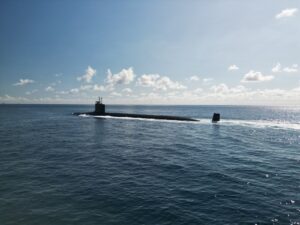
Dylan Spaulding, a senior scientist at the Union of Concerned Scientists, argued that future pit production at SRPPF is not to replenish the stockpile since the pits made there would be for new nuclear weapons – particularly pits for the W93 warhead, which would be used in the Navy’s submarine-launched ballistic missiles and would be “the first time that the United States is introducing new designs into the nuclear arsenal since the end of the Cold War.”

“This is really a paradigm shift in which the nuclear complex is turning from maintaining the weapons we have using science based techniques that don’t require nuclear testing,” Spaulding said, “to introducing, in fact, all new designs with potentially new capabilities and new delivery systems to go along with them.”

Coghlan agreed, saying, “no future pit production is to maintain the safety and reliability of the existing stockpile, and our existing stockpile has been full scale tested over history at least 1100 times.” 

“The new pit plant at SRS is strictly for new design nuclear weapons that can’t be tested because of the international testing moratorium, and therefore could erode confidence in the existing stockpile,” Coghlan added, “or conversely, these new pits could cause the US, could prompt the US to resume testing, after which all proliferation hell would break loose. Putin has already explicitly said, ‘if the US tests, Russia is going to test,’ and you can bet that North Korea, China… will test, and we’re off to the new nuclear arms race.”

Meanwhile, the State Department gave a statement in February saying China and Russia already “failed to maintain” a testing moratorium.

Nuclear Security & Deterrence Monitor
Nuclear Security & Deterrence Monitor brings you timely, accurate news and information on the activities of the U.S. Nuclear Security Administration, including weapons complex, weapons dismantlement, nuclear deterrence, the weapons laboratories and nonproliferation.
Subscribe