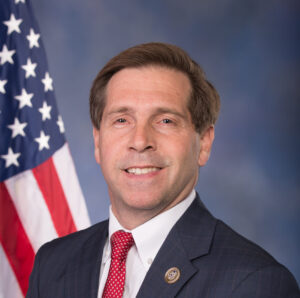
Sen. Lindsey Graham (R-S.C.) pressed Energy Secretary Chris Wright recently over the Department of Energy’s decision to redirect funding intended for the Savannah River Site to weapons production efforts at Los Alamos National Laboratory..
During a Senate Appropriations Energy and Water Development subcommittee hearing in late April, Graham said $149 million appropriated through reconciliation for the Savannah River Plutonium Processing Facility (SRPPF) had been “reprogrammed to Los Alamos pit production program,” Graham asked Wright whether he was aware of the shift. Wright responded that he was.
“How do you feel about that?” Graham asked, before answering his own question: “I don’t feel good about it.”
Graham, who also serves as the chairman to the Senate Budget Committee, also pointed to an additional $227 million intended for the Savannah River Site’s Tritium Facility that he said had been reprogrammed. While not detailing the full scope of the transfers during the exchange, the South Carolina Republican suggested multiple funding changes had deviated from congressional intent.
“Rather than go through the list, we got a bunch of money being reprogrammed,” Graham said. “That wasn’t the intent, and I’ll talk to you on the phone about it.”
The comments underscore persistent tensions surrounding the National Nuclear Security Administration (NNSA) effort to accelerate plutonium pit production at both Los Alamos National Laboratory and the Savannah River Site, an approach lawmakers have backed to hedge against schedule delays or technical setbacks at either location.
Graham, a longtime advocate for Savannah River nuclear missions, stopped short of directly criticizing Wright, praising the secretary’s performance while emphasizing that appropriated funds should be spent as Congress intended.
“When we do things up here in terms of appropriating, we’ve appreciated people to follow it,” Graham said. “All of us.”
The One Big Beautiful Bill Act made $1 billion available, in addition to fiscal 2025 funds, to accelerate construction at NNSA facilities. It also made $500 million available for accelerating primary capability modernization, which would likely include funds for pit production. All of these funds are available until September 30, 2029.
The fiscal 2027 budget justification for NNSA weapons activities said SRPPF would get $728 million in mandatory funding, meaning reconciliation.
In accordance with federal law, NNSA must be able to produce 80 or more pits, the fissile cores of a nuclear weapon, yearly to replenish the nuclear stockpile. The SRPPF in South Carolina will eventually work in tandem with Los Alamos to produce plutonium pits, or the fissile cores of a nuclear weapon, for the nation’s nuclear weapons stockpile.
Savannah River is expected to make upwards of 50 pits once SRPPF completes construction at an expected date of 2035, and Los Alamos National Laboratory in New Mexico is expected to make upwards of 30. NNSA also expects SRPPF’s design to be 90% complete in 2026.
In a hearing with the Senate committee’s House counterpart, Wright said “don’t wait” until Savannah River Site is finished to start pit production, and instead “come on out to Los Alamos and work with us in pit production today and developing the new lines and how we’re going to manufacture this going forward.”