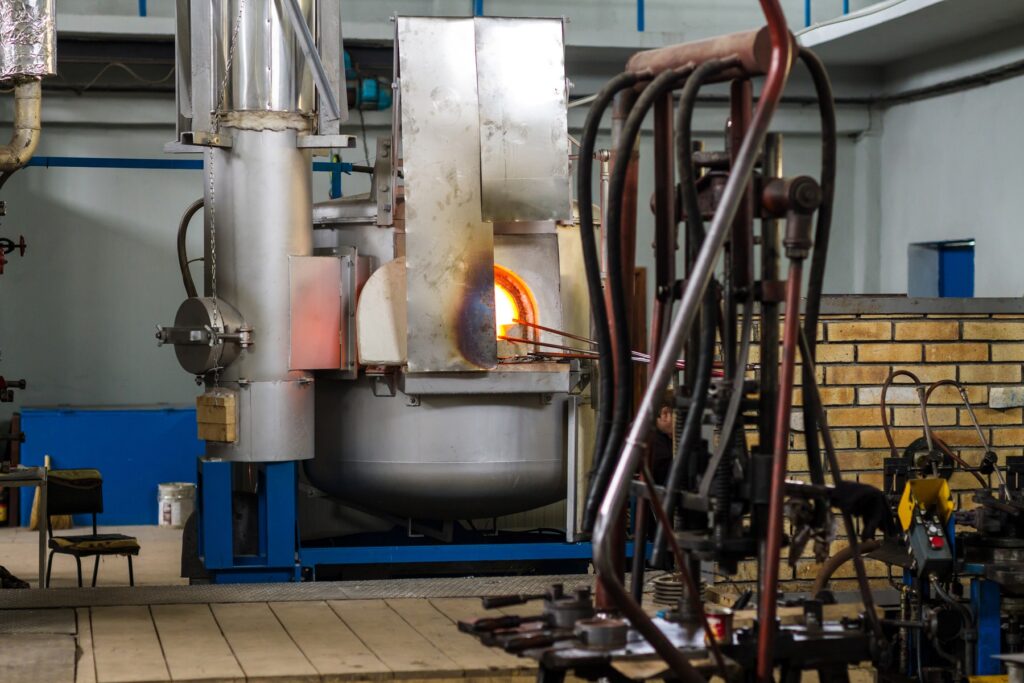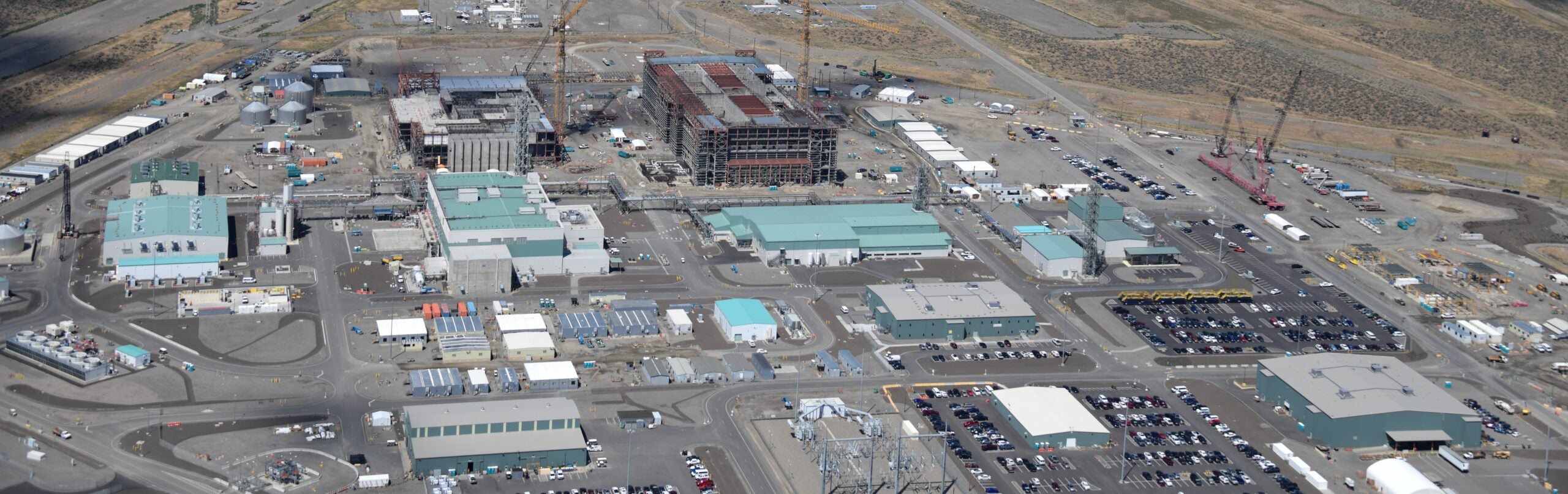
The Department of Energy acknowledged Thursday morning that the first liquid radioactive and chemical sludge from underground tanks at the Hanford Site is being transferred into the new Waste Treatment and Immobilization Plant (WTP) in Richland, Wash.
“With radioactive tank waste now being transferred to Hanford’s Waste Treatment Plant, the Low Activity Waste Facility hot commissioning process is officially underway,” according to an emailed statement from DOE’s Hanford Field Office.
“As with every project, Hanford continues working in a safe and deliberate manner as start-up activities progress to meet the October 15, 2025, milestone,” DOE goes on to say. The Oct. 15 deadline is when DOE is supposed to start vitrifying some of the less-radioactive waste into a glass form. The plant is expected to start doing the same with high-level waste in the 2030s.
Hanford’s current legal target calls for glassifying all wastes by 2052, according to a 2021 report by the Government Accountability Office.
The recent DOE statement did not offer specifics on how much of the waste was moved from Hanford Tank Farms to the Direct-Feed Low-Activity Waste Facility where the liquid waste will be converted into a stable glass-like solid.
“Radioactive and hazardous waste is starting to be moved from leak-prone underground tanks to the Waste Treatment Plant,” the Washington state Department of Ecology said in its own news release. “It will soon be fed into the melter to be transformed into glass. This is a historic moment for everyone who has worked to make this a reality. We are now on the brink of achieving hot commissioning at the plant – a legal milestone indicating the facility is fully operational and work has begun to treat tens of millions of gallons of nuclear waste.”
“This step marks a turning point on our journey to vitrifying Hanford’s nuclear waste,” said Chris Musick, general manager for the Waste Treatment Completion Company and Bechtel. Musick’s comments were emailed to company staff Wednesday.
“We are just a few days away from creating safe and compliant glass, protecting our community and the Columbia River,” Musick said. “Our months of preparation have ensured safe and secure transfer of waste and, soon, the production of compliant radioactive vitrified glass.”
“We here at ODOE [the Oregon Department of Energy] and in Oregon are very excited about the startup of hot commissioning,” said Oregon DOE Assistant Director for Nuclear Safety Maxwell Woods, who directs that state’s Hanford Cleanup Board.
“What an exciting and critical milestone, and we congratulate US DOE, its contractors, and all the countless other people and organizations who have been involved with the vit plant over the years of planning and construction,” Woods said in an email reply to Exchange Monitor.
The Oregon board was told this week that the ongoing federal government shutdown probably won’t affect startup and early operations at the WTP.
Separately, the Tri-City Herald newspaper reported Thursday that the Hanford tank waste contractor, BWXT-led Hanford Tank Waste Operations & Closure (H2C), wrote to union umbrella group Hanford Atomic Metals Council this week to say it could layoff hundreds of workers this month due to the shutdown. But H2C promptly withdrew the contingency letter, the newspaper said.
In September sources said Secretary of Energy Chris Wright was having second thoughts about deploying the multi-billion-dollar plant, as the issue was said to have factored into the termination of Roger Jarrell, the then acting head of the Office of Environmental Management.
Hanford has roughly 56 million gallons of radioactive and hazardous tank waste held in 177 underground storage tanks, most of them single-shell tanks and some of which have leaked. The waste is residue left over from decades of plutonium production for nuclear weapons.
The cost of the WTP, being built by Bechtel, is between $24 billion and $28 billion, according to various Government Accountability Office reports.
Hanford has been looking at glassifying its tank wastes since the 1990s. It began construction in 2002, with the first glass-making plant originally scheduled to go online back in 2009. WTP is supposed to take care of perhaps half of the tanks’ low-level wastes. DOE and the state have agreed to explore using concrete-like grout to tackle some of the remaining low-activity wastes because that approach would be supposedly faster and cheaper than building a second plant. That was the conclusion of research by a National Academy of Sciences panel.
Reporter John Stang contributed to the article.