Citing factors such as growing electricity demand, several states are forming working groups, task forces or commissions to explore new nuclear power generation.
The interest extends into New England, which has a complicated history on nuclear power, with multiple retired reactors and at least a couple of senators, Sen. Ed Markey (D-Mass.) and Sen. Bernie Sanders (I-Vt.), known for being vocal nuclear critics.
The rekindled interest in nuclear power comes amid surging energy demands, the need for more baseload power and the push for more clean energy. Governors and lawmakers, Democratic and Republican, have been looking at nuclear as a possible solution, Exchange Monitor has found.
Multi-state Efforts
In the New England region of the U.S., six state governors of Connecticut, Maine, Massachusetts, New Hampshire, Rhode Island and Vermont signed a March 31 joint statement setting up a region-wide effort to add nuclear generation.
Energy demand is expected to increase over 40% in the next 20 years and peak demand, which occurs in winter, is forecasted to double by 2045, the governors said, citing figures from ISO New England. The New England states look to construct advanced nuclear generation in communities that are open to hosting these resources.
“New England has a long tradition of collaborating on regional energy matters,” the six governors said in the joint release. “As governors, we are committed to safeguarding our collective energy future through advancement of a diverse energy strategy that includes nuclear power, a pillar of New England’s electric system.”
While a quarter of New England’s electric generation comes from nuclear power, the area has had a troubled history with the nuclear sector. The region is home to several shuttered and decommissioned nuclear power plants: Connecticut Yankee in Connecticut, Maine Yankee in Maine, Pilgrim in Massachusetts, Vermont Yankee in Vermont and Yankee Rowe in Massachusetts. Millstone Nuclear Power Plant in Waterford, Conn. also closed Unit 1 at its plant.
Many of New England’s old reactors shut down due to economic reasons such as marketplace competition from natural gas-fueled plants. Operational concerns, such as the reactor embrittlement at Yankee Rowe, also led to closure to some of the plants.
Citizens Awareness Network’s, a New England-based environmental group, Deb Katz told the Monitor Friday morning in a call that Massachusetts Gov. Maura Healey’s (D) effort to bring nuclear power back to the state is a “slap in the face” to their communities. Katz, who lives near Yankee Rowe and Vermont Yankee, said that New England has a nuclear waste issue that needs to be addressed.
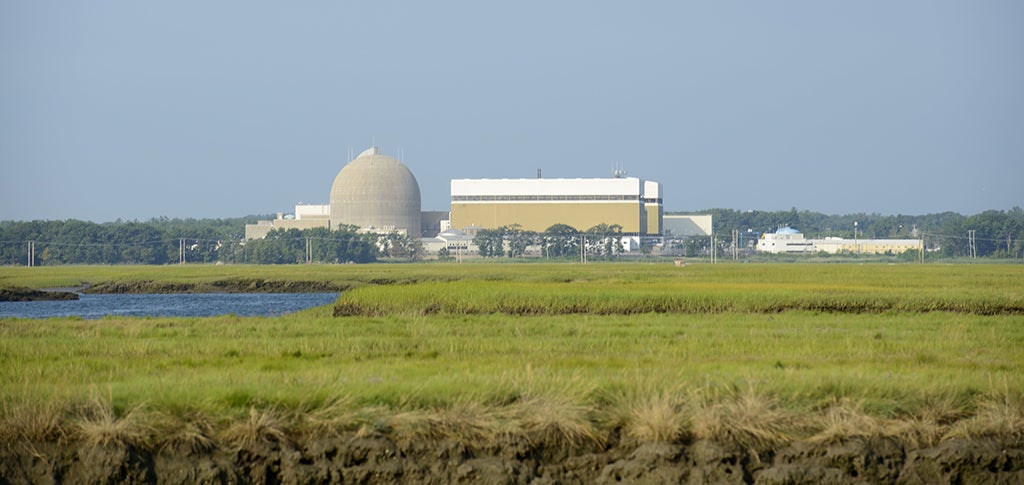
The only nuclear plants operating in the area are Millstone in Connecticut and Seabrook in New Hampshire.
In October 2025, through the National Association of State Energy Officials (NASEO)’s Advanced Nuclear First Mover Initiative, 11 states issued a request for information (RFI) to create a scalable and rapid approach to deploying new nuclear reactors.
The 11 states involved with the strategy are Indiana, Kentucky, New York, Tennessee and Wyoming, who were named co-chairs of the effort. Louisiana, Maryland, Pennsylvania, Utah, Virginia and West Virginia were tapped as participating states. Texas is listed as an observer state but not as a participating one.
NASEO also unveiled another new initiative in February called a Clean Air Task Force. This initiative will be focused on creating policies, working with private partners and finding ways to finance nuclear energy projects. This effort is co-chaired by New York, Indiana, Kentucky, Tennessee and Wyoming. Maryland, Pennsylvania, Utah, Virginia and West Virginia will be involved with this effort.
In the western section of the U.S., the Western Governors’ Association began an initiative in September 2025. Western Governors’ Association Chair Utah Gov. Spencer Cox (R), called the effort Energy Superabundance: Unlocking Prosperity in the West.
The venture examines opportunities for energy options, including nuclear power, across the western region of the U.S.
Individual State Efforts
In the past several months, Arizona, Delaware, Idaho, Indiana, Iowa, Missouri, New Jersey and Wisconsin have created task forces to study the feasibility of adding nuclear energy to their energy portfolio.
Arizona, Missouri, New Jersey and Wisconsin already have commercial nuclear plants in operation within their borders and are looking to potentially add more.
Delaware and Indiana lack any homestate commercial nuclear plants. Although, parts of Delaware are powered by Salem and Hope Creek Nuclear Generating Stations in N.J. These states have a growing interest in particularly bringing small modular reactors (SMRs) online.
While Idaho also lacks currently operating commercial plants, the state has a long nuclear history. The state is home to the Department of Energy’s Idaho National Laboratory, which has hosted over 50 reactors since the Manhattan Project. The lab is currently the hub for research and development of small modular reactors (SMRs) and microreactors.
Although the Duane Arnold Energy Center in Iowa shut down in 2020, operator NextEra Energy is looking to restart the one-unit plant back online. NextEra’s Vice President of Development Lane Witten serves on the Iowa nuclear task force.