Workers at the Department of Energy’s Waste Isolation Pilot Plant near Carlsbad, N.M., are roughly halfway through sinking a new underground utility shaft, site managers said Thursday.
Shaft-sinking crews recently surpassed the midway point at 1,076-feet deep, the DOE and its new prime contractor, Bechtel affiliate Salado Isolation Mining Contractors, said in a March 9 press release.
Ultimately, the full shaft depth will be 2,275 feet. Currently, workers are halfway to the Waste Isolation Pilot Plant (WIPP) repository depth of 2,150 feet, according to the release.
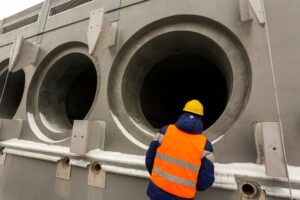
“When completed, this shaft will be part of the new permanent ventilation system that will allow us to provide critical airflow to the underground workforce,” Mark Bollinger, DOE’s acting Carlsbad Field Office manager, said int he release.
Bollinger was referring to the $500-million Safety Significant Confinement Ventilation System that should come online by mid-2026 and triple WIPP’s underground airflow to about 540,000 cubic square feet per minute.
When done, the new Utility Shaft will be 26 feet in diameter with two 3,000-foot drifts, or horizontal openings, excavated at the 2,150-foot level to align with the rest of the WIPP underground.
Last June, DOE’s Office of Enterprise Assessments instructed subcontractor Harrison Western-Shaft Sinkers to tighten up some safety practices connected with digging the new shaft.
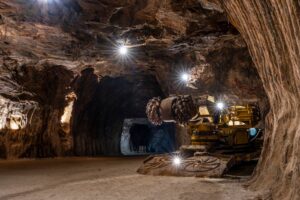
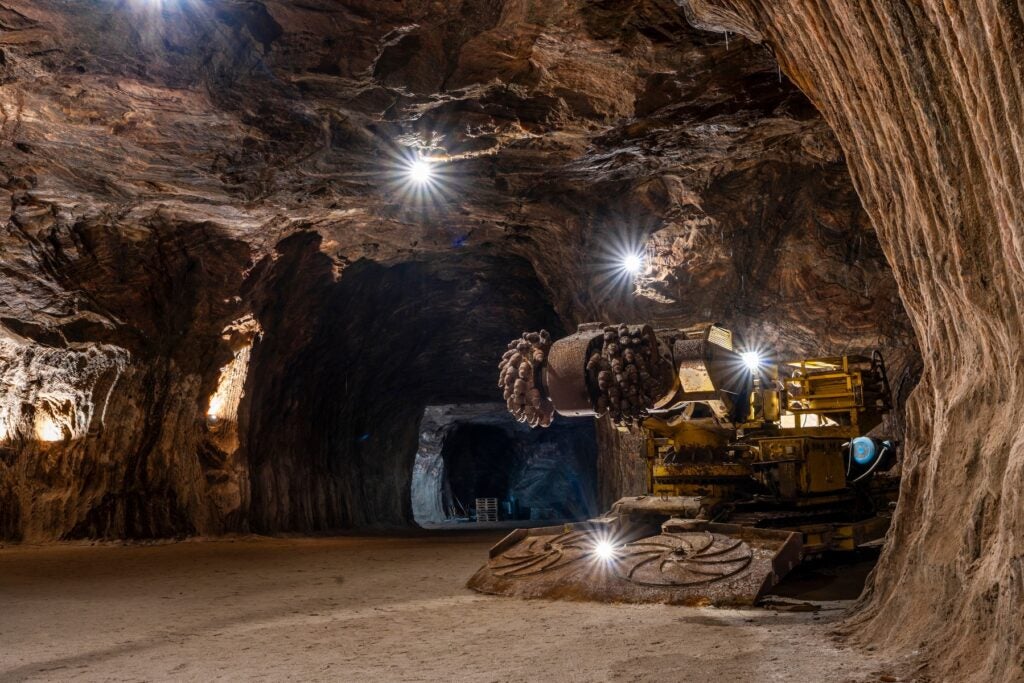
The underground salt mine is the only deep geologic repository for defense-related transuranic waste in the United States.
In October 2021, the state of New Mexico allowed work on the deep shaft to resume via a permit modification. Crews at WIPP began working on the shaft in April 2020 under a temporary authorization but operations stopped the following fall due in part a local surge in cases of COVID-19.