WRAP UP: IN CONGRESS, IN THE INDUSTRY

NS&D Monitor
3/28/2014

IN CONGRESS

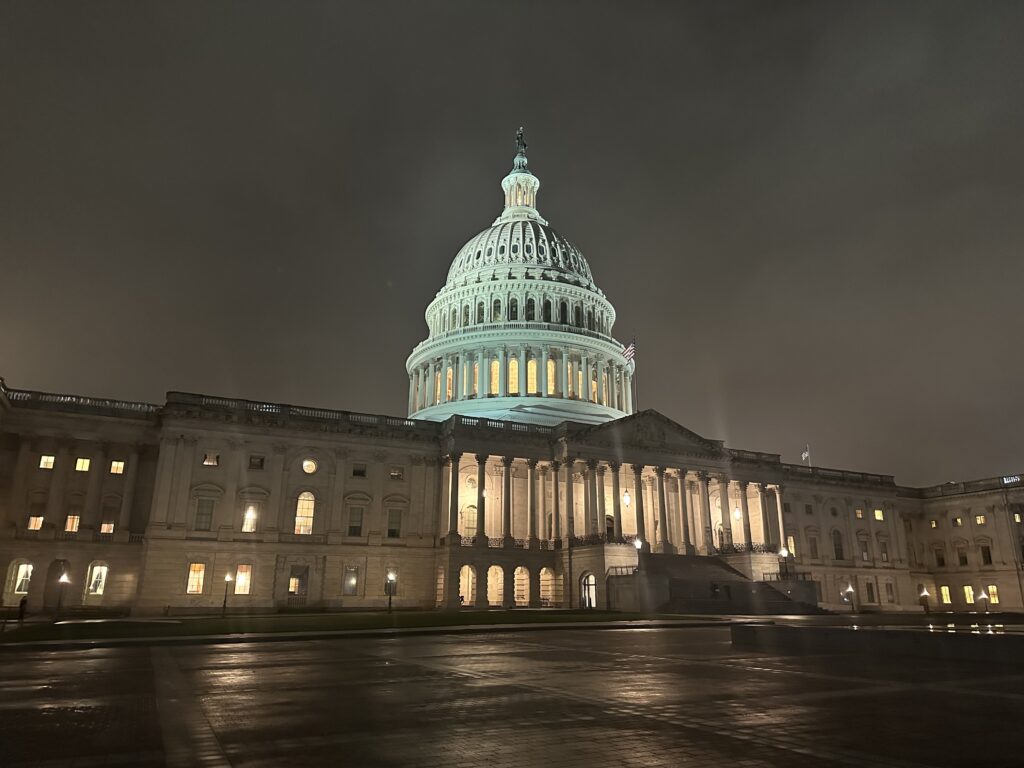
A Senate Armed Services Strategic Forces Subcommittee hearing scheduled for this week was postponed and is likely to be rescheduled for early April. Acting National Nuclear Security Administration chief Bruce Held was scheduled to testify at the hearing March 26 alongside NNSA Deputy Administrator for Defense Programs Don Cook, Naval Reactors Director Adm. John Richardson, and DOE Environmental Management Senior Advisor David Huizenga, but a series of votes on the Senate floor forced the hearing to be postponed.

The Congressional appropriations process may go faster this year than in previous years, according to House Energy and Water Appropriations Subcommittee Chairman Mike Simpson (R-Idaho). The Appropriations Committee is making an effort to hasten the pace of its effort to try and complete spending bills by the beginning of Fiscal Year 2015 in October—something that has not happened in recent years. “I will say this is an accelerated hearing schedule we are having throughout all the Appropriations bills because we are actually going to try something new this year in both the House and the Senate and that is to do our job and do it on time,” Simpson said this week during a subcommittee hearing on DOE’s applied energy budget requests. “We are trying to get appropriations done so you know what your budgets will be when the first of the fiscal year rolls around. We are having accelerated hearings in all of the subcommittees so it makes a lot of conflicts going on for our members as we try to get this done, and I think the hearing schedule is that the middle of April we will be done with that, and then we will start marking up appropriations bills to try and get them to the floor. Of course, a lot of it depends on the floor time that is available in the House and Senate.”

IN THE INDUSTRY

CRC Technologies, a woman-owned small business headquartered in Ohio, has been added to Street Legal’s NNSA Technical Engineering and Programmatic Support Blanket Purchase Agreement team. Street Legal is a HUBZone small business leading one of eight teams selected by NNSA for the BPA last year, and “CRC is proud to be a part of a qualified and integrated team ready to support NNSA and DOE programs,” a company spokesperson said. CRC specializes in proposal management and project controls support services on complex government projects. Earlier this month, the company was awarded a project controls subcontract worth $12 million to support Fluor-B&W Portsmouth at the DOE Portsmouth site. “For NNSA, CRC is excited to leverage our current project controls capabilities, past project management support on the NNSA DICCE program, and our close proximity to headquarters to become a trusted partner to NNSA and other DOE offices,” CRC Chief Operating Officer Basil Human said. Nithin Akuthota, CRC’s Director of Washington, D.C. Operations, will lead CRC’s interactions with the Street Legal team and customers.


In This Issue


More on This Topic


Congress forages for answers on the logistics of DOE’s nuclear campus program

WASHINGTON — Nuclear industry experts and Congress continue to navigate the early development stages of the Department of Energy’s Nuclear Lifecycle Innovation Campus program.  During the Senate Environment and Public Works Committee’s Wednesday hearing, multiple senators sought further understanding of the inner workings, such as funding, interagency partnerships and disposal of different types of wastes, […]


Key House, Senate races in DOE nuclear cleanup complex

With less than three weeks to go before the Nov. 3 general election, here is a look at some of the key House of Representatives and Senate races around Department of Energy nuclear cleanup sites.

The sites and races are listed alphabetically. 

Energy Technology Engineering Center in California: Rep. Brad Sherman (D) is running for re-election against Republican Larry Thompson.

Hanford Site in Washington: Republican Amanda McKinney and Democrat John Duresky will square off to fill the seat being vacated since longtime incumbent Dan Newhouse (R) in Washington’s fourth congressional district elected not to seek a new term. McKinney is a member of the Yakima County Commission while Duresky is a retired Air Force major. Newhouse, a longtime incumbent, is one of the few remaining Republicans in Congress who voted to impeach President Donald Trump after Trump supporters attacked the U.S. Capitol on Jan. 6, 2021.

Idaho National Laboratory: Incumbent Rep. Mike Simpson (R) cruised to an easy win in the GOP primary in May and will face Democrat Ellie Gilbreath in the general election. Gilbreath is an attorney and mediator. Simpson, a member of the House Appropriations Committee, has served in the House since January 1999. In the Senate, incumbent Jim Risch (R), a member of the Senate Energy & Natural Resources Committee, is running for re-election against Independent Natalie Fleming and Libertarian Matt Loesby. Democrat David Roth dropped out of the race. 

Lawrence Berkeley National Laboratory in California: Rep. Lateefah Simon (D) is seeking re-election against fellow Democrat Jamie Joyce under California’s top-two primary system. California as a state sometimes practices intra-party general elections.

Lawrence Livermore National Laboratory in California: Rep. Aisha Wahab (D) won a special election in August to serve out the remainder of the term of Rep. Eric Swalwell, who resigned after several sexual assault allegations.  A former member of the California State Senate, Wahab is an information technology manager. In the general election, Wahab will face another Democrat, Melissa Hernandez, who won the party’s primary and is a member of the board of directors for Bay Area Rapid Transit. 

Los Alamos National Laboratory in New Mexico: Rep. Teresa Leger Fernández (D) is seeking her fourth term against Martin Zamora (R), a member of the New Mexico House of Representatives. Leger Fernández is on the House Rules Committee and Natural Resources Committee. In the Senate: Incumbent Ben Ray Luján (D) is seeking re-election against Republican Larry Marker, who won the GOP primary.  

Moab Uranium Mill Tailings Remedial Action (UMTRA) Project in Utah: Rep. Mike Kennedy (R) is running for re-election against Democrat Johnny Larsen. 

Nevada National Security Site: Incumbent Democrat Rep. Steven Horsford will seek re-election against Republican Copy Whipple, who won the GOP primary. Whipple describes himself as a rancher and businessman. 

Oak Ridge Site in Tennessee: Rep. Chuck Fleischmann (R) , currently chair of the House Appropriations Energy & Water subcommittee, is another longtime GOP congressman defending his seat. He will face Anna Golladay (D) in the general election. Golladay, who won her party’s primary, has a background as a consultant, business operator and associate pastor in the United Methodist Church. In the Senate: Bill Hagerty (R) is running for re-election against Democrat Marquita Bradshaw.

Paducah Site in Kentucky: Incumbent Rep. James Comer (R) is running for re-election against Democrat Drew Williams, who has a bachelor’s degree from Murray State University and has worked in the construction industry. Comer is chair of the House Oversight and Government Reform Committee. In the Senate: With the retirement of long-serving Republican incumbent Mitch McConnell, the seat is being sought by Republican Congressman Andy Barr and Democrat Charles Booker, a former member of the Kentucky legislature. 

Portsmouth Site in Ohio: Rep. David Taylor (R ) is seeking re-election against Democrat Jen Mazzuckelli, a high-school English teacher. In the Senate race: Republican incumbent John Husted, a former lieutenant government appointed to fill the unexpired Senate term of Vice President J.D. Vance, will defend the seat against Democrat Sherrod Brown. Brown served three terms in the U.S. Senate before losing his seat in 2024. 

Sandia National Laboratories in New Mexico: Rep. Melanie Stansbury (D) is seeking re-election against Republican Ndidiamaka (Didi) Okpareke, a pharmacist who won the GOP primary. 

Savannah River Site in South Carolina: Longtime Republican incumbent Joe Wilson is seeking re-election against Democrat Zyon Khalifa, an attorney who won his party’s primary. In the Senate: Republican Sen. Darline Graham, appointed to the seat following the death of her brother Lindsey Graham this summer, and who also won the GOP Senate primary, will seek a full term against Democrat Annie Andrews.  

West Valley Demonstration Project in New York: Incumbent Republican Nick Langworthy is running for re-election against Aaron Gies for the Democratic Party and the Working Families Party.

Waste Isolation Pilot Plant in New Mexico: Rep. Gabe Vasquez, a Democrat,  is seeking re-election against Republican Greg Cunningham.  

In This Issue

More on This Topic


Hanford Advisory Board lineup remains in limbo

A full week into fiscal 2027, the Department of Energy had still not appointed members for the newly-configured Hanford Advisory Board.

A DOE spokesperson said late Thursday Oct. 8 that the new members of the citizen advisory board for the Hanford Site in Richland, Wash., have yet to be finalized. DOE had previously targeted Oct. 1, which is the start of the new fiscal year, for announcing members of the new HAB.

Earlier Thursday, a spokesperson for the Washington state Department of Ecology said the state was still in the dark about appointment of any replacement HAB members.

The DOE Office of Environmental Management announced in August that it would shrink the size of the HAB and bring its operations more in line with other DOE site-specific environmental advisory boards.

HAB would go from 38-to-20 members, all of them at-large members appointed by DOE. In addition, DOE said it would terminate a longstanding memorandum of understanding on the advisory board with the state of Washington and the U.S. Environmental Protection Agency.

In This Issue

More on This Topic


New Mexico Congressional Dems tout $10M for WIPP road

Members of the New Mexico Congressional delegation serving the area around the Department of Energy’s Waste Isolation Pilot Plant (WIPP) have lined up $10 million for upkeep of the haul road leading to the nation’s only disposal site for defense-related transuranic waste.

The federal money will help shore up the U.S. 285 Relief Route, a key roadway used by trucks moving waste from DOE sites to WIPP near Carlsbad, N.M., according to a Friday Sept. 29 press release.

The announcement was made by Sens. Ben Ray Luján (D-N.M.), Martin Heinrich (D-N.M.) and Rep. Gabe Vasquez (D-N.M.)

“WIPP serves a critical role for nuclear waste storage in our state and for our nation,” said Vasquez in the release. “This funding is much needed to ensure the safety and improvement of transportation of volatile materials to the facility.”

Route 285 is a north-south highway running from Sanderson, Texas to Denver, Colo. Use of the road for WIPP shipments was briefly suspended two years ago due to flooding near Roswell, N.M.

“For more than 25 years, trucks bound for WIPP have been rolling down New Mexico highways,” Gov. Michelle Lujan Grisham (D) said in an Oct. 3 Facebook post. “As of this week, the Department of Energy is helping with the upkeep: A $10 million grant to rehabilitate the U.S. 285 Relief Route.”

“Well-maintained roads are a safety measure for every driver using US 285,” Lujan Grisham said. “Thank you to DOE and our congressional delegation for getting this done, It’s a solid down payment and New Mexico will keep asking for the rest.”

The grant is not the only effort perking in Congress to try and increase funding for road infrastructure around WIPP in Southeast New Mexico. The WIPP Economic Assistance Assurance Act of 2026 (S. 4252) would provide inflation-adjusted infrastructure funds beyond what was offered in the original WIPP Land Withdrawal Act of 1992.

In This Issue

More on This Topic


Congress seeks to bolster U.S. fusion industry in new bill

Two California lawmakers introduced a bill Sept. 24 that, if enacted, would provide $10 billion in funding to the fusion industry to help spur commercialization of the advanced nuclear technology.

Rep. Jay Obernolte (R-Calif.) and Zoe Lofgren (D-Calif.), members of the House Space Science and Technology Committee, based the bipartisan bill, American Leadership in Fusion Act, on recommendations from a fusion industry report from fall 2025 titled “Fusion Forward”. Reps. Don Beyer (D-Va.), Lori Trahan (D-Mass.) and James Gallagher (R-Calif.) sponsored the bill.

The report offered three primary policy recommendations Congress should consider to help “win the [international] fusion”: declare fusion a national security priority, directly invest $10 billion into the industry and take strategic actions in the fusion race.

“Fusion energy has the potential to be a reliable domestic source of power and strengthen America’s energy independence,” said Obernolte in the press release last week. “The American Leadership in Fusion Act supports the research infrastructure and commercialization pathways needed to move fusion technologies toward deployment and maintain U.S. leadership in this critical field.”

According to the bill’s fact sheet, $3.8 billion of the funding would go towards new test facilities for fuel material and fuel cycle purposes, $3 billion would be allocated to a future milestone-based demonstration program and $2 billion towards current milestone development programs. The remaining funds of the $10 billion would address other technical and technological gaps for the fusion industry. 

Beyond the $10 billion investment proposed in the bill, the legislation intends to have more than one fusion pilot plant to be under construction no later than Dec. 31, 2028. The bill also calls for the Department of Energy to establish an Office of Fusion and create a fusion workforce development program with the National Science Foundation, according to the  fact sheet.

Both the House and Senate introduced a bill last year that would establish a standalone office for fusion in DOE. However, House appropriators in May said that the office was not needed due to many of its operations already being carried out by the Office of Technology Commercialization. 

In This Issue


More on This Topic


Congress forages for answers on the logistics of DOE’s nuclear campus program

WASHINGTON — Nuclear industry experts and Congress continue to navigate the early development stages of the Department of Energy’s Nuclear Lifecycle Innovation Campus program.  During the Senate Environment and Public Works Committee’s Wednesday hearing, multiple senators sought further understanding of the inner workings, such as funding, interagency partnerships and disposal of different types of wastes, […]


NRC needs to address workforce concerns amid the growing interest in nuclear power, GAO says

The growing interest in building more nuclear power across the United States calls for the Nuclear Regulatory Commission to build up its workforce to meet the incoming workload, the Government Accountability Office (GAO) said in a report this week.

Over the past couple of years, nuclear power has gained bipartisan support on Capitol Hill and across the nation as the energy source is seen to provide baseload and low-carbon power. In this growing interest, many nuclear companies and utilities are looking to build more reactors for various purposes, such as data centers and advanced manufacturing.

GAO said in its report, published Monday, it recommends that NRC finalize its workforce planning by the first quarter of fiscal 2027 and for the NRC chair to establish a system to measure the metrics on whether the agency has enough staffing to meet its needs. While NRC did not provide a formal comment letter, the agency concurred with the recommendations.

In the GAO report, NRC has seen a significant reduction in its staffing from July 2024, when the Accelerating Deployment of Versatile, Advanced Nuclear for Clean Energy (Advance) Act of 2024 was passed, to July 2026. GAO said that NRC’s workforce was reduced from 2,957 to 2477 or 16% in that timeframe.

GAO reported 740 employees left the agency from July 2024 to July 2026 while only hiring 270 on the flipside. Most of the departures came through the way of voluntary retirements. 

NRC began to develop a new workforce tool, NRC Enterprise eXecution and Utilization System (NEXUS), to better gauge the agency’s workforce needs in 2025. According to the report, NEXUS is a device “that NRC expects will allow the agency to more effectively assess its workforce, optimize project delivery, and strategically target the use of its ADVANCE Act authorities going forward.”

However, the NEXUS tool has been delayed several times and is expected to be completed by the first quarter of fiscal 2027, NRC officials said in the document. GAO urged that NRC stay on track with the deadline that it may begin to use its additional hiring authorities granted through the Advance Act.

Through the Advance Act, NRC was provided three authorities to address its staffing needs: the ability to directly hire certain positions, compensation flexibility and provide bonuses for hiring and performance. These authorities granted by the law are set to end by 2034.

GAO said that from July 2024 to July 2026, NRC has only used the capability to provide bonuses in 18 instances for current staffers, but did not use the only capabilities.

The total compensation awarded through bonuses was around $335,000, ranging from $15,000 and $25,000 per employee. According to the report, NRC said it did not use other authorities from the Advance Act due to the agency’s recent reorganization but will intend to use it going forward. The agency said it used preexisting direct hiring authorities to fill some of the vacancies over the past few years.

“According to NRC officials, NRC needs a more stable environment and a clear understanding of the new agency structure and workforce condition and distribution to understand where mission-critical needs may exist before conducting any external hiring,” the document said. “NRC has leveraged its preexisting direct hire authority to fill some vacancies over the years. Officials told us that NRC prefers to use the preexisting direct hire authority because it is readily available across the agency for broad positions.”

In bringing in more staffers, GAO also urges NRC to establish metrics to continue to navigate whether its staffing needs are being met.

“In addition, it is not clear that the existing authorities will sufficiently address the significant workforce challenges and needs NRC may face in the future, according to officials and some stakeholders,” GAO said. “As of July 2026, NRC had not established metrics to evaluate whether its workforce authorities adequately address its needs. Establishing such metrics could help NRC determine if it has sufficient workforce flexibilities, authorities, and tools to meet its current and future needs before the ADVANCE Act hiring and compensation authorities sunset in 2034.”

GAO conducted the audit for this report from September 2025 to September 2026. 

In This Issue


More on This Topic