The org chart is in flux at the Department of Energy’s Environmental Management Los Alamos National Laboratory field office where Jessica Kunkle will be rotating out to fill another supervisory role within DOE, the Northern New Mexico Site-Specific Advisory Board heard Thursday evening.
Stanley Pyram, previously chief engineer at the Savannah River Site in South Carolina, will serve as acting manager once Kunkle starts her new assignment, the advisory board heard.
Kunkle joined DOE’s nuclear cleanup office at Los Alamos from NNSA’s Office of Infrastructure Lifecycle Management in Washington, D.C., where she has served as deputy associate administrator.
WASHINGTON, D.C. – The Department of Energy’s reactor pilot program could see “three to four” demonstration reactors reach criticality by July 4, DOE Assistant Secretary Nuclear Energy Ted Garrish told a Senate committee Thursday morning.
Garrish, along with John Wagner, DOE Idaho National Laboratory director, and Mike Laufer, Kairos Power CEO, testified before the Senate Energy and Natural Resources to discuss DOE’s implementation of President Donald Trump’s May 23, 2025 nuclear-related executive orders.
The reactor pilot program, initiated by Executive Order 14301, calls for DOE to issue a request for application and seek U.S. nuclear companies interested in building and operating reactors at national labs. DOE plans to have at least three demonstration reactors, which will not produce power, reach criticality by this summer.
Carlsbad, N.M., not far from the Department of Energy’s Waste Isolation Pilot Plant (WIPP), is expected to see temperatures in the mid-to-upper 90s most of this week, according to local weather forecasts.
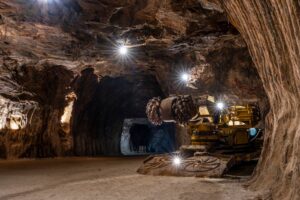
WIPP workers at the former salt mine where defense-related transuranic waste is disposed of for DOE might feel fortunate to be working underground this week.
Michael Budney, who formerly led Department of Energy operations at the Savannah River Site in South Carolina, has accepted a director post at Mission Technologies, a division of Huntington Ingalls Industries (HII) in Canberra, Australia.
Budney announced the appointment Friday March 13 on his LinkedIn page. In the new role Budney will work with the Australian Submarine Agency, according to the LinkedIn page.
Budney ran the Savannah River field office for DOE’s Office of Environmental Management for seven years, until February 2025. Before that, he worked about three years for DOE’s Office of Business Operations. Budney worked about six years for Northrop Grumman after spending 30 years in the U.S. Navy. When Budney retired from the Navy in 2009 he was the deputy director of U.S. Nuclear Command & Control System support staff.
The Department of Energy’s Defense Waste Processing Facility, which turns radioactive tank waste into glass form at the Savannah River Site in South Carolina, is now 30 years old.
The facility for vitrifying tank waste into glass was commissioned in March 1996 by Hazel O’Leary, secretary of energy during the Bill Clinton administration, DOE noted in a March 12 press release.
Over time, the Defense Waste Processing Facility has churned out over 17 million pounds of glass and filled more than 4,500 canisters and that amounts to more than half of the canisters expected to be filled, DOE said. The plant is run by BWX Technologies-led Savannah River Mission Completion, which also includes Amentum and Fluor. It’s worth noting that is basically the same partnership lineup at Hanford Tank Waste Operations and Closure (H2C).