The Department of Energy’s disposal site for defense-related transuranic waste narrowly avoided two accidents in August, according to a September staff report from the Defense Nuclear Facilities Safety Board (DNFSB).
There were two separate “near miss” episodes, one on Aug. 3 and one on Aug. 6, at the Waste Isolation Pilot Plant (WIPP), according to a September report from DNFSB. The Bechtel-led WIPP prime, Salado Isolation Mining Contractors (SIMCO), declared the Aug. 3 mishap a near-miss.
Neither resulted in any injuries, according to the DNFSB report. The Aug 3 instance involved a worker failing to wear a hard hat in an area one was required. The Aug. 6 incident involved an underground roof bolt failure.
The problems cited in the September report all occurred while emplacement of waste shipments were suspended at WIPP. Such work resumed around Aug. 27.
The Aug. 3 mishap happened in the Waste Handling Operations area. “A worker in the area tried to stabilize the load by hand and stepped into an area that required hard hats, though the worker was not wearing one,” DNFSB reported. “Waste Handling operations personnel identified this and several other issues with the response to the event, which they are addressing with training.”
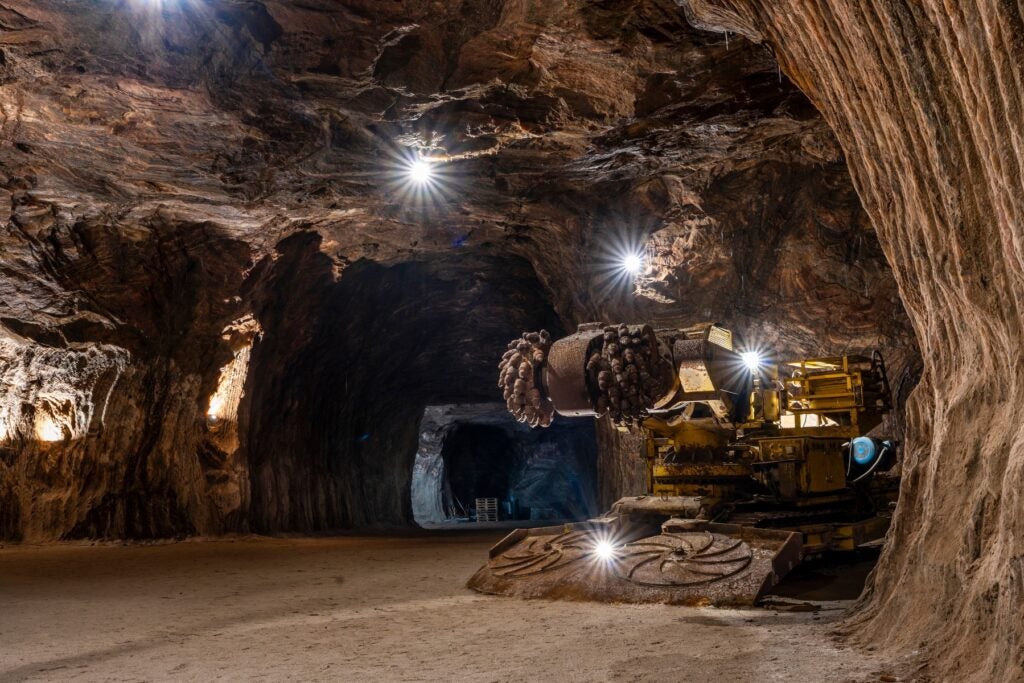
Then on Aug. 6, workers were “underground near the waste shaft bottom,” DNFSB said in the report. “The Waste Handling Engineer reported hearing a roof bolt fail about 200 feet away, striking the ground in the center of the drift.”
“This occurrence reflected a failure of the roof bolt lanyard to perform its safety function,” DNFSB said. “After investigation, SIMCO personnel identified a second failure mode of lanyards if attached too close to a roof bolt penetration of the overhead fence.”
Roof bolting is a process used in underground mines to reduce the chances of large chunks of rocks falling down upon workers.
In a Friday email, DOE and the operations contractor had the following to say about the Waste Handling near-miss:
“SIMCO immediately removed the lifting fixture from service in the above ground area and re-trained all waste handling employees, including supervisors, on the appropriate way to respond to unexpected conditions in the field. No waste was involved and operations resumed after the re-training.”
The department and SIMCO replied this way on the roof bolting problem. “SIMCO temporarily paused site operations to conduct an investigation that included over 31,000 bolt lanyard inspections,” according to the DOE statement. “We also engaged outside experts to conduct an engineering evaluation of the lanyard system.” SIMCO’s approach exceeds industry standards, but is continuing to evaluate potential improvements in roof bolting, DOE added.
While it was not a near-miss, on Aug. 16, the cage for the underground Waist Hoist fell about 1,500-feet to the bottom of the shaft. “SIMCO has commissioned an external review from corporate reach back personnel including their lead cause analyst, as well as requesting the Mine Safety and Health Administration Technical Group to evaluate the event and SIMCO’s response actions,” according to the DNFSB.
The Air Intake Shaft Hoist was removed from service after the fall. “Decisions will need to be made as to whether it will be repaired or SIMCO will dismantle it and start early on the replacement with a salt production hoist in its place,” DNFSB said in the report.
Fiscal 2027 money for upgrading WIPP’s hoist system was included in a tweak to the ongoing federal budget continuing resolution, which is in effect through Dec. 11, according to DNFSB.